Farming at the Edge: Where Autonomous Robots and Edge Compute Meet
Autonomous robots don’t create value when someone is watching them. They create value when they can work continuously, safely, and independently — and only ask for human attention when it actually matters.
That’s exactly what Burro robots are doing in vineyards and farms today: carrying loads, navigating fields, moving between zones, and operating all day without constant supervision.
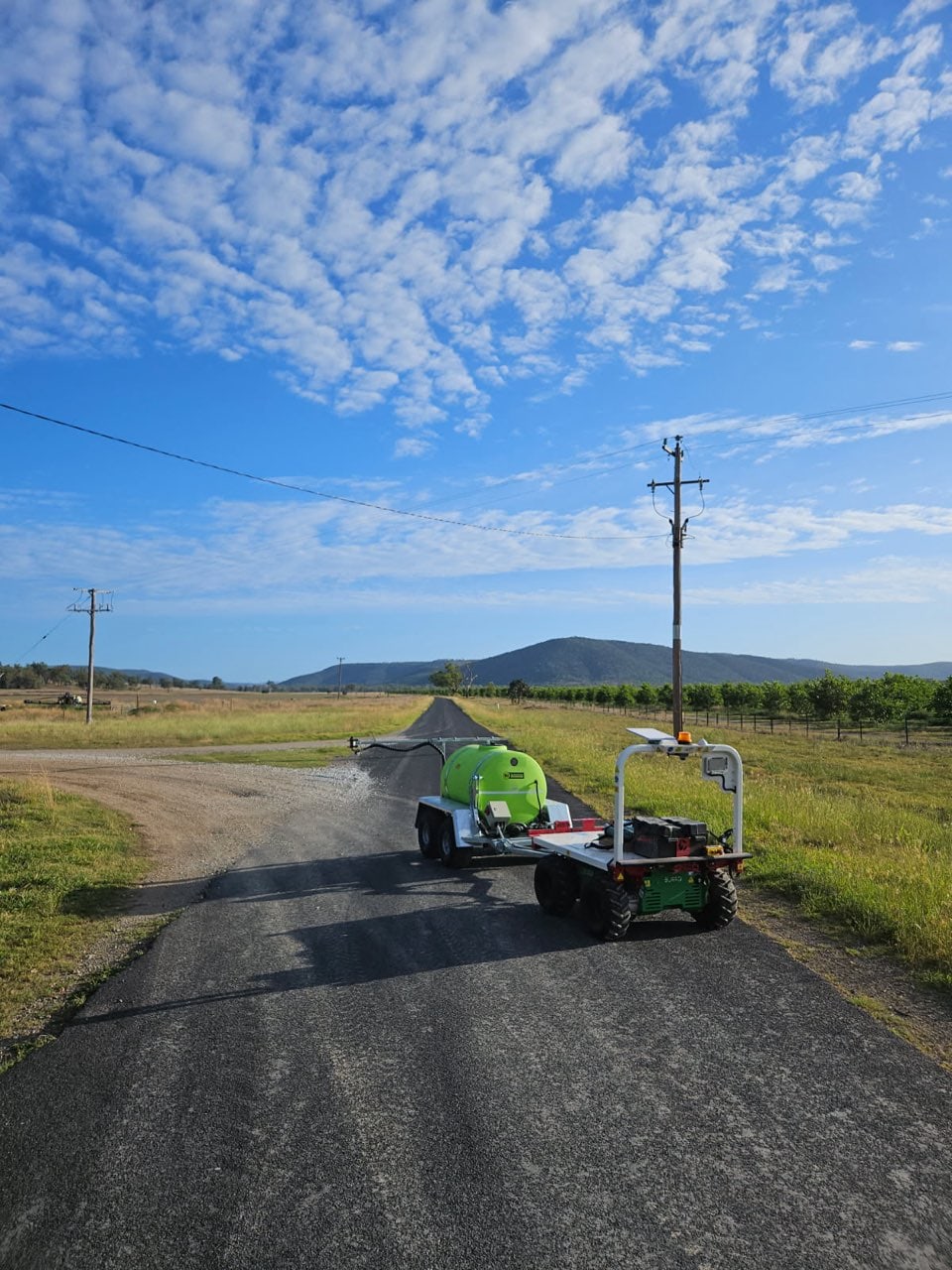
But when you have hundreds or thousands of robots in motion, operators can’t stay glued to dashboards, radios, or live feeds. They need to know only one thing: When do I actually need to step in?
That’s where Akamai Functions became essential.
Turning robot movement into actionable signals
In partnership with Agri Automation Australia, Burro built a lightweight notification system to:
Monitor robot locations through the Burro Cloud API
Detect when a robot enters or exits predefined geofenced areas
Automatically send an SMS notification to the operator only when attention is required
Whether a robot crosses into a loading zone, approaches a warehouse, or moves near a public access point, the operator is notified automatically only if human attention is required.
How this system works
This notification system runs on Akamai Functions, using WebAssembly (Wasm) as its execution model. Akamai Functions provides a globally distributed, Wasm-powered serverless engine on Akamai Cloud that executes application logic within milliseconds, anywhere in the world. Whether managing the web crawlers responsible for driving organic traffic to your site or, in this case, controlling physical robots, the low-latency reach of Akamai's global network makes it a natural fit.
With sub-millisecond cold starts, one-command global deployment, and seamless integration across Akamai’s security and compute ecosystem, teams eliminate infrastructure complexity while delivering faster, safer, more scalable digital experiences.
Akamai Functions operate at a higher level of abstraction than the operating system kernel and provide strong isolation by design, with no inherent side effects that could compromise the host environment. This allows untrusted code to run safely in a multi-tenant environment at a massive global scale, giving developers confidence that applications are secure by default and resilient in production.
Predictable behavior without operational overhead
Rather than relying on servers or long-running background services, the application executes as a short-lived, scheduled function.
Each invocation:
Retrieves the robot’s location from the Burro Cloud API
Evaluates it against predefined geofenced destinations
Sends a notification if required
Terminates
Secure, persistent state ensures notifications are sent exactly once per event, delivering predictable behavior without operational overhead.
The resulting architecture is intentionally simple and robust, well suited to real agricultural environments where reliability matters more than complexity. It scales easily across additional robots, sites, and notification channels while remaining straightforward to operate.
Edge intelligence ready for AI in the field
This is what practical edge compute looks like when it leaves the lab and starts working in the real world.
Out in vineyards and fields, robots move continuously through their environment, making decisions, navigating terrain, and doing useful work without waiting on a human to tell them what to do. That autonomy is powered by onboard intelligence. But autonomy alone is not enough. The real operational challenge is knowing when a human actually needs to be involved.
That’s the problem this edge native function solves.
Running on Akamai Functions, the notification logic turns a robot’s live movement data into meaningful operator awareness. Each time the function runs, it pulls location data from the cloud API, evaluates it against geofenced boundaries, and determines whether an operator needs to be notified.
It’s simple. It’s reliable. And it’s exactly the kind of foundation that AI inference slots into naturally.
Where edge execution meets future AI
As these systems evolve, edge functions become the natural orchestration layer sitting alongside on-device AI, where the robot’s onboard intelligence handles perception and decision-making, and the edge function acts on those outputs to determine whether a human needs to be in the loop. Each system does what it’s best at: AI inference on the hardware built for it, lightweight logic at the end where latency matters.
Learn more
If your robots, devices, or systems operate outside a centralized data center, see how Akamai Functions can help you turn AI insight into real-time action at the edge.

Tags