Additional commentary by Emily Lyons
Welcome back to AI Pulse, our blog series where we deep dive into the AI bot traffic insights we’re observing across the Akamai network. If you missed any of the previous blog posts in the AI Pulse series, be sure to check them out:
- OpenAI’s Wild Bot Behavior After GPT-5
- AI Bot Mitigation Is Increasing Everywhere
- What Circadian Rhythms Reveal About AI Bot Behavior
- How Big Tech Impacts AI Bot Traffic
- AI Bots Are Targeting Commerce, Publishers, and High Tech
- The Rise of AI Search Crawlers
- How OpenAI Became the Majority Player
You may have noticed that we skipped last week’s post … and for good reason. We’ve been gearing up for something special: the first-ever agentic Cyber Week breakdown.
What is Cyber Week?
Cyber Week is the widely recognized five-day stretch of online shopping that runs from Thanksgiving through Cyber Monday in the United States. It’s one of the biggest traffic surges of the year for ecommerce, driven by a flood of human shoppers, traditional bots, and now something new: agentic commerce.
This year marked a turning point. AI assistants and autonomous agents didn’t just browse — they compared, planned, monitored prices, and initiated tasks on behalf of users.
In 2025, for the first time, we saw agents meaningfully enter the shopping ecosystem, influencing how traffic behaves, how intent is captured, and how retailers must consider discovery, demand, and fraud.
A look at the U.S. commerce numbers
For this analysis of Cyber Week 2025, we focused exclusively on commerce organizations headquartered in the United States. Akamai categorizes commerce customers into three industry segments: Hotel & Travel (including major airlines, hospitality groups, and travel agencies), Retail (spanning some of the world’s largest retailers and e-commerce brands), and Other (comprising a smaller set of commerce organizations that don’t cleanly fit the first two categories).
The total bot traffic in U.S. commerce since July
Across these industry segments, we observed distinct trends leading into Cyber Week. U.S. retail bot traffic has been steadily rising since mid-June, climbing 7% from early summer through Cyber Monday (December 1). In contrast, U.S. Hotel & Travel experienced a sharp drop of more than 50% in early July, after which traffic stabilized at this lower baseline (Figure 1).
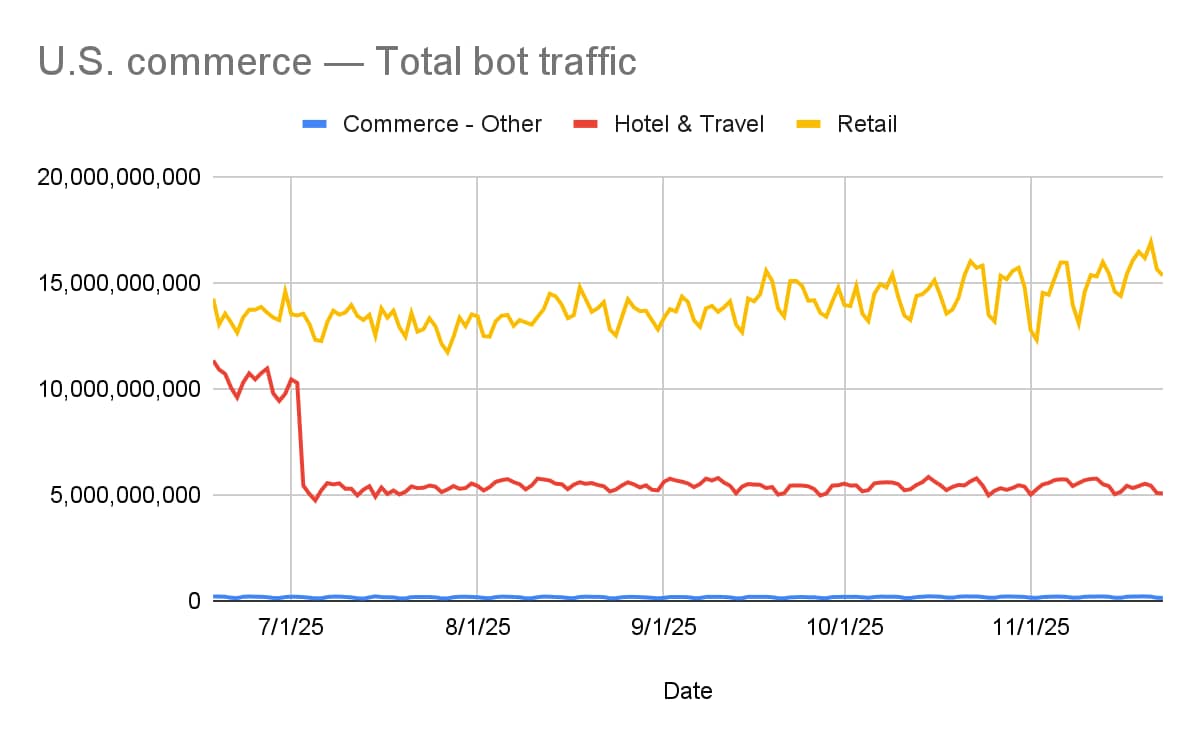 Fig. 1: Total bot traffic across U.S. commerce by industry segment
AI bot traffic in U.S. commerce over the same period
Looking specifically at AI bot traffic in U.S. commerce over the same time frame, we see a similar upward trajectory, though with more obvious trends by industry segment. Hotel & Travel showed steady, consistent growth leading into Cyber Week, ending the period up nearly 17%. Retail fluctuated more week to week but still closed with a strong 26% overall increase (Figure 2).
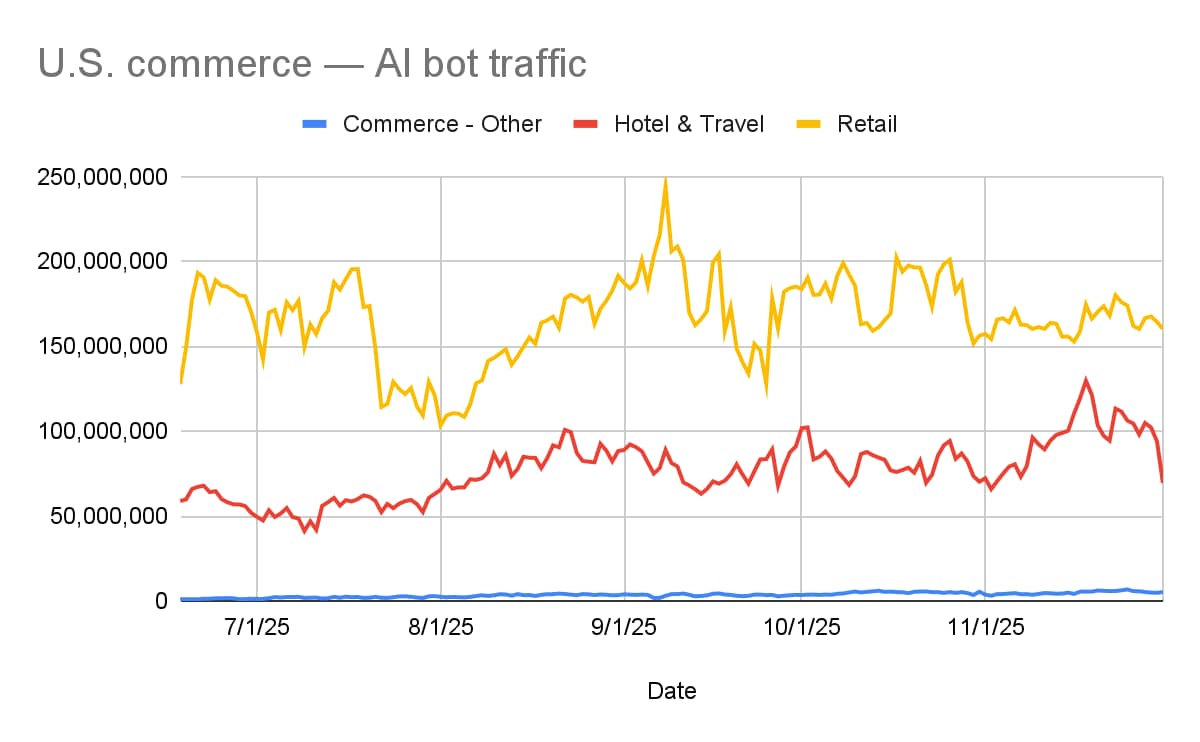 Fig. 2: Total AI bot traffic across U.S. commerce by industry segment
To put this into perspective: When we look at AI bot traffic as a share of total bot traffic across U.S. commerce, it still represents a very small slice — roughly 1% to 1.5% (Figure 3). So, although AI bot traffic is clearly rising, it remains a small fraction of the broader bot activity that’s hitting U.S. commerce applications today.
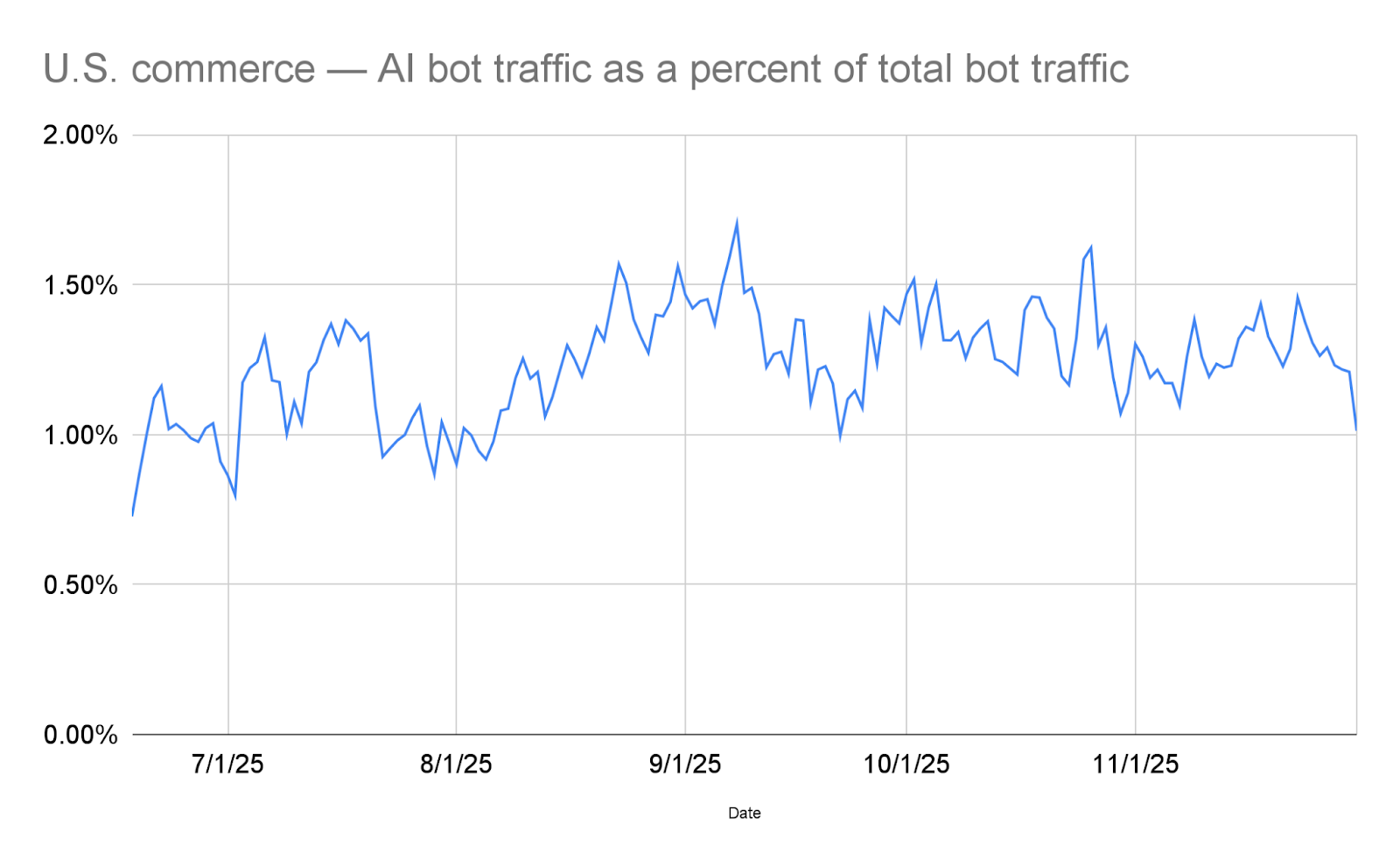 Fig. 3: AI bot traffic as a percentage of total bot traffic across U.S. commerce
Diving into the AI bot traffic during Cyber Week
For our analysis of Cyber Week, we focused on traffic during a 10-day window beginning November 22.
As a reminder from earlier AI Pulse editions, Akamai classifies AI bot activity into four distinct categories:
- AI training crawlers
- AI search crawlers
- AI fetchers
- AI agents
When we break down Cyber Week activity across U.S. commerce organizations (Figure 4), the picture initially looks straightforward.
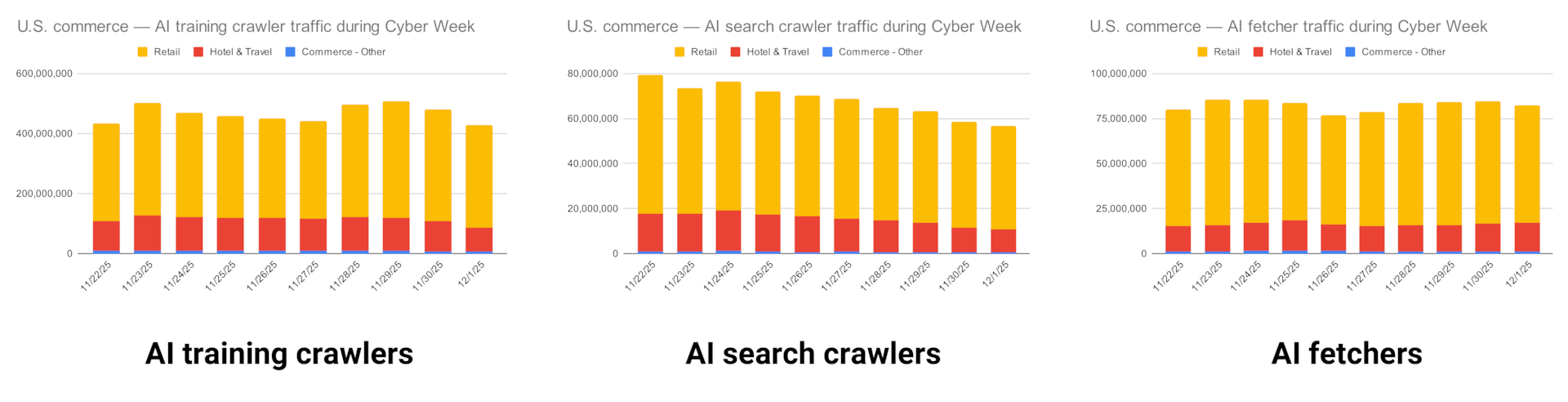 Fig. 4: AI bot traffic during Cyber Week by AI bot category
- AI training crawler traffic remained largely flat, suggesting no major model-building surges during the peak shopping period.
- AI search crawler traffic declined, indicating that discovery-oriented bots pulled back during the highest-traffic retail week of the year.
- AI fetcher traffic stayed relatively stable, showing consistent content-retrieval patterns.
At first glance, it looked like the story might end there — steady training, lighter search, and flat fetcher activity. Not exactly the fireworks one might expect for the first truly agentic Cyber Week. However, the real signal emerged when we isolated AI agent traffic.
The Black Friday AI agent boom
If there was any doubt that agents had officially entered the Cyber Week picture, this removed it. Across that same 10-day window, AI agent traffic surged on Black Friday (11/28), climbing to nearly 4 million requests across U.S. commerce customers (Figure 5).
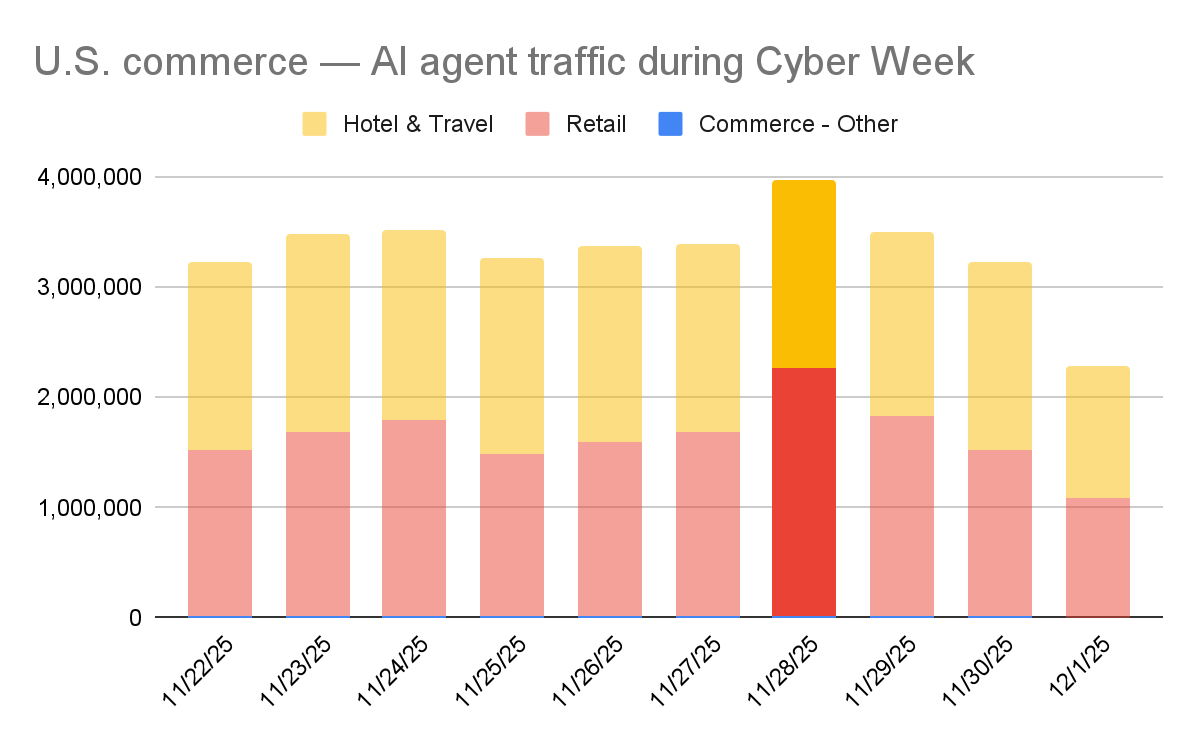 Fig. 5: AI agent traffic across U.S. Commerce
When we break this down further, we see that the spike was led overwhelmingly by retail, signaling that agent-driven activity was concentrated around the year’s biggest shopping moment. Meanwhile, Hotel & Travel remained comparatively steady, showing that the agentic surge was not uniform across commerce but highly tied to retail demand patterns.
When we isolate daily requests within the U.S. retail industry segment, the trend becomes even more pronounced (Figure 6). Agent traffic spiked sharply on Black Friday, then fell off quickly through the weekend, ultimately reaching its lowest point on Cyber Monday (12/01).
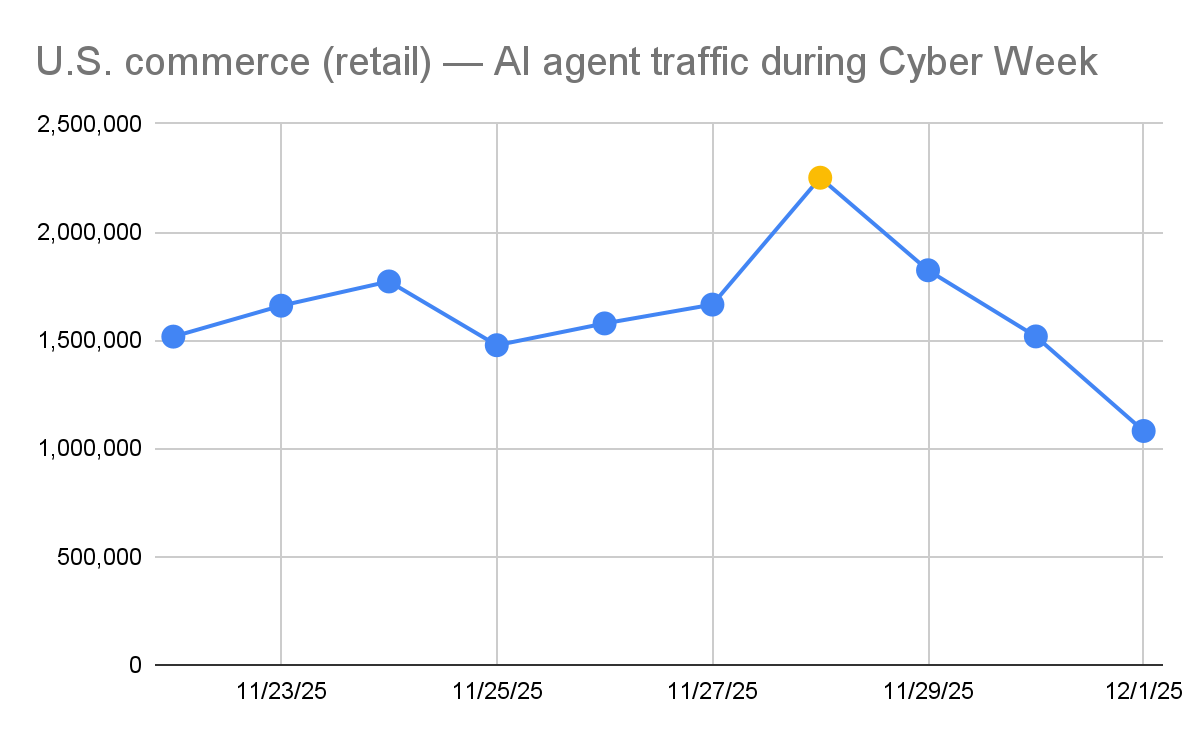 Fig. 6: AI agent traffic during Cyber Week across U.S. Retail industry segment
Interpreting the Cyber Monday drop
We believe the sharp decline in agent activity on Cyber Monday for the U.S. retail industry segment reflects a shift in user behavior. By the time the Monday after Black Friday arrives, deals have stabilized, inventory has settled, and most shoppers already know what they want.
Cyber Monday is increasingly transactional rather than exploratory, which means there are fewer triggers for agents to compare prices, monitor changes, or assemble options.
In contrast, Black Friday’s volatility, driven by rapid promotions, restocks, and unpredictability, creates far more opportunities for agents to intervene. We hypothesize that as agentic commerce matures, this pattern will only become more pronounced: There will be spikes when consumers are exploring, dips when they’re executing.
Pivoting to individual AI bots across U.S. commerce
When we looked at the 10 highest-volume AI bots across U.S. commerce customers during Cyber Week, we saw a few clear patterns (Figure 7).
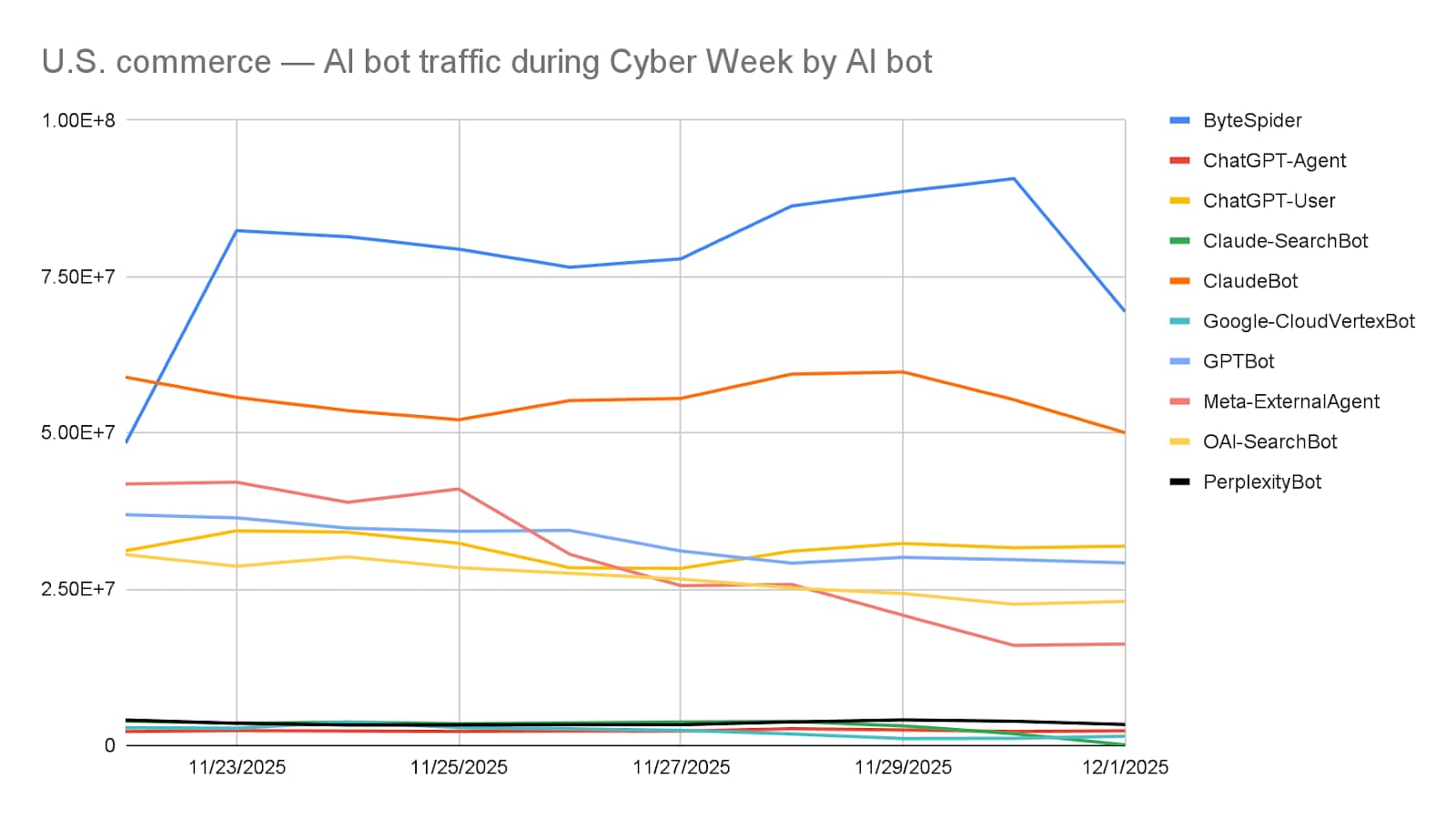 Fig. 7: U.S. commerce AI bot traffic during Cyber Week by top 10 AI bots
- ByteSpider showed a steady lift leading into Black Friday, holding its highest levels through the weekend before tapering off heading into Cyber Monday.
- ClaudeBot followed a similar trajectory, with a gradual rise toward the weekend and a soft decline afterward.
- ChatGPT-Agent and GPTBot remained relatively stable across the full 10-day window, with only minor fluctuations.
- Meta-ExternalAgent moved in the opposite direction, trending downward on Black Friday, and continued to drop into Cyber Monday.
Although several bots maintain predictable patterns, ByteSpider’s weekend peak highlights its growing role in how AI systems navigate high-demand retail moments, especially as more commerce workflows become agent-assisted.
The so what
Cyber Week used to be all about human shoppers and traditional bots, but this year, AI officially showed up to play.
For commerce teams, that means the game is changing. If AI is now part of Cyber Week, your storefront needs to be AI-friendly with a clean structure, clear signals, and content that agents can actually understand. The more optimized your site is, the more you’ll attract the right AI traffic — and the easier it becomes to guide how agents interact with your brand.
And as agentic commerce grows, retailers will need to enable it intentionally: by creating pathways for product and pricing data, setting rules for which bots get access, and shaping how AI moves through the shopping journey.
AI has entered Cyber Week, and it’s only going to play a bigger role in the future.
Learn more
To learn more about how Akamai can help your business manage AI bot traffic and enable agentic commerce, contact our team of experts.

Tags