Akamai Block Storage is high-performance, persistent storage for cloud instances and containers. It’s typically used for volumes containing system files, databases, and app code, as well as other workloads that need speed, durability, and flexibility.
Unlike ephemeral local storage or object storage accessed over HTTP APIs, block storage provides low-latency, network-attached volumes built to handle transactional workloads.
This blog post explains how Akamai Block Storage works, what it’s best used for, and how to get the most out of it as a key component of your data platform at the edge.
What is block storage?
Block storage (or block-level storage) is a way of storing data in fixed-size blocks that are efficiently distributed and arranged across the underlying storage medium.
Block storage volumes connect to compute instances over a network and are deployed within the same region to minimize latency. This method differs from both local instance storage, in which data is physically attached to a computer, and object storage, which stores data as URLs in a flat structure.
Akamai Block Storage is the high-performance storage service of Akamai Cloud. It’s used by Akamai Cloud compute resources (including instances, Docker, and Kubernetes) to provide storage for virtual machines, databases, app code, AI workloads, and other transactional data.
How block storage works
Block storage is delivered as volumes that you attach to cloud virtual machines. In container platforms, it’s accessed through orchestration layers such as Kubernetes CSI drivers (Figure 1).
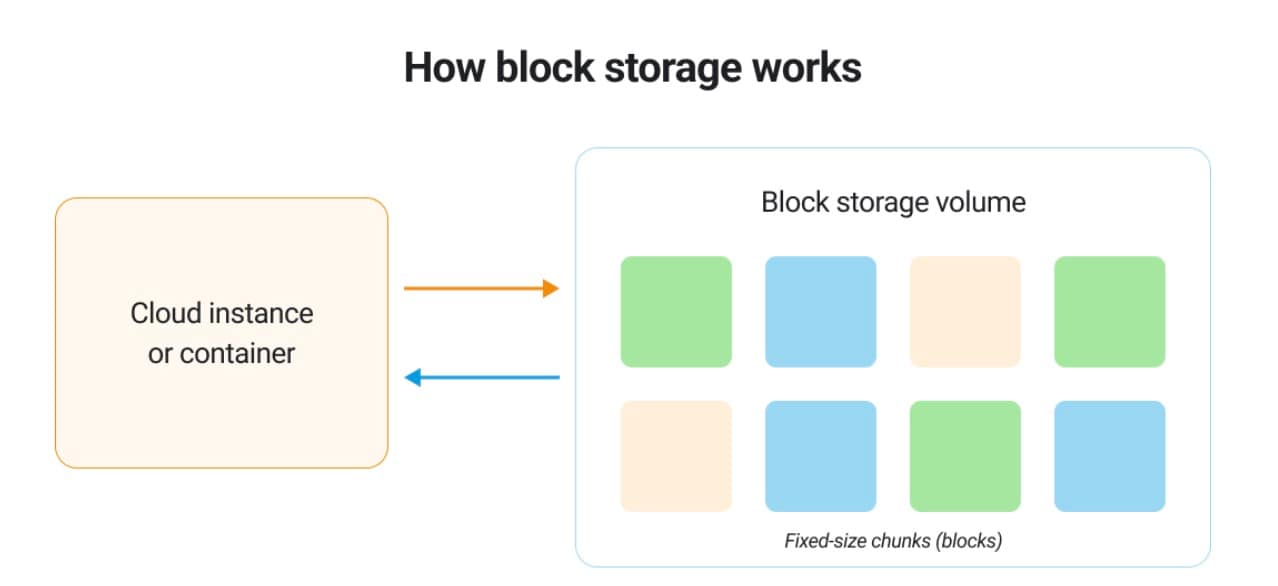 Fig. 1: A graphical overview of how block storage works
By dividing data into fixed-size blocks that can be read, written, or overwritten independently across multiple storage devices, block storage delivers a strong combination of performance, flexibility, fault tolerance, and scalability.
Because it offers low latency, distributes data across underlying devices, and operates independently from these devices, block storage has become a primary storage model for cloud platforms.
Akamai Block Storage is deployed alongside compute resources in globally distributed locations, bringing both your data platform and associated compute closer to your users and applications at the edge.
How to create and manage volumes with Akamai Block Storage
Interacting with Akamai Block Storage is straightforward. First, you create a volume of a fixed size between 10 GB and 16 TB (which can increase later, if needed), then attach it to your cloud compute resources.
Next, format it with a compatible file system such as ext4, NTFS, or XFS. You can treat it as a local drive and interact with it directly. Your workloads will run on it the same way they would on a physical machine.
Once your Akamai Block Storage volumes are configured, you can instantly create, resize, and delete them, as well as attach and detach them from different resources without rebooting them (this is known as “hot swapping”). This makes it easy to scale storage independently from compute instances. Data remains durable and persists even if a virtual machine is deleted.
Connecting Akamai Block Storage to your tools
You can connect Akamai Block Storage to Akamai Cloud instances using the web interface, CLI, or API, and to Docker or Kubernetes using the Docker Volume Driver or Block Storage CSI driver.
Akamai Block storage is also compatible with industry-standard tools to automate storage creation and management. Akamai provides an official Terraform provider for creating and managing Akamai Block Storage volumes using infrastructure as code (IaC). You can also deploy cloud resources programmatically in languages including JavaScript, Go, and Python with the Pulumi Akamai Cloud integration.
Achieve high performance and resilience wherever your users are
Akamai Cloud lets you build data platforms that are closer to your users than the centralized data centers provided by hyperscalers like AWS, Google, and Azure.
Both Akamai Block Storage and Akamai Object Storage, as well as associated compute resources like virtual machines and containers, can be deployed globally in available regions (Figure 2).
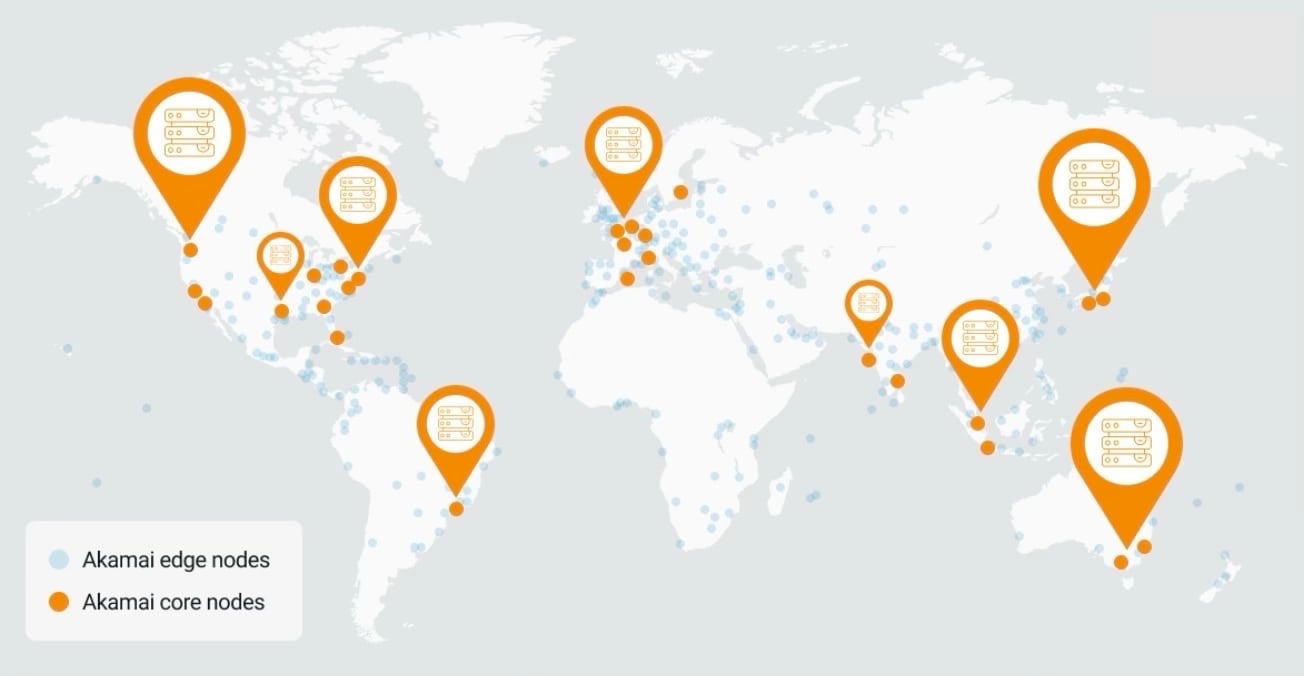 Fig. 2: A map of the Akamai global infrastructure core nodes that support block storage
The key benefits of Akamai Block Storage
Akamai Block Storage offers the best possible performance by running entirely on NVMe solid-state drive (SSD) storage devices, instead of using standard SSDs or hybrid solutions. This architecture is designed to deliver consistently high performance for demanding workloads.
Each volume provides sustained performance of 8,000 input/output operations per second (IOPs; measured using a standard 4K block size) with a throughput of 350 MB/s. When additional performance is needed, volumes are able to automatically burst to 12,000 IOPs at 525 MB/s for 60 seconds, supporting short periods of increased demand.
You also benefit from:
Data security: All volumes support full disk encryption to protect data at rest.
Data locality and synchronization: Volumes are highly durable and available across regions.
Integration with other Akamai Cloud tools: Build your data platform by combining block storage with cloud instances, Docker containers, Kubernetes orchestrations, and other resources — all located at the edge, closer to your users.
Data resiliency: Akamai Block Storage is designed for reliability. Block Storage volumes are configured to be durable and fault-tolerant using erasure coding that protects your data against disk and node failures without relying on single-device redundancy. Akamai also provides a 99.9% uptime guarantee for block storage.
Note: Volume performance may vary based on workload characteristics and instance type.
The top use cases for block storage
Block storage is often used for the following common use cases:
Persistent storage for instances: Attach block storage volumes to a cloud instance and use it for any general-purpose task, including boot disks and backups.
Persistent storage for containers: Add persistent storage to Docker or Kubernetes to maintain data outside of container or pod life cycles.
Database hosting: Confidently tackle intensive tasks like database hosting with high-performance NVMe technology, which Akamai Block Storage is built on.
Pairing cloud instances with Akamai Block Storage
Cloud instances paired with Akamai Block Storage provide a scalable, fully customizable environment for commercial apps or your own self-hosted software as a system (SaaS). They’re also widely used for media applications that require maximum performance while maintaining the ability to scale.
Trust Akamai Block Storage for specialized use cases
Akamai Block Storage is also used for emerging and specialized workflows that require fast, scalable storage alongside powerful cloud computing resources, including GPUs.
Bespoke data platforms at the edge: Build data infrastructure that spans the globe, tailored to your use case and optimized for performance and cost at the edge.
Data protection and compliance: Support data sovereignty and adherence to local data protection regulations through storage in globally distributed regions.
Persistent storage for distributed microservices-based apps: Use Akamai Block Storage to power your real-time apps, running custom code close to your users as part of a global infrastructure.
Combine block storage and object storage for greater impact
You can optimize your data platform even further by combining block and object storage for different purposes — using block storage for low-latency, high-IOPS workloads, and object storage for cost-efficient, scalable data.
For example, storing your database on high-performance Akamai Block Storage ensures that your app's core dynamic experience remains fast and responsive. At the same time, object storage can provide cost-efficient storage for static assets, which can then be deployed to a CDN — or even multiple CDNs stacked together — for broader reach and better performance.
Set up Akamai Block Storage in minutes
Akamai Block Storage is suitable for any use case that requires geographical reach and high performance at the edge.
Setup is simple, and it takes just a few clicks to create scalable block storage that integrates with virtual machine instances and container environments (Docker, Kubernetes) hosted in Akamai Cloud (Figure 3).
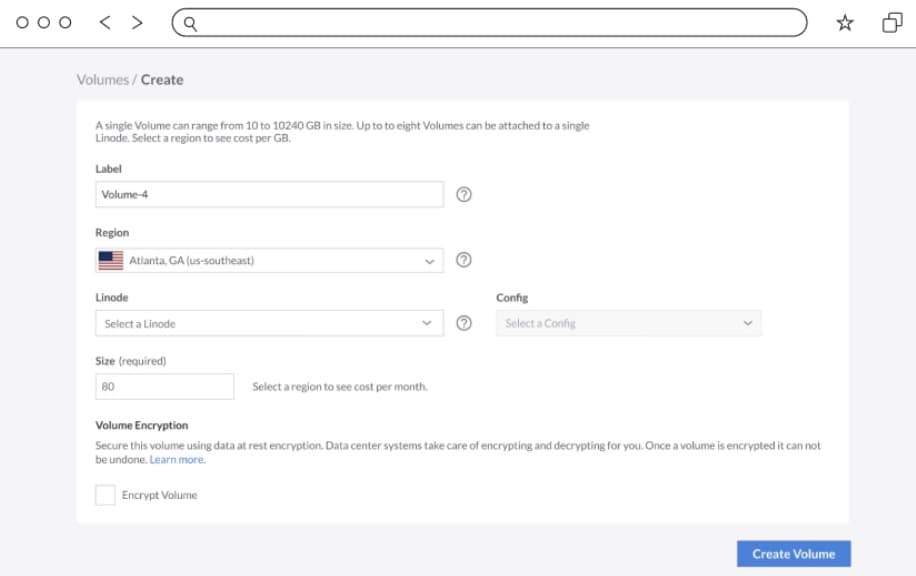 Fig. 3: Creating a block storage volume in the Akamai Cloud Manager
To create a block storage volume in Akamai Cloud:
Log in to Akamai Cloud Manager.
Click Volumes in the sidebar, then click the Create Volume button (Figure 4).
Enter a Label for the volume, select a Region, and set a volume Size in GB.
Optional: Select an existing instance to attach the new block storage volume to, and enable encryption.
- Click Create Volume.
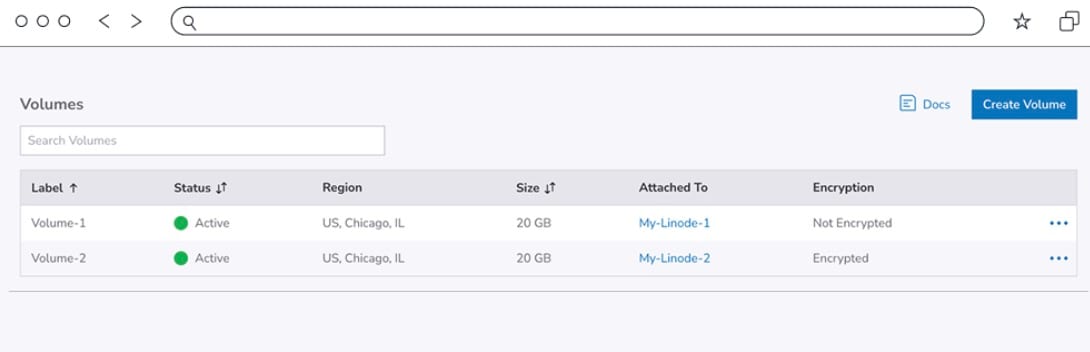 Fig. 4: Listing block storage volumes in the Akamai Cloud Manager
You can then attach the volume to your cloud compute instance with just a few clicks in Akamai Cloud Manager.
From there, you can finish configuring it by creating a file system and mounting it. Akamai Cloud Manager generates the commands for you to do this (Figure 5).
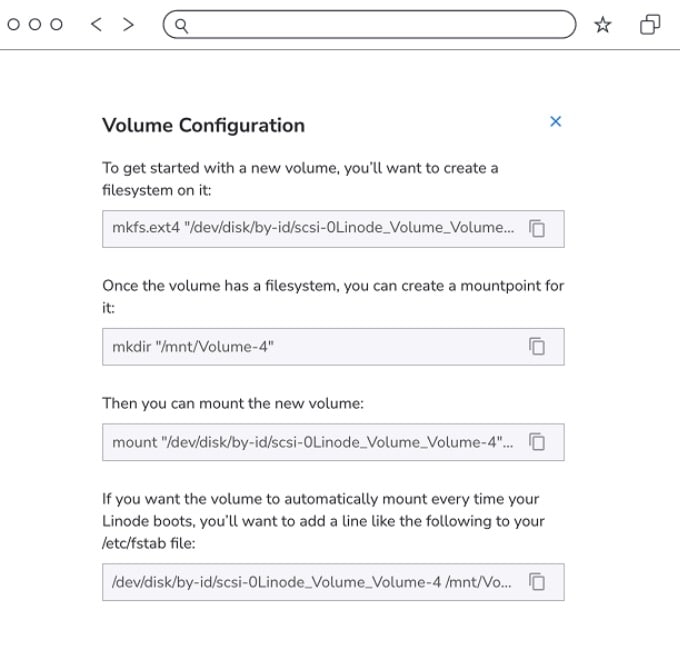 Fig. 5: Akamai Block Storage generates the Linux commands required to create a file system and mount the new volume in an instance
If you need to use the data on your Akamai Block Storage volume on another instance, detaching and re-attaching also only takes a few clicks.
Build faster, improve performance, and reach users everywhere
Akamai Block Storage gives you the foundation to power apps, databases, and workloads that need speed, reliability, and global reach — so you can scale without limits.
Get started with Akamai Cloud and begin building a data platform that’s scalable, resilient, and cost-effective.



Tags