When you need to store or distribute large volumes of data with high availability and scalable performance while keeping costs in check, object storage is often the right choice.
This blog post explains how Akamai Object Storage works, what it's best used for, and why it's becoming the new standard for data platforms, artificial intelligence (AI), and modern applications that run at the edge.
What is object storage?
Object storage is a popular data storage technology known for its cost-effectiveness and scalability. Instead of organizing data into files or folders, it stores data as discrete units called objects. Each object contains the data itself, its metadata, and a unique identifier.
Objects live in a flat address space and are accessed via an API or URL. Unlike traditional filesystems, which organize data in hierarchical directories and may store metadata separately, object storage keeps everything bundled together (Figure 1).
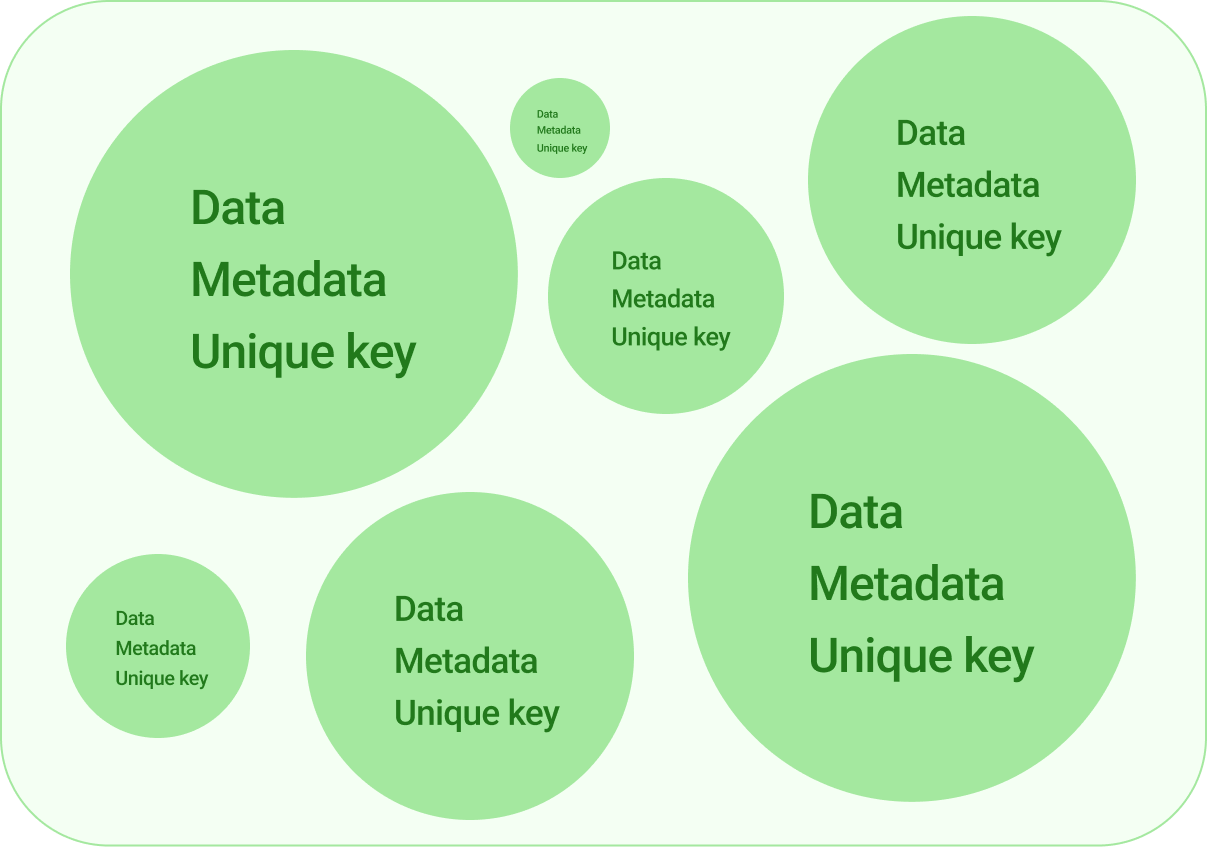 Fig. 1: Standalone objects in an object storage bucket
The architecture of object storage makes it highly scalable and ideal for unstructured data. It can also be configured to optimize for reliability. These factors make object storage attractive for cloud platforms that need to meet capacity demands and for their customers who want low-cost storage.
Akamai Object Storage builds on this model to help organizations cut storage costs while maintaining high performance and low latency. It provides a reliable data foundation for applications that need to store and access high volumes of data.
How object storage works (and why it scales so easily)
You usually interact with object storage through an API or web interface. Cloud platforms like Akamai Cloud, AWS, and Azure provide graphical web interfaces for creating and managing buckets (distinct storage locations) and uploading files. They also provide interfaces that allow you to manage access keys and permissions (Figure 2).
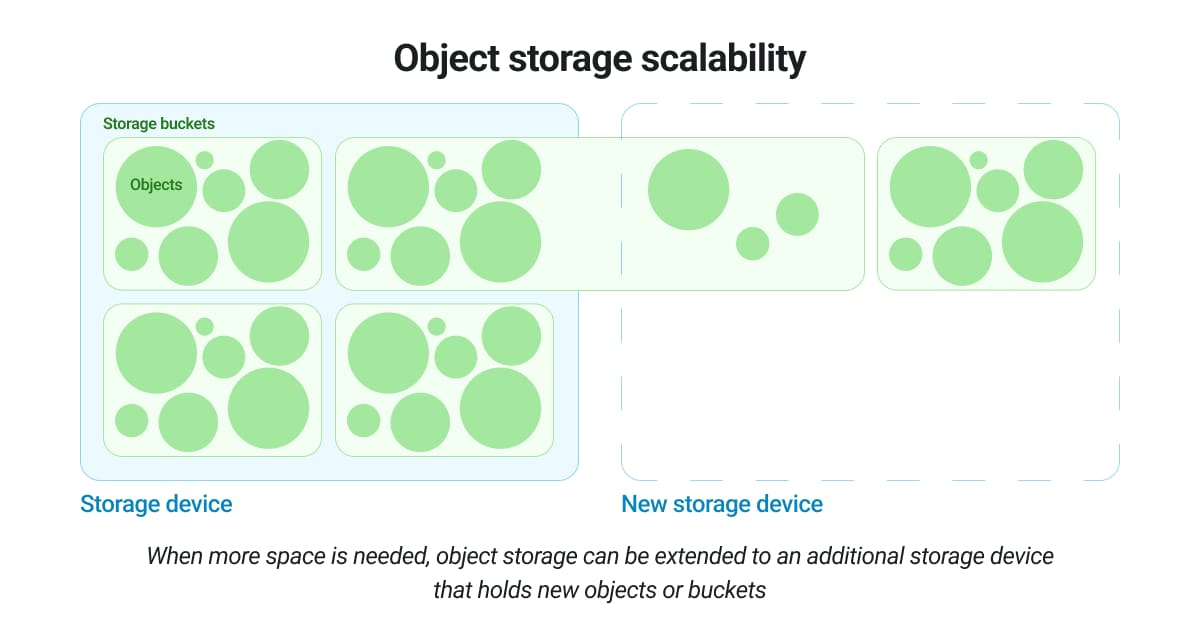 Fig. 2: How object storage works for scalability
Each object in object storage can be retrieved by using a unique key. This means that objects can be spread across multiple storage devices efficiently. When more capacity is required, the object storage platform simply adds more storage behind the scenes, without requiring you to resize or reformat existing data.
Since an object's unique key can be any string, keys often appear as a path with slashes that are interpreted as directory separators, so they can be organized and displayed as if they were files in folders — but that doesn't make it part of an overall hierarchy. This approach has performance implications if your data is structured, but it’s perfect for unstructured data like media assets, log files, and archives.
Why object storage has become the standard for developers
Most developers interact with object storage through an API or command-line interface (CLI) to programmatically store, access, or distribute files. Amazon S3 popularized object storage, so many providers try to keep their object storage implementations compatible with S3, allowing users to easily switch to their platform without rewriting their code. This has made S3 compatibility the de facto standard for interacting with object storage.
Akamai Object Storage provides its own native web interfaces and CLI tools for creating buckets, uploading and managing files, and granting access. It also has an open architecture that supports S3-compatible software and popular developer tools, including:
S3cmd, an S3-compatible command line tool used for bucket and object management, as well as tasks like directory syncing
Cyberduck, a cloud storage browser for macOS and Windows, and a favorite among developers who prefer a GUI for interacting with S3 storage
Existing S3-compatible SDKs and libraries for popular languages and frameworks like Python, JavaScript, Node.js, and Laravel
Despite the ubiquity of S3-compatible tools, vendor lock-in is still a concern. Google Cloud offers limited S3 support, while Azure doesn’t have any S3 compatibility.
Because object storage can be accessed simultaneously via its API from cloud instances, containers, serverless functions, and even end-user devices, it’s highly flexible. This also means that virtual machines are not required to mount and read data from object storage. Performance improvements have made object storage suitable for applications beyond storing continuously growing datasets.
The popularity of object storage is also driven by its high durability: Akamai Object Storage provides 99.999999999% (or "eleven nines'') durability using erasure coding that can regenerate missing data from parity blocks, making it a highly reliable data store for data platforms.
The key benefits of Akamai Object Storage
Hyperscalers like AWS, Azure, and Google Cloud focus on operating huge, centralized data centers to provide almost limitless compute and storage resources. Akamai Cloud leverages a large number of global points of presence, many in regions underserved by the hyperscalers (Figure 3). This allows customers to build applications on the world's most distributed compute platform with access to S3-compatible storage when and where it is needed.
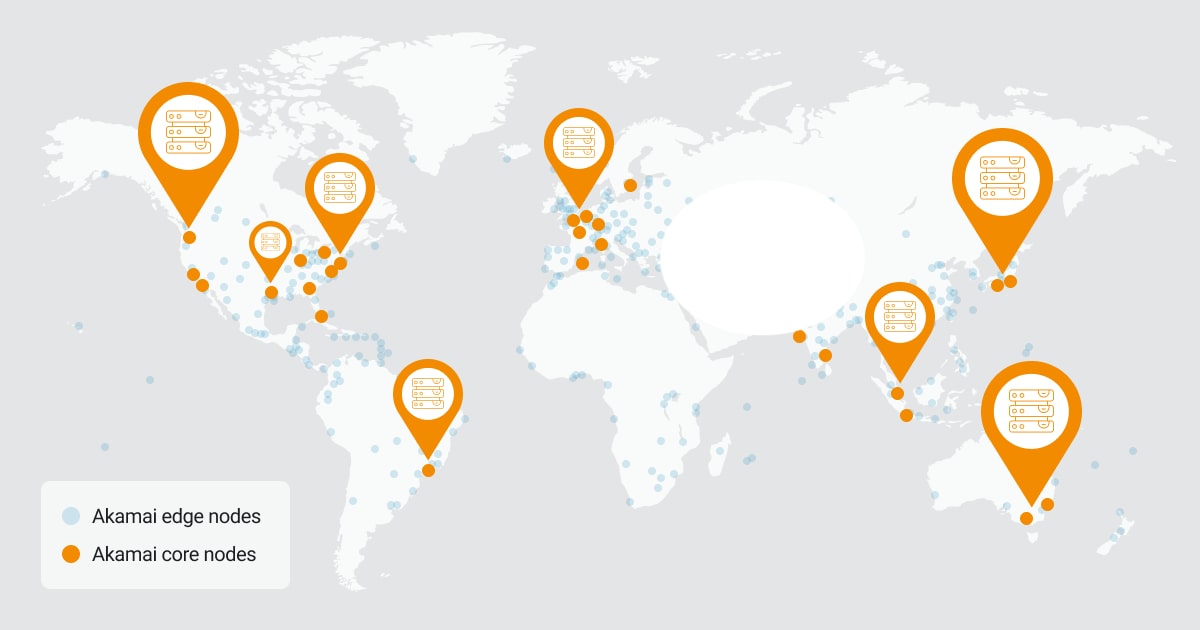 Fig. 3: A map of the Akamai global infrastructure core nodes that support object storage
When used for consumer-oriented applications, like software downloads, game assets, or media streaming, object storage can serve as the origin for a content delivery network (CDN). Akamai Cloud handles CDN distribution from object storage with origin offloading and content caching, streamlining global content delivery.
Akamai Object Storage also provides:
Data security: Data can be configured to be encrypted at rest and in flight, and buckets and objects are accessed through secure URLs managed with bucket policies and access keys.
Data locality and synchronization: Buckets are isolated to the region created, with core data centers distributed globally. Versioning, strong read-after-write consistency, and object lock enables reliable data synchronization.
Integration with other Akamai Cloud products: Build your data platform by combining object storage with serverless functions, cloudlets, and other resources — all located at the edge, as close to your users as possible.
Performance and scalability: High-performance, low-latency object storage grows with your workloads.
Predictable pricing and lower egress: Control your spending with Akamai Object Storage through a pricing model that keeps costs transparent and predictable.
Akamai Object Storage can handle petabytes of data and billions of files, making it adaptable for everything from handling small data projects to delivering petabytes of streaming media to more than 50 countries. If you require the highest levels of performance and reliability (for example, streaming the big final of a global sports match or maintaining uptime during a highly anticipated concert ticket release), you can stack multiple storage providers and CDNs together.
The top use cases for Akamai Object Storage
Object storage powers foundational workloads that require scalable, durable, and cost-efficient data storage across applications and environments. Common use cases include:
Backup and archive storage: Store backups in redundant object storage that never runs out of space and can be made immutable using Object Lock.
Content distribution: Distribute website assets, user-generated content, and app and game patches at scale.
Observability and analytics storage: Store logs, metrics, and analytics data reliably at scale.
ML/AI data storage: Store inference data in scalable storage that can often be accessed and processed directly.
Akamai's unique advantages also lend it to more advanced and specialized use cases, such as:
Data protection and compliance: Store data in globally distributed regions to support data sovereignty and meet local regulatory requirements.
Distributed data for modern microservices-based apps: Use object storage as the origin for content delivery with Akamai CDN and integrate it with databases and microservices.
Akamai AI Inference Cloud platform: Turn large language models (LLMs) into real-time apps that reason and respond, powered by object storage built to scale with your workload.
Publishing optimized content for video on demand (VOD) streaming: Store original and optimized media files, and deliver VOD content through Adaptive Media Delivery powered by the Akamai CDN.
Beyond individual use cases, Akamai Object Storage can also act as a persistent data store for Kubernetes and serverless workers in data platforms at the edge.
You can combine different types of Akamai cloud storage to take advantage of each. For example, an application may require a high-performance transactional database while generating large volumes of log data that need long-term storage. In that case, you might host the database on a cloud instance with high-performance Akamai Block Storage attached and store ever-growing logs in Akamai Object Storage.
Set up Akamai Object Storage and connect your app in minutes
Akamai Cloud delivers scalable, fully S3-compatible object storage that integrates seamlessly with your existing applications. A streamlined web interface makes it easy to create buckets, generate access keys, and manage permissions without clicking between configuration screens or navigating complex access policies.
Setting up Akamai Object Storage takes only a few minutes:
Log in to the Akamai Cloud Manager and click Object Storage in the sidebar.
- Click Create Bucket and enter a bucket name, region, and endpoint type (E3 is the best-performing endpoint), then click Create Bucket again to finish (Figure 4).
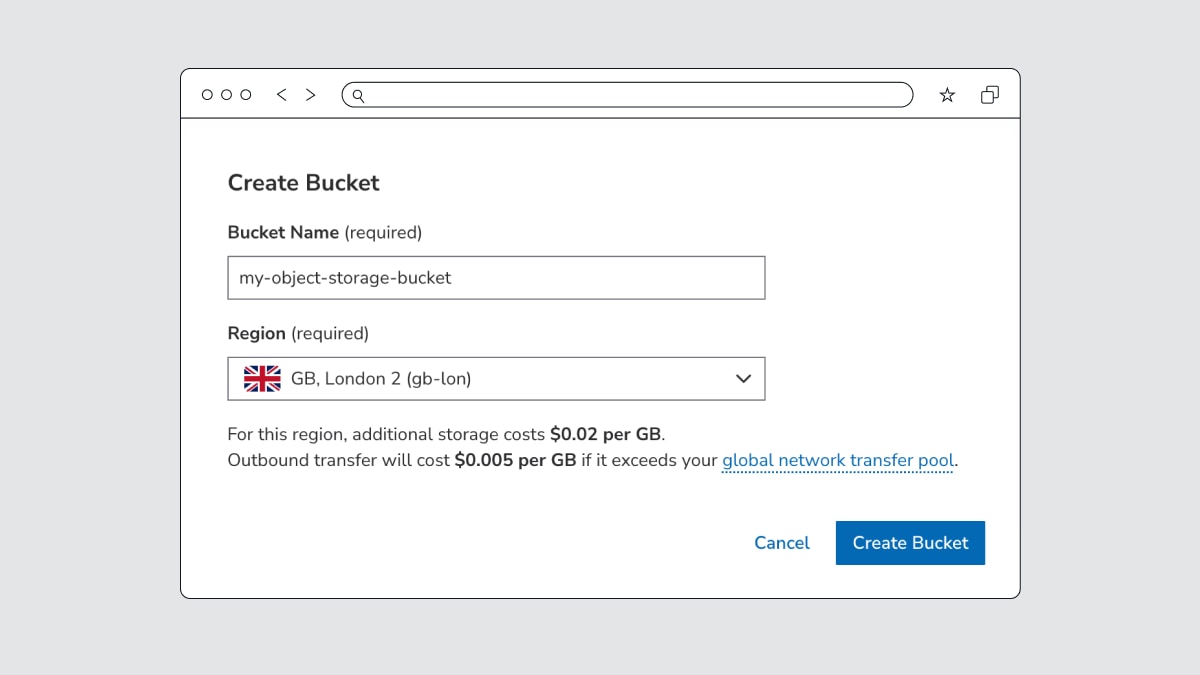 Fig. 4: An object storage bucket being created in Akamai Cloud
To create an access key for your new bucket:
Click the Access Keys tab, then click Create Key.
- Enter a label, choose the region your bucket is in, and then click Create Access Key (Figure 5).
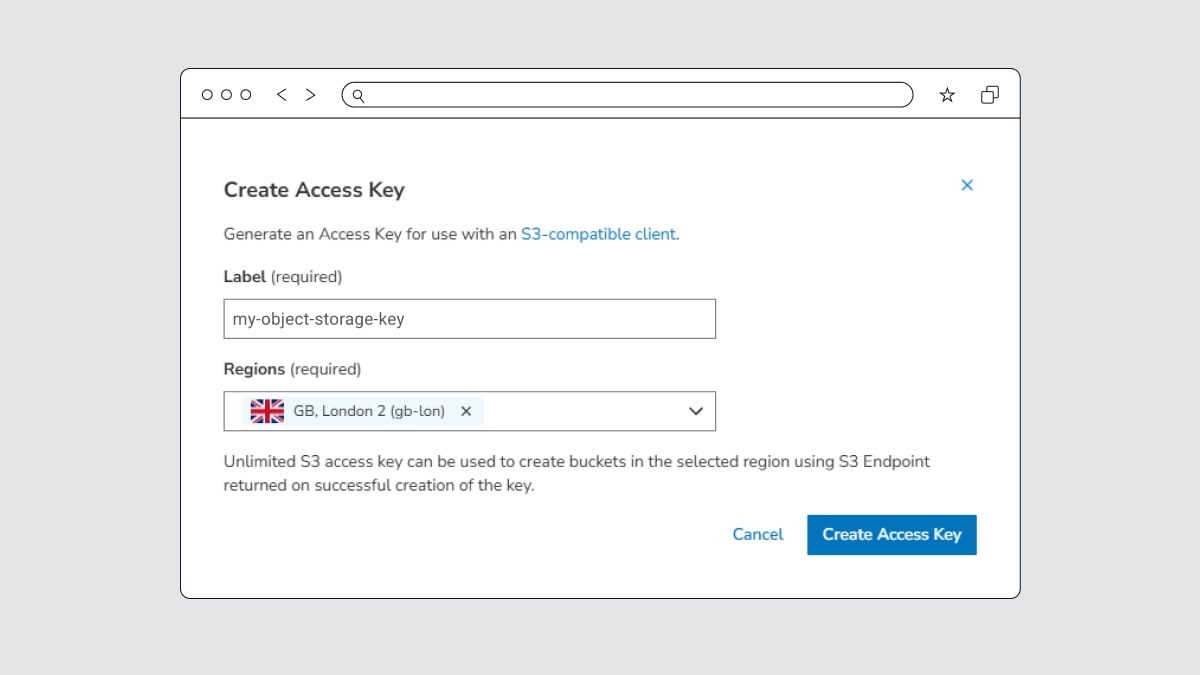 Fig. 5: An access key being created for an Akamai Object Storage bucket in Akamai Cloud
You don't need to create an instance; you can just connect any S3-compatible tool directly to Akamai Object Storage using your access keys. Permissions can be adjusted to restrict keys to certain buckets. Once you have a bucket and a key, you're now ready to move your data.
Akamai Object Storage is great for storing hot data for analytics workloads like Apache Iceberg or Quickwit, future-proofing media workflows, and staging data to the world's most distributed CDN for global distribution.
If you're looking for a multicloud flexibility, Akamai Object Storage pairs with Amazon S3, Microsoft Azure Blob Storage, and Google Cloud Storage, delivering global edge reach and additional data resilience.
Build faster, scale smarter, and deliver globally
Power your data platforms, AI workloads, and media delivery with object storage that’s reliable, scalable, and cost-efficient.
Get started with Akamai Cloud and begin building your data platform in minutes.



Tags