Key takeaways
Modern malware shapes a complex domain generation algorithm (DGA) threat landscape by using advanced DGAs that mimic natural language to successfully bypass traditional, static network defense mechanisms.
A hybrid deep learning framework combines a unique CNN-BiLSTM-Attention architecture to extract local structural patterns and model sequential context, effectively capturing complex dictionary-based domains.
To ensure high operational accuracy, the model was validated through extensive benchmark evaluation, minimizing false-positive rates to effectively reduce alert fatigue for enterprise security teams.
The system maintains proactive continuous learning via built-in capabilities and adaptive fine-tuning strategies, ensuring long-term detection efficacy as malware evasion tactics evolve over time.
Why DGA detection matters in the age of AI
As organizations increasingly adopt AI-powered applications, autonomous agents, and API-driven services, the attack surface that’s available to attackers continues to expand. Modern malware frequently relies on domain generation algorithms (DGAs) to create large numbers of dynamically generated domains that help maintain resilient command and control (C2) communications while evading traditional blocklists and signature-based defenses.
The challenge has become even more complex as many modern DGAs mimic legitimate domain structures by combining dictionary words and natural language patterns, making malicious domains appear human-readable and difficult to distinguish from legitimate traffic.
To address this challenge, we developed a hybrid framework that combines Convolutional Neural Networks, Bidirectional Long Short-Term Memory networks, and an Attention Mechanism (CNN-BiLSTM-Attention) for real-time DGA detection. The architecture integrates local pattern extraction, sequential context modeling, and attention-based prioritization to identify both randomly generated and dictionary-based DGA domains.
The result is a scalable detection approach designed for modern, cloud native, and AI-driven environments in which early identification of malicious domains is critical.
Understanding the DNS vulnerability: An introduction
The Domain Name System (DNS) is a foundational component of the internet that translates human-readable domain names into machine-readable IP addresses. Because nearly every online service depends on DNS, it has become a frequent target for cyberattacks.
Among the most persistent threats are DGAs. These algorithms generate large numbers of domains that allow malware and botnets to maintain lC2 communications without relying on a fixed infrastructure.
This constant domain rotation makes traditional defenses such as blocklists and static signatures less effective, creating a need for more adaptive detection approaches.
Historically, DGA detection relied on manually engineered features such as character entropy, vowel-to-consonant ratios, and query behavior patterns. Although effective against early DGAs, these techniques struggle against newer variants.
Modern “wordlist-based” DGAs generate domains by combining legitimate dictionary words. As a result, many malicious domains appear natural and human-readable, making them significantly more difficult to distinguish from legitimate traffic.
This shift has accelerated the adoption of machine learning and deep learning approaches that can learn complex patterns directly from domain data instead of depending on manually engineered rules.
To address these challenges, we developed a hybrid architecture that combines CNN, BiLSTM, and Attention mechanisms within a unified framework.
The model uses character-level embeddings and convolutional feature extraction to identify subtle morphological patterns that are often missed by purely sequential approaches. The attention layer further improves detection by emphasizing the most informative portions of a domain string.
Beyond model accuracy, we focused on long-term operational effectiveness. An adaptive maintenance strategy enables the framework to update itself as DGA techniques evolve, helping maintain detection performance over time.
Developing the framework: Our methodology
To achieve scalable and real-time detection, our process is divided into six distinct steps:
Data collection and labeling: Aggregating balanced training data from trusted threat intelligence feeds and live enterprise telemetry
Preprocessing and feature engineering: Structuring raw domain strings into descriptive character pairs to reveal hidden morphological traits
Model architecture design: Routing structural and sequential text properties through a multilayered CNN-BiLSTM-Attention framework
Model training: Optimizing network weights via binary cross-entropy loss and the Adam optimizer while leveraging early stopping to prevent overfitting
Evaluation and validation: Benchmarking our results using multifold validation setups to ensure minimal false-alarm metrics
Deployment and continuous learning: Routing live traffic through high-throughput inference pipelines while tracking cosine similarity to trigger automated fine-tuning or full retraining when data drift occurs
Figure 1 illustrates the overall DGA detection workflow, from data preparation and feature engineering to model training and adaptive deployment.
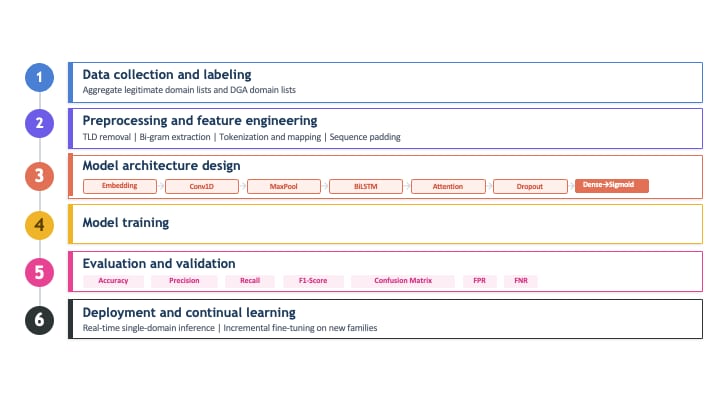 Fig. 1: Architecture of the DGA detection pipeline
Data collection and labeling
To build a representative training dataset, we combined trusted public sources with internally collected DNS traffic data.
The final dataset included approximately 20 million labeled domains, including:
10 million legitimate domains
10 million DGA-generated domains
Data sources included:
Alexa and Majestic Top 1M rankings for legitimate domains
DGArchive and other threat intelligence feeds for DGA samples
Internal DNS telemetry, providing broad geographic and linguistic coverage
This balanced dataset enabled evaluation against both randomly generated and dictionary-based DGA families.
Preprocessing and feature engineering
Rather than analyzing individual characters in isolation, the framework represents domains as character bi-grams, allowing the model to capture local structural patterns more effectively.
The preprocessing pipeline includes:
- Removing top-level domains (TLDs) such as .com and .net
- Converting all domain strings to lowercase
- Extracting overlapping character bi-grams
- Mapping bi-grams to a vocabulary of 1,314 tokens
- Padding sequences to a fixed length of 100 tokens
This representation helps capture phonetic and structural relationships that frequently appear in modern wordlist-based DGA domains.
Model architecture design
The proposed CNN–BiLSTM–Attention architecture is designed to capture both local domain patterns and long-range sequential relationships while emphasizing the most informative portions of each domain string.
The workflow consists of four stages:
1. Embedding layer: Character bi-grams are converted into dense vector representations, allowing the model to learn relationships between frequently occurring character combinations.
2. CNN feature extraction: A one-dimensional CNN identifies local n-gram patterns and morphological structures commonly found in DGA domains.
3. BiLSTM sequence modeling: A BiLSTM analyzes domain sequences in both directions, helping capture broader contextual relationships that may not be visible through convolution alone.
4. Attention-based prioritization: A trainable attention layer assigns greater importance to highly discriminative character segments while reducing the influence of less informative patterns.
The resulting representation is passed through fully connected classification layers to generate a binary prediction that indicates whether a domain is legitimate or algorithmically generated.
Model training
The model was implemented using a stratified split: 70% for training, 15% for validation, and 15% for held-out testing. Optimization utilized the Adam optimizer with a binary cross-entropy loss function. To prevent overfitting, we employed early stopping with a patience of three epochs, monitoring validation loss to restore the most effective weights.
Recognizing that real-world DNS streams often exhibit varying costs for false positives, we also introduced a threshold optimization phase. Here, an exhaustive search between 0.1 and 0.9 was performed to identify the optimal classification threshold — maximizing overall accuracy while strictly maintaining a low false positive rate (FPR).
Evaluation and validation
To assess the effectiveness of the proposed framework, we evaluated the model using a stratified dataset split consisting of 80% training data and 20% validation data based on a five-fold cross-validation strategy.
Performance was measured via several metrics commonly used in cybersecurity classification tasks, including accuracy, precision, recall, F1-score, false-positive rate, and false-negative rate (Table 1). These metrics provide a balanced view of detection quality while accounting for operational considerations, such as alert fatigue and missed threats.
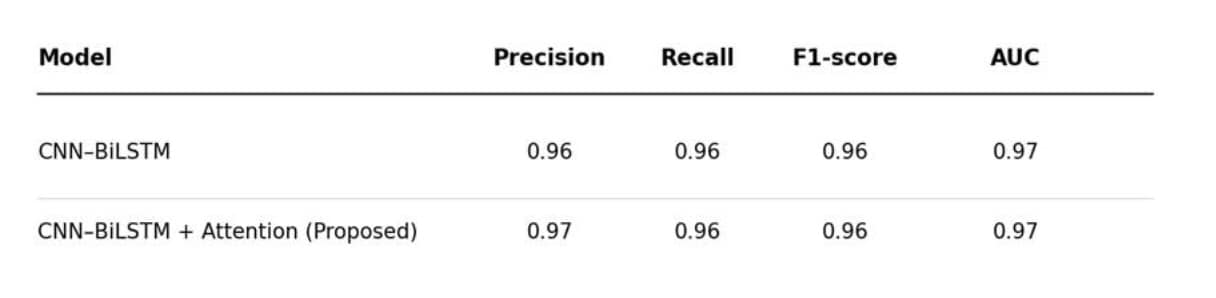 Table 1: Performance comparison of baseline and proposed models
The proposed CNN–BiLSTM–Attention architecture was benchmarked against alternative deep learning models across multiple dataset sizes to evaluate both detection performance and scalability. In addition to overall classification accuracy, we analyzed error rates to better understand the framework’s effectiveness in real-world DNS monitoring environments.
Deployment and continuous learning
DGA techniques evolve continuously, making long-term model maintenance essential.
To address concept drift, the framework monitors similarity between newly observed DNS traffic and the original training distribution.
Depending on the detected level of change, the system can:
Perform lightweight fine-tuning by updating only classification layers
Trigger full model retraining when significant distribution shifts are detected
This adaptive strategy helps maintain detection effectiveness as new DGA families and malware campaigns emerge.
Benchmarking efficacy: Evaluation and performance analysis
We compared the proposed CNN–BiLSTM–Attention architecture with alternative neural network architectures to assess detection accuracy, robustness, and scalability.
The results consistently showed that the CNN–BiLSTM–Attention architecture outperformed baseline models, delivering stronger detection accuracy while maintaining low false-positive and false-negative rates (Figure 2). These findings highlight the value of combining local feature extraction, sequential context modeling, and attention-based prioritization within a unified detection pipeline.
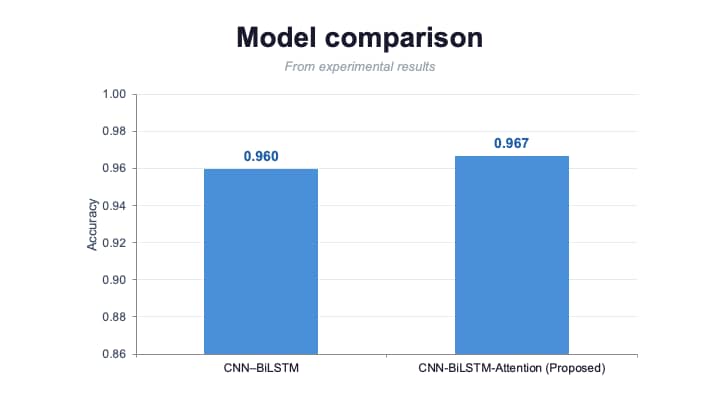 Fig. 2: Comparison of model accuracy across baseline and deep learning architectures
In addition to overall accuracy, we evaluated operational error metrics that are particularly important in security environments (Table 2). False positives can generate unnecessary investigations, while false negatives may allow malicious infrastructure to remain undetected.
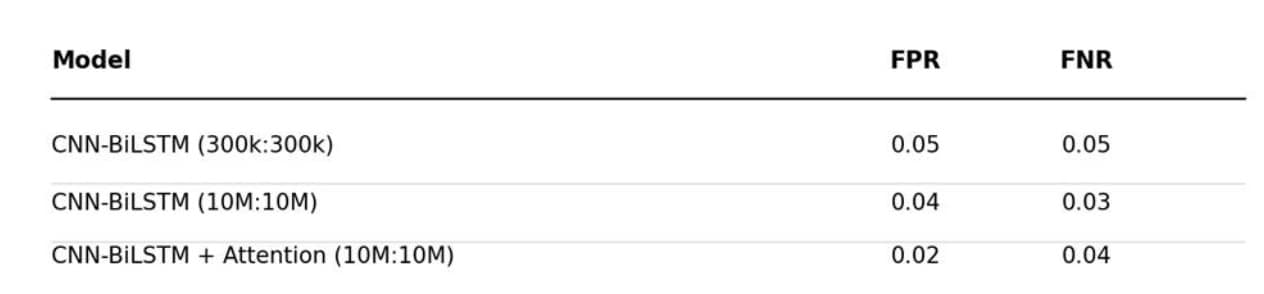 Table 2: False positive rate (FPR) and false negative rate (FNR) for all models
The attention-enhanced model achieved the lowest false-positive rate among all evaluated approaches, reducing alert fatigue while maintaining strong detection performance.
The framework also demonstrated strong scalability when trained on larger datasets, supporting deployment in high-volume DNS environments (Figure 3). Together, these results validate the model’s effectiveness for real-world DGA detection at enterprise scale.
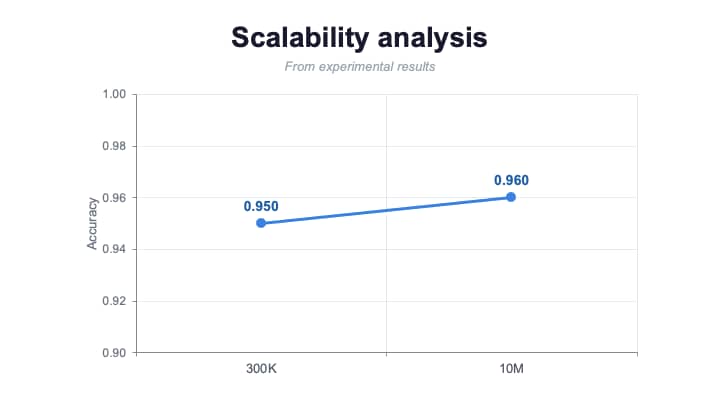 Fig. 3: Scalability analysis of the proposed framework across medium- and large-scale datasets.
Mitigating concept drift: Continual learning and fine-tuning
DGA techniques evolve continuously, making static detection models increasingly less effective over time. To maintain long-term performance, the framework incorporates adaptive update strategies that respond to changing domain-generation behaviors.
Depending on the level of observed drift, the system can apply one of two update approaches:
Fine-tuning updates only the classification layers while preserving previously learned feature representations. This approach is computationally efficient and well suited for incremental behavioral changes.
Continual learning retrains the model using a combination of historical and newly observed samples. This enables adaptation to previously unseen DGA families while reducing the risk of forgetting earlier patterns.
Together, these strategies help maintain detection accuracy as malware operators introduce new domain-generation techniques and evasion tactics.
Looking ahead: Conclusion and future directions
As DGA techniques become more sophisticated, security teams need detection systems that can adapt as quickly as the threats they face. In this blog post, we introduced a hybrid CNN–BiLSTM–Attention architecture designed to identify algorithmically generated domains in real time while maintaining strong performance across diverse DGA families.
Beyond detection accuracy, the framework was built with operational resilience in mind. By combining adaptive retraining strategies with continuous monitoring of data drift, the system can remain effective as malware operators evolve their domain-generation techniques.
From a practical perspective, the approach balances accuracy, scalability, and deployment readiness, making it well suited for large-scale DNS security environments and modern AI-driven application infrastructures.





Tags