



Decentralized compute removes the physical distance between your models and your users, so your apps deliver faster responses.
AI is moving to the edge. Akamai is already there.
Build, deploy, and scale AI applications faster on our open, developer-friendly platform, with predictable pricing and integrated security.
The State of AI Inference: 50% of AI fails at peak load
Discover the data behind the latency wall and how organizations use distributed compute to scale production AI ROI.
Next steps
Frequently Asked Questions (FAQ)
Frequently Asked Questions (FAQ)
Actually, it usually lowers them. Centralized clouds often charge heavy egress fees to move data out of their ecosystem. Edge architecture minimizes these costs compared to legacy cloud providers.
Yes. Akamai provides the flexibility to run any model size, from fine-tuning specialized versions to building dedicated custom clusters designed for large-scale workloads.
Security is baked into our distributed fabric. Because inference happens closer to the user, sensitive data often doesn’t need to travel across the public internet to a distant data center. We layer this with AI-native DDoS protection and Zero Trust security to protect both your models and your users.
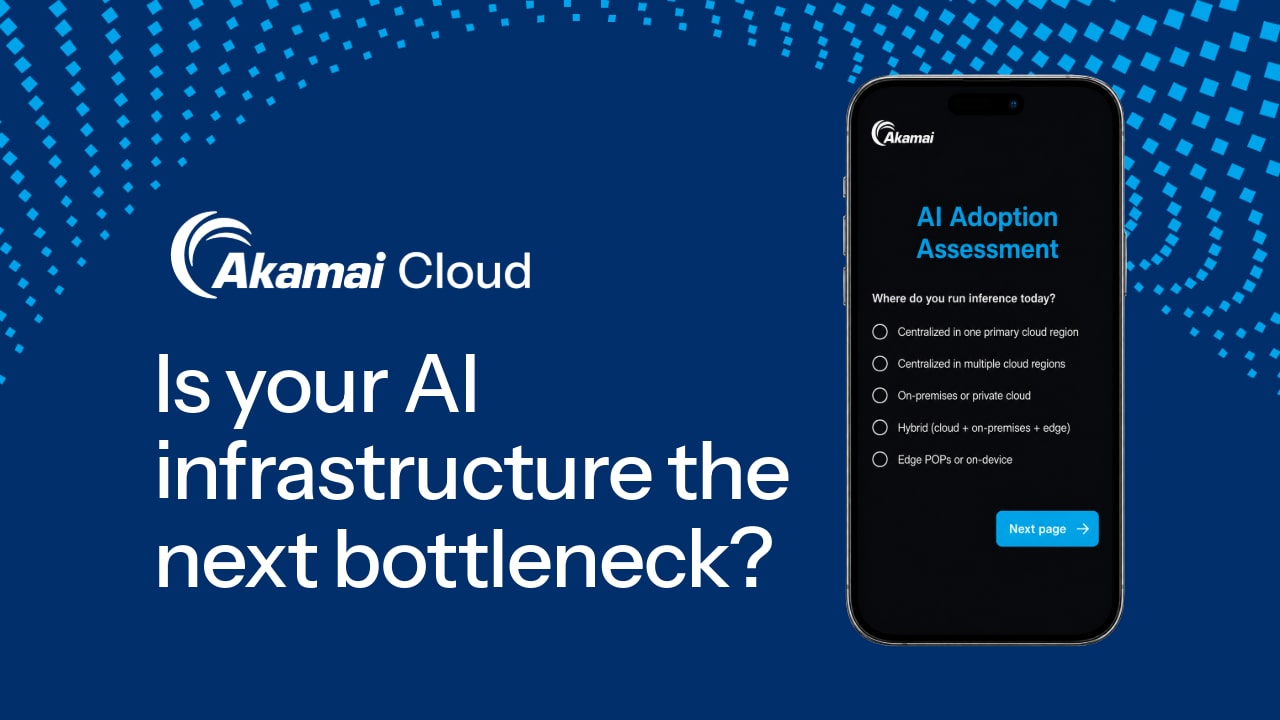
Centralized clouds aren’t ideal for real-time AI. Innovation is vital to move GPU power close to users, enabling millisecond responses and ensuring that high-performance scaling remains fast, secure, and cost-effective.
Let’s Talk
Talk to architects and engineers who have done this before. We’ll help you run your AI in production.