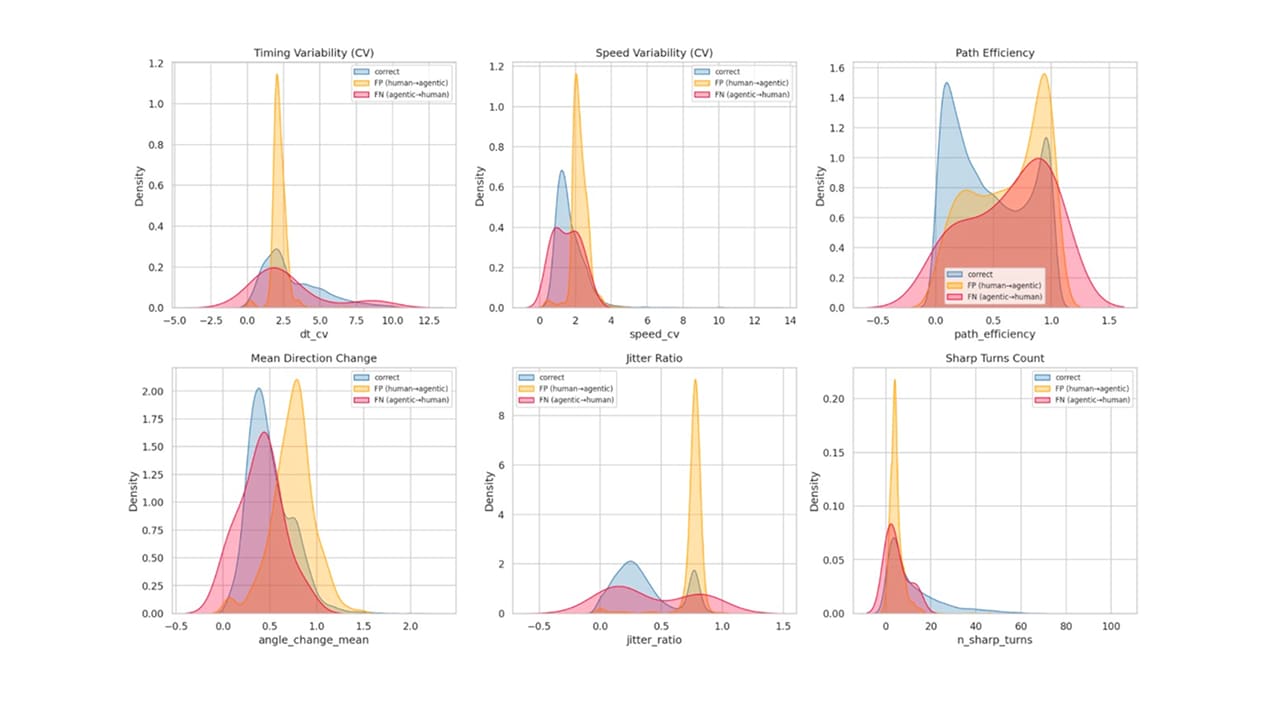
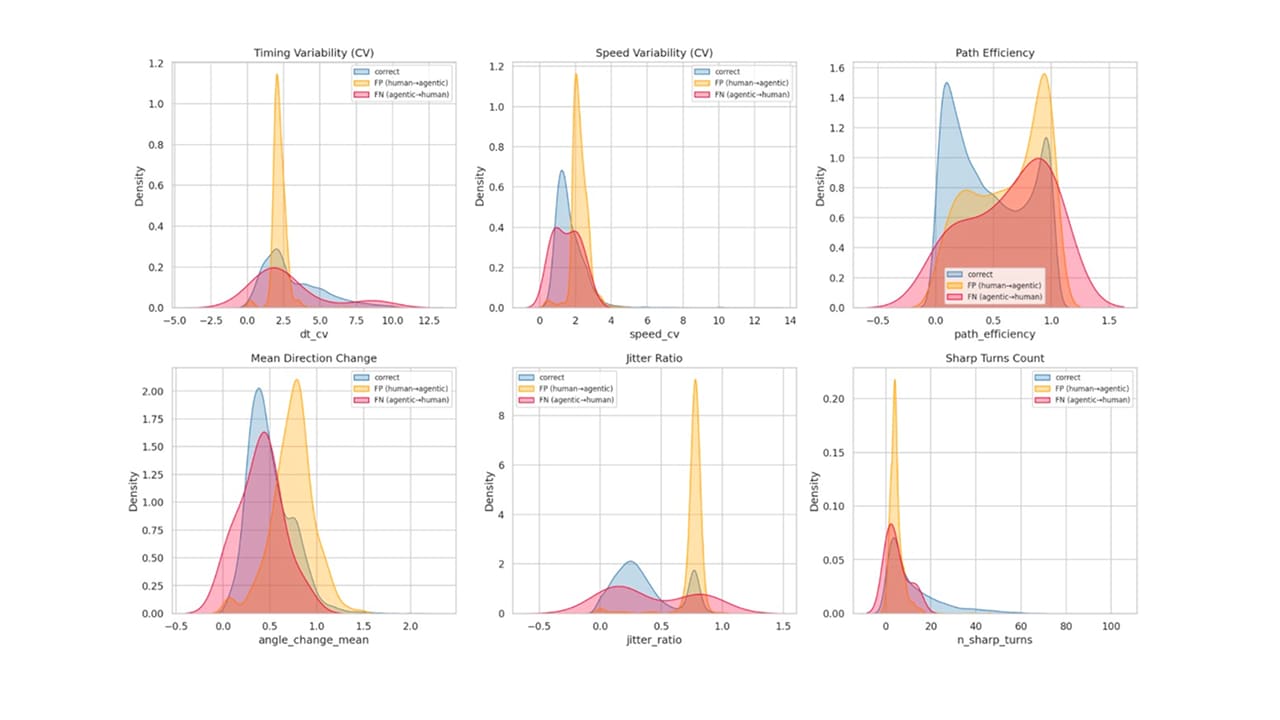
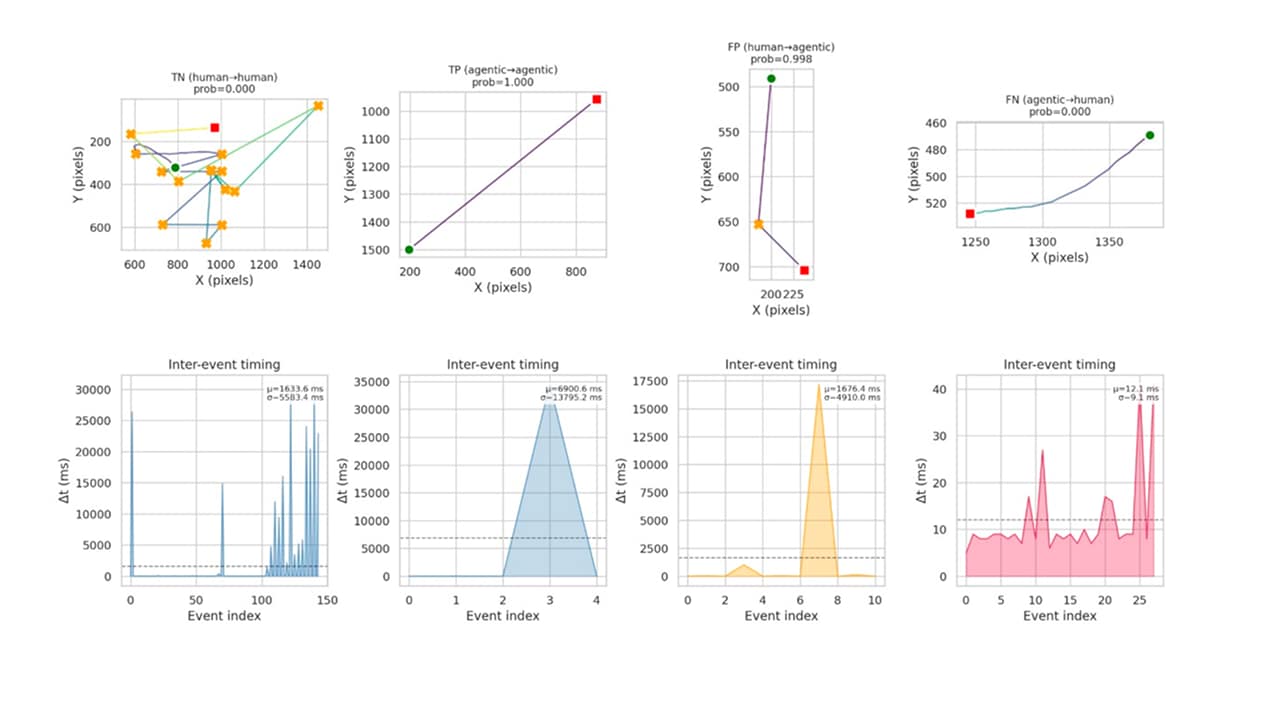
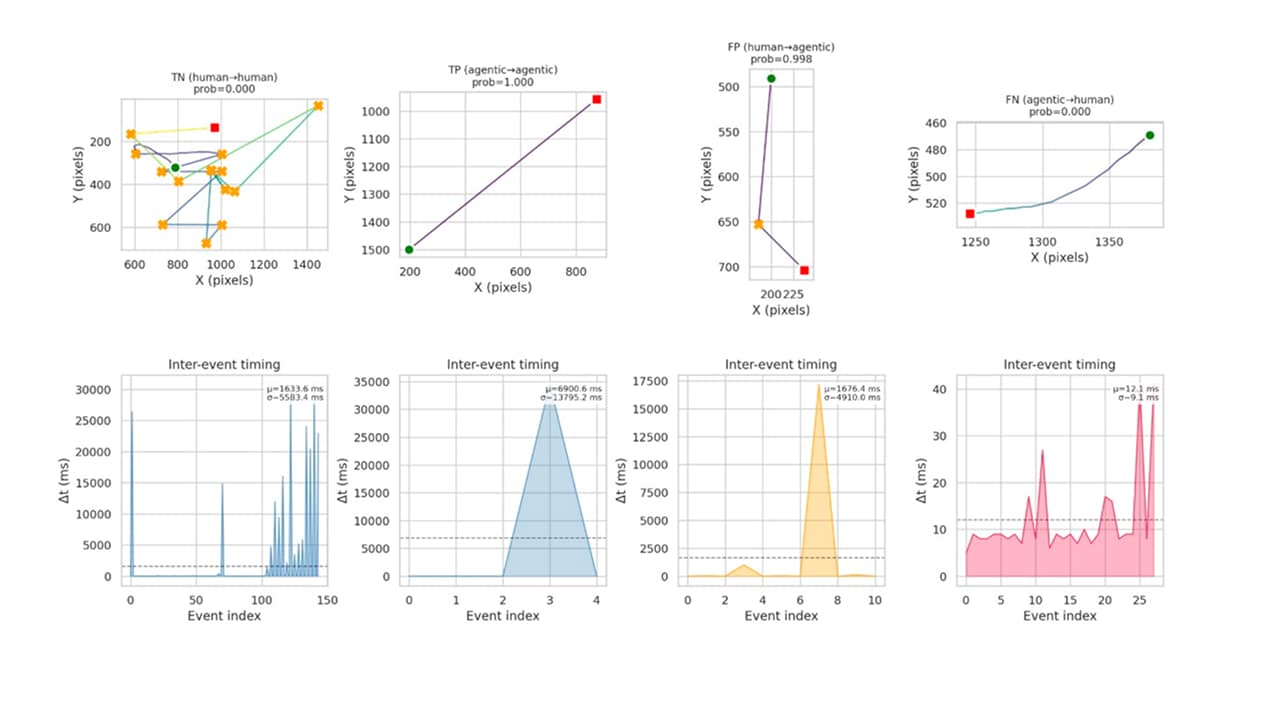
An agent session, however, shows sparse, direct paths: appear at point A, move to point B, clicking, done. Interevent timing for agentic sessions often shows gaps of 2,000 ms to 3,000 ms between any mouse activity, reflecting the agent’s “thinking” between actions.
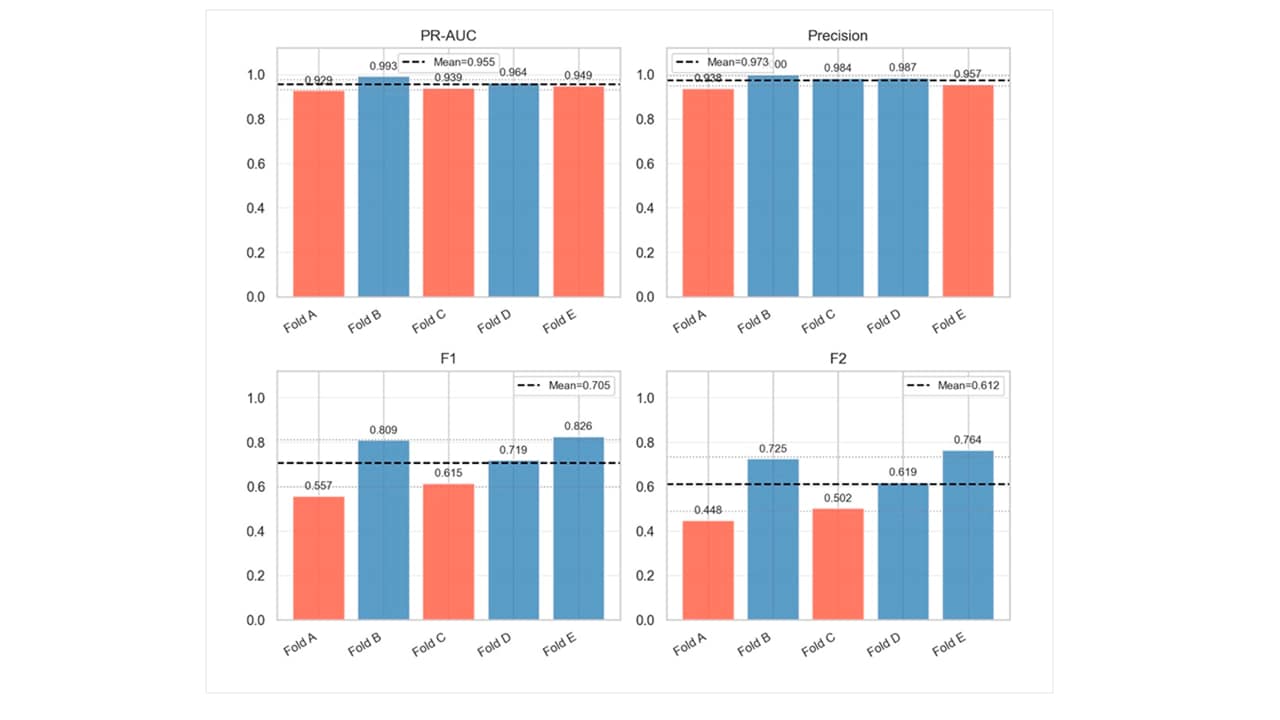
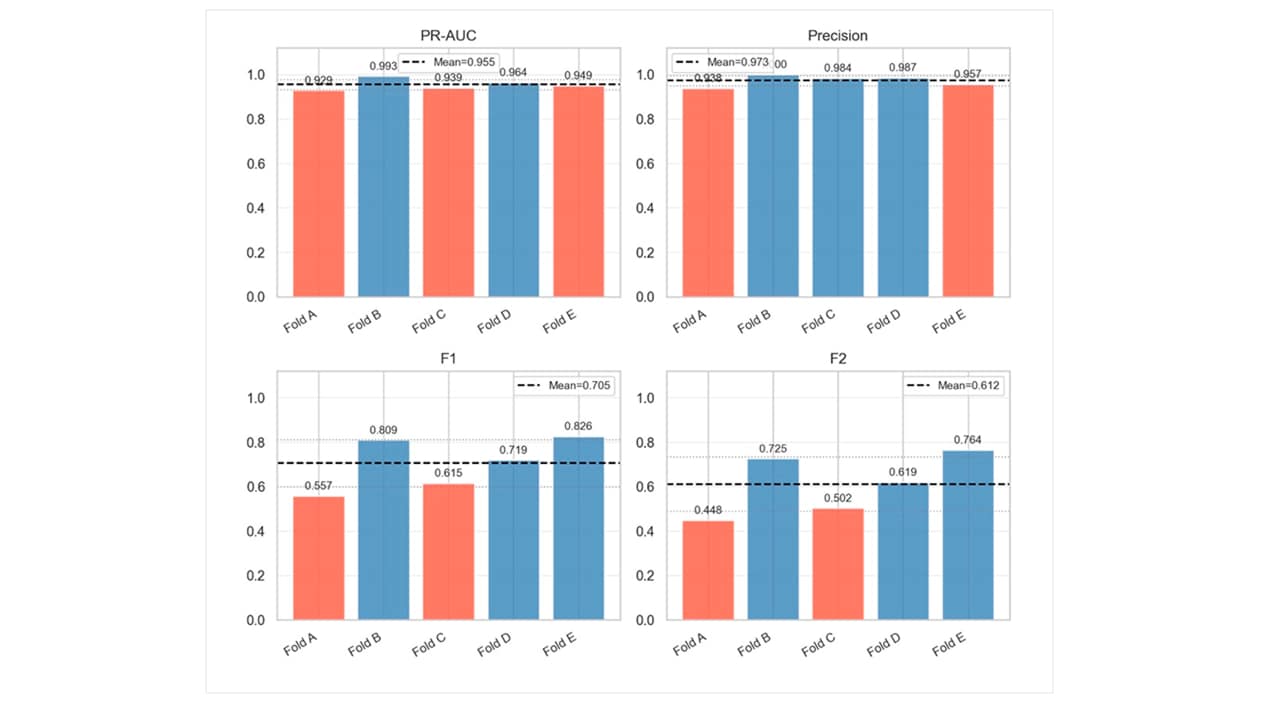
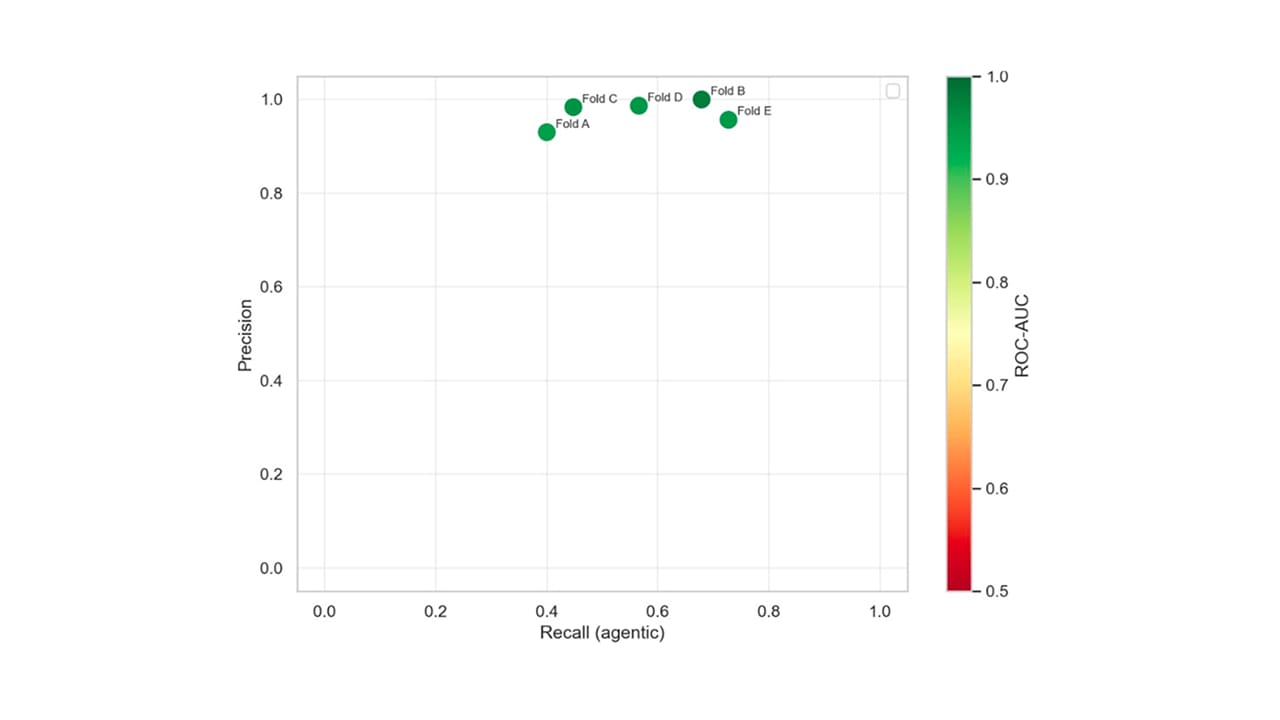
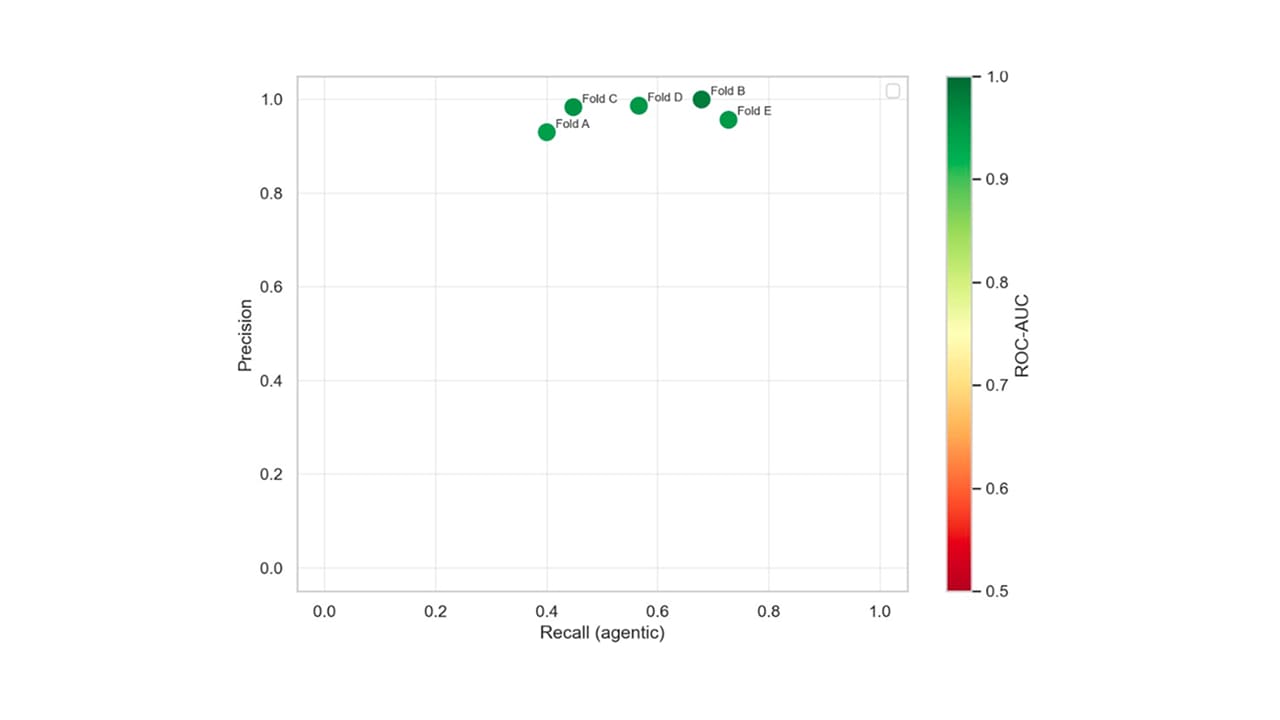
False positives (i.e., human sessions that the model flags as agentic) tend to be users who visited a page, clicked one link, and left. Their behavioral profile is sparse and direct, superficially resembling agent behavior.
These are genuine edge cases, not artifacts: These humans interacted efficiently, and the model's confusion is structurally reasonable, but can likely be mitigated with richer training performed in future research.
Updating transformer embeddings by concatenating interevent timing features (such as the mean and standard deviations shown in Figure 5) before they are passed to the MLP classifier is likely to yield improved model performance on the set of currently misclassified sequences.