Background

Identifying Agentic Automation with Behavioral Telemetry: Part 2

August 27, 2026 by Michael Sparkman and Daniel McAndrew

Share

Key takeaways

The two-stage architecture achieves a 0.981 area under the receiver operating characteristic curve (ROC-AUC) and 92.4% agentic recall on request sequences with at least five mouse events, reliably ranking autonomous agent traffic above human sessions.

Overall session recall sits at 52.6%, but jumps to 97.9% on evaluable sessions. Performance varies significantly by tool based on how sparse their telemetry is — OpenAI Atlas sessions were 89.9% evaluable, whereas Perplexity Comet sessions were only 48.8% evaluable.

A leave-one-customer-out cross-validation demonstrated strong transferability across websites, maintaining a 0.956 ROC-AUC, proving the model learns universal behavioral signatures rather than site-specific patterns.

Agents display sparse, direct mouse movements with 2,000 ms to 3,000 ms idle gaps while “thinking,” contrasting sharply with the continuous, curvilinear trajectories of human users.

Designed as an insight signal rather than an outright blocker, the model is most effective when paired with passive fingerprinting to confirm AI browser activity and feed risk-scoring dashboards.
 

In part one of this two-part series, we introduced a category of web traffic that existing bot detection models weren't designed to catch: AI agents operating in “control browser” mode. 

Tools like Perplexity Comet and the Claude Chrome Extension navigate websites autonomously — clicking purposefully, moving directly, and generating behavioral telemetry that is too sparse for traditional behavioral models to evaluate.

We built a two-stage detection architecture to address this: a Masked Autoencoder Transformer trained on 3.5 million unlabeled mouse event sequences to produce compact behavioral embeddings, followed by a shallow multilayer perceptron (MLP) classifier trained on 2,190 labeled agentic sessions collected from real, BMP-instrumented customer websites.

In this blog post, we present the results of that model — how it performs at the request level and at the session level, how well the behavioral signatures generalize across customers, and what agentic sessions actually look like in the data. We also discuss what the results mean in the context of a real-world deployment.

Request-level detection

On a held-out test set of labeled sequences (with at least five mouse events), the final two-stage model’s achievements are shown in Table 1.


MetricValue 

ROC-AUC

0.981

Agentic recall (true positive rate)

92.4%

Human specificity (true negative rate)

94.7%

F2 score

0.651

Table 1: MLP classifier performance metrics on held-out dataset of labelled telemetry sequences composed of at least five mouse events

Session-level detection

Request-level recall is one thing. But in production, what matters is whether we can flag a session — and agents often produce many requests within a session, some with enough telemetry to score and some without.

We evaluated the model across all 816 labeled agentic sessions in our dataset using max-probability aggregation (a session is flagged if any single request scores above the threshold; Table 2).


MetricValue 

Overall session recall

52.6%

Recall on evaluable sessions (≥ 5 events in at least one request)

97.9%

Evaluable session fraction

53.7%

Table 2: MLP classifier performance metrics on sessions, where sessions are classified as agentic automation if the mouse telemetry sequence from at least one HTTP POST request was classified as agentic  

The gap between 52.6% and 97.9% is almost entirely explained by the 46.3% of sessions in which every single request contains fewer than five mouse events. Once a session has at least one scoreable request, the model identifies it with near-perfect reliability. 

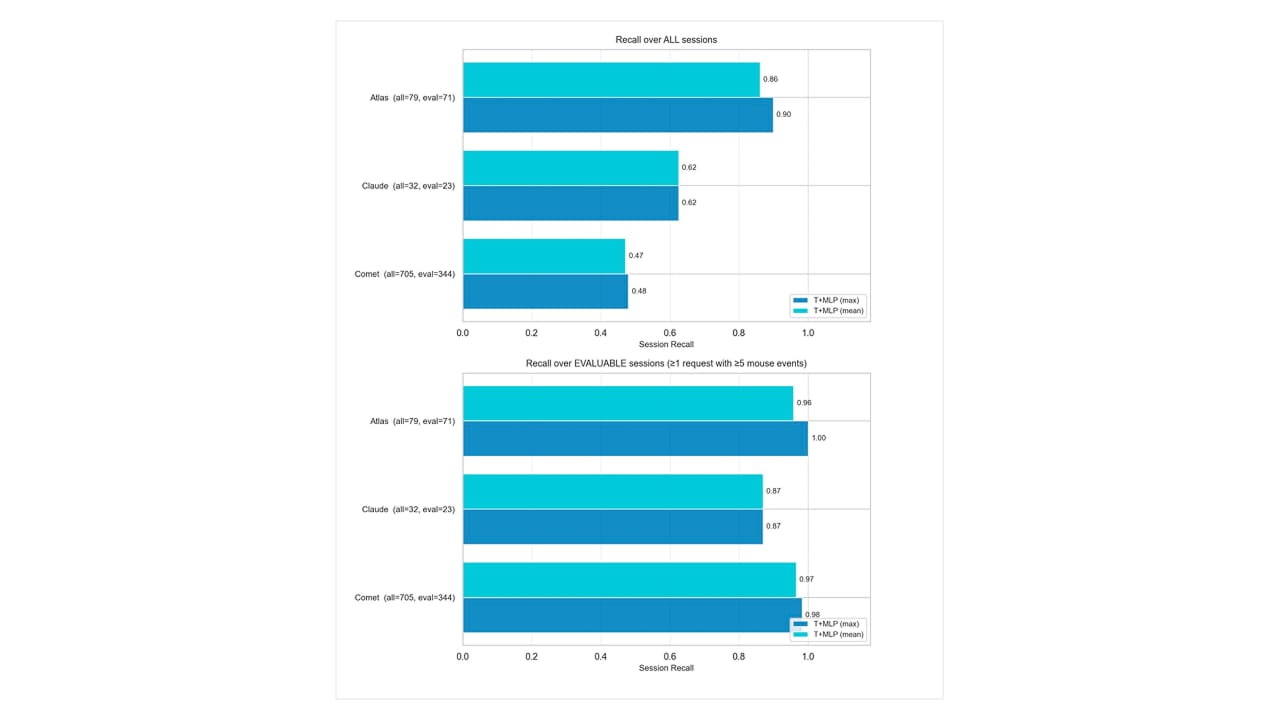
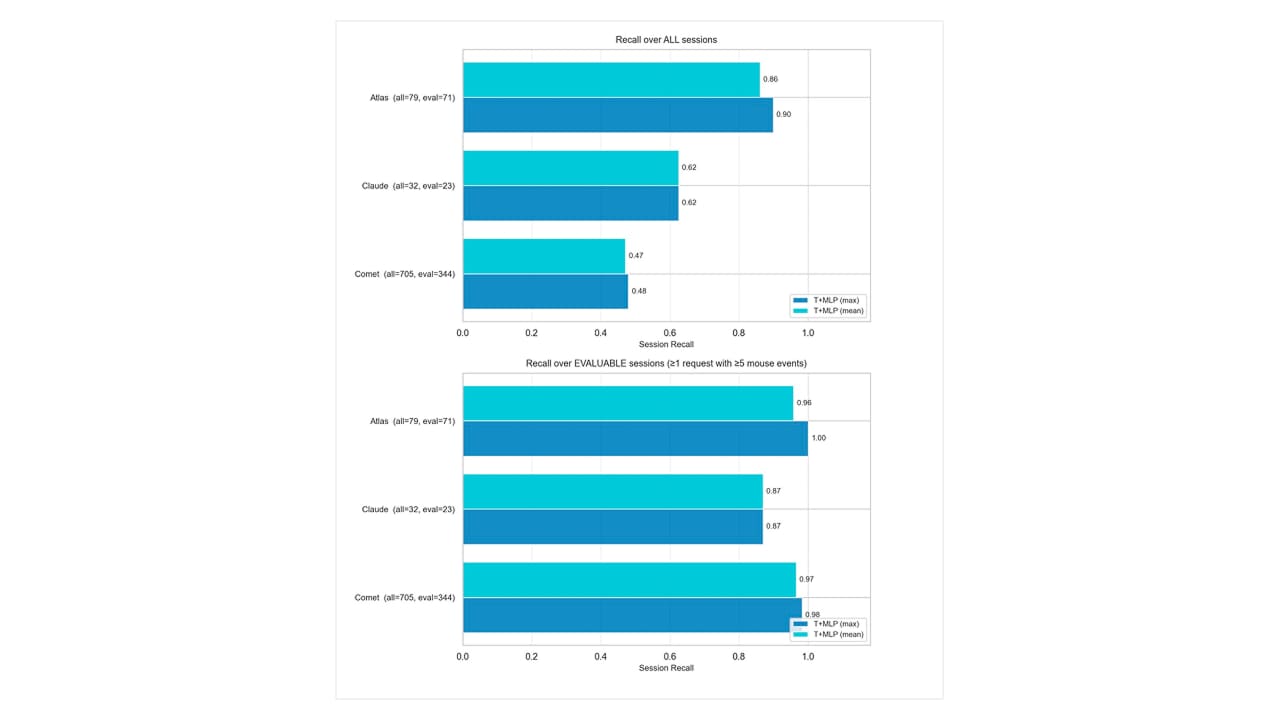
Per-tool performance reflects behavioral differences between agents. Atlas (OpenAI) sessions are 89.9% evaluable — Atlas tends to generate more mouse activity than Comet. Comet (Perplexity) sessions, which make up 86% of our dataset, are only 48.8% evaluable; Comet's Control Browser mode produces very sparse telemetry (Figure 1).

Per-tool performance reflects behavioral differences between agents. Atlas (OpenAI) sessions are 89.9% evaluable — Atlas tends to generate more mouse activity than Comet. Comet (Perplexity) sessions, which make up 86% of our dataset, are only 48.8% evaluable; Comet's Control Browser mode produces very sparse telemetry (Figure 1).
Fig. 1: Session-level recall disaggregated by agentic tool for the MLP classifier using extracted transformer embeddings (T+MLP): Max recall is calculated by classifying a session as agentic if at least one request from the session is classified as agentic; mean recall is calculated by classifying a session as agentic if the average score across the session’s requests is agentic
Per-tool performance reflects behavioral differences between agents. Atlas (OpenAI) sessions are 89.9% evaluable — Atlas tends to generate more mouse activity than Comet. Comet (Perplexity) sessions, which make up 86% of our dataset, are only 48.8% evaluable; Comet's Control Browser mode produces very sparse telemetry (Figure 1).

Generalizing across customers

To test whether the model was learning genuine behavioral patterns or overfitting to the specific customer websites in our training data, we ran a leave-one-customer-out cross-validation across the five customers with the most labeled agentic data.

All telemetry used in this analysis is fully anonymized so that no personally identifiable information is retained, and customer identities are not referenced in or recoverable from the dataset (Table 3).


MetricIn-distributionCross-customer CV

ROC-AUC

0.983

0.956 ± 0.014

Precision (balanced)

94.5%

97.3% ± 2.2%

Recall

~92.1%

56.3% ± 14.3%

Table 3: K-fold cross-validation metrics comparing performance on in-distribution data (held-out test data from the set of customer websites included in the training set of a model’s fold) to performance on held-out data from customer websites entirely excluded from a model’s training fold  

The 2.7 percentage point drop in ROC-AUC from in-distribution to cross-customer suggests the model is generalizing meaningfully — the behavioral signatures it learned transfer across websites and customer verticals. 

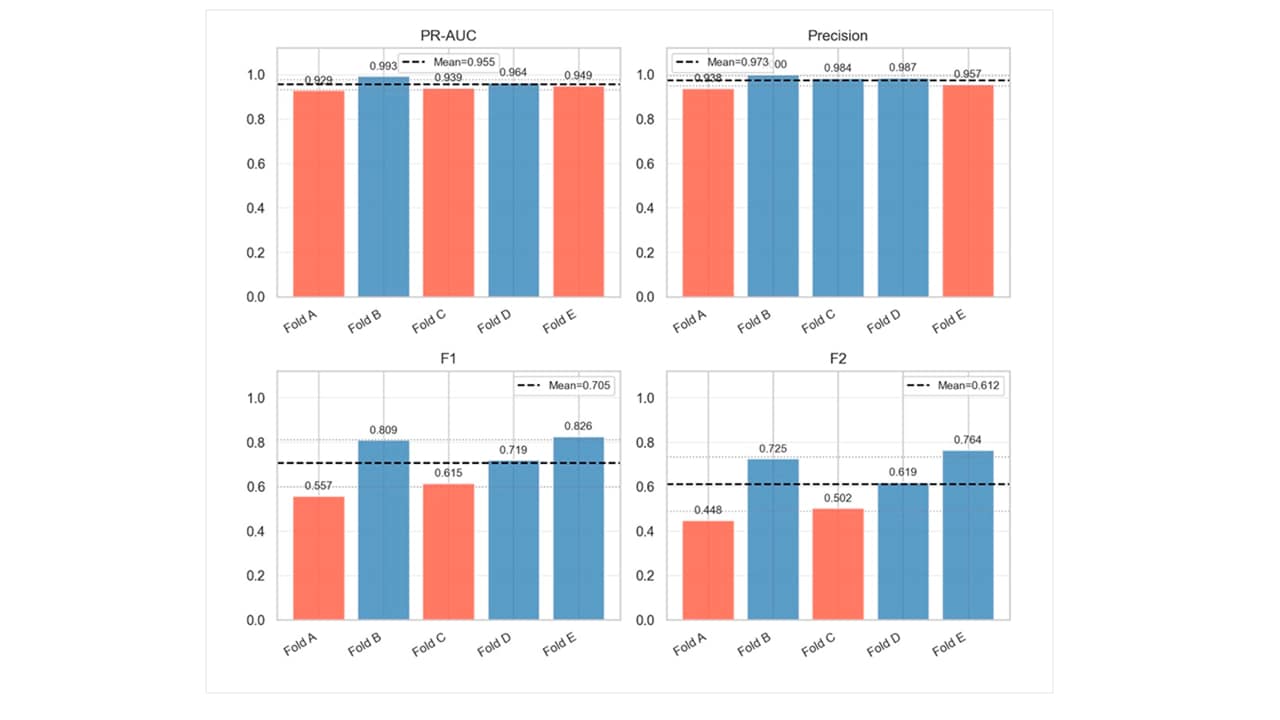
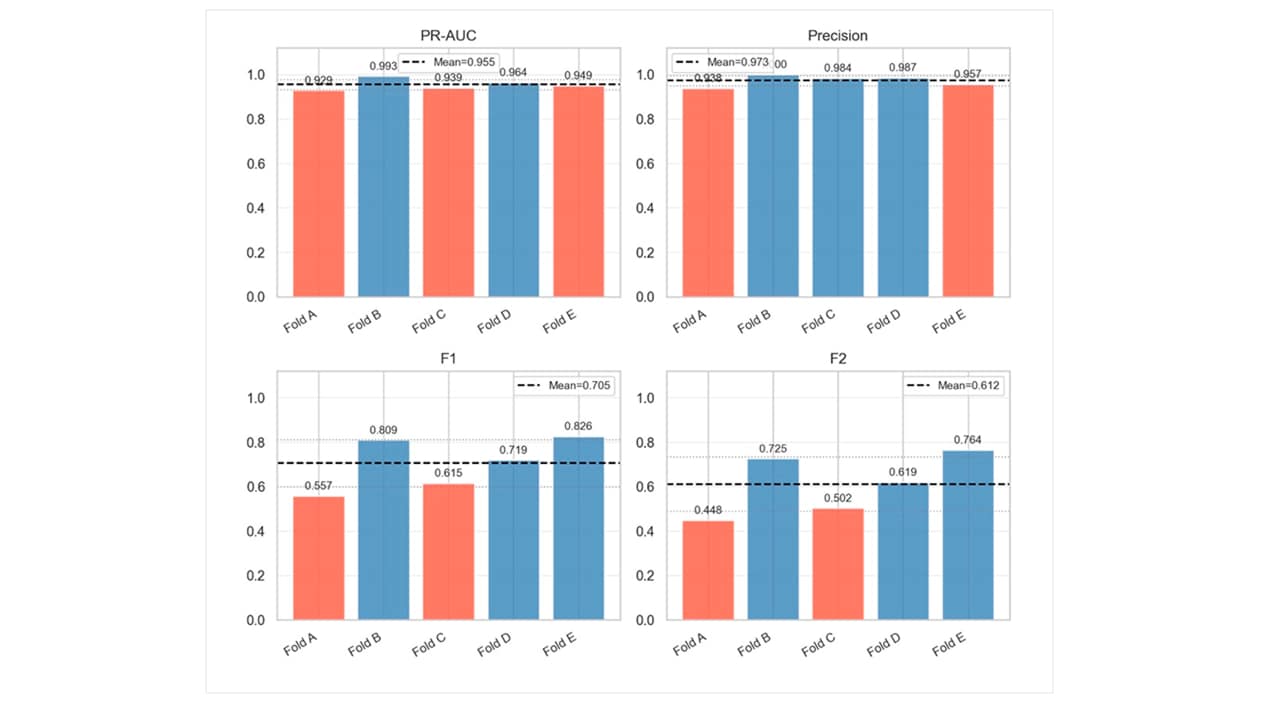
The higher variance in recall (39.6%–72.7% across folds) reflects differences in how much telemetry each tool generates on different sites, not model failures.

K-fold cross-validation results, in which a model was trained using data from all but one customer’s data for each fold are shown in Figure 2. The held-out customer’s data was only used for evaluating model generalizability and determining if overfitting was occurring. 

K-fold cross-validation results, in which a model was trained using data from all but one customer’s data for each fold are shown in Figure 2.
Fig. 2: K-fold cross-validation metrics for the models corresponding to each of the five dataset folds where one customer website was entirely excluded from training data (bars in blue are above the mean across models, while those in red are below the mean)
K-fold cross-validation results, in which a model was trained using data from all but one customer’s data for each fold are shown in Figure 2.

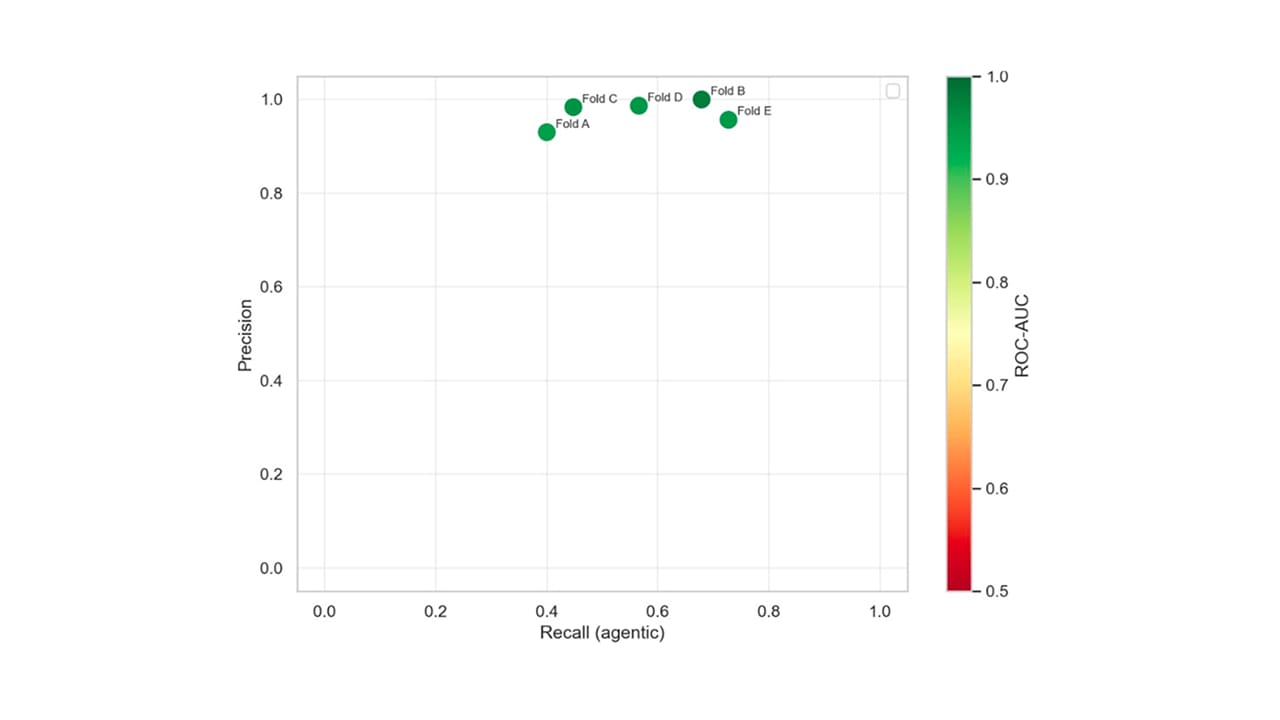
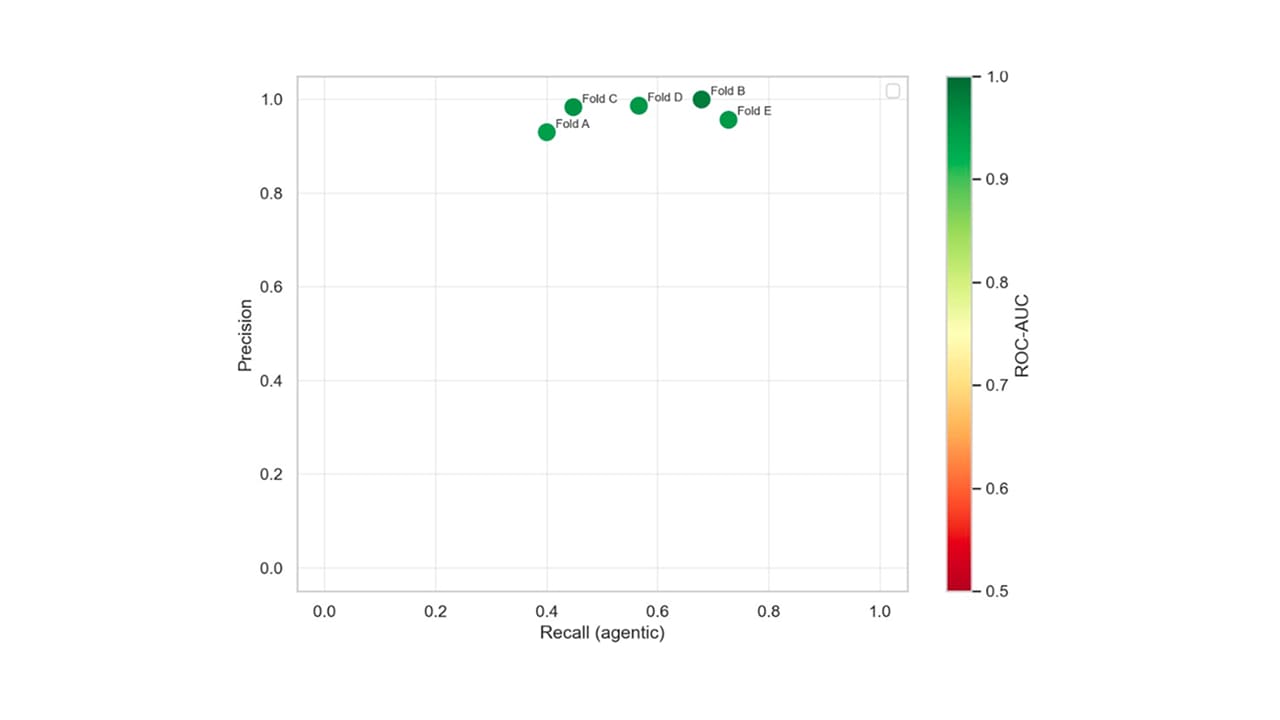
Precision, agentic recall, and ROC-AUC for models trained on each of the folds are shown in Figure 3.

Precision, agentic recall, and ROC-AUC for models trained on each of the folds are shown in Figure 3.
Figure 3: Recall and precision visualization for each of the models corresponding to the five cross-validation folds
Precision, agentic recall, and ROC-AUC for models trained on each of the folds are shown in Figure 3.

What agents look like in the data

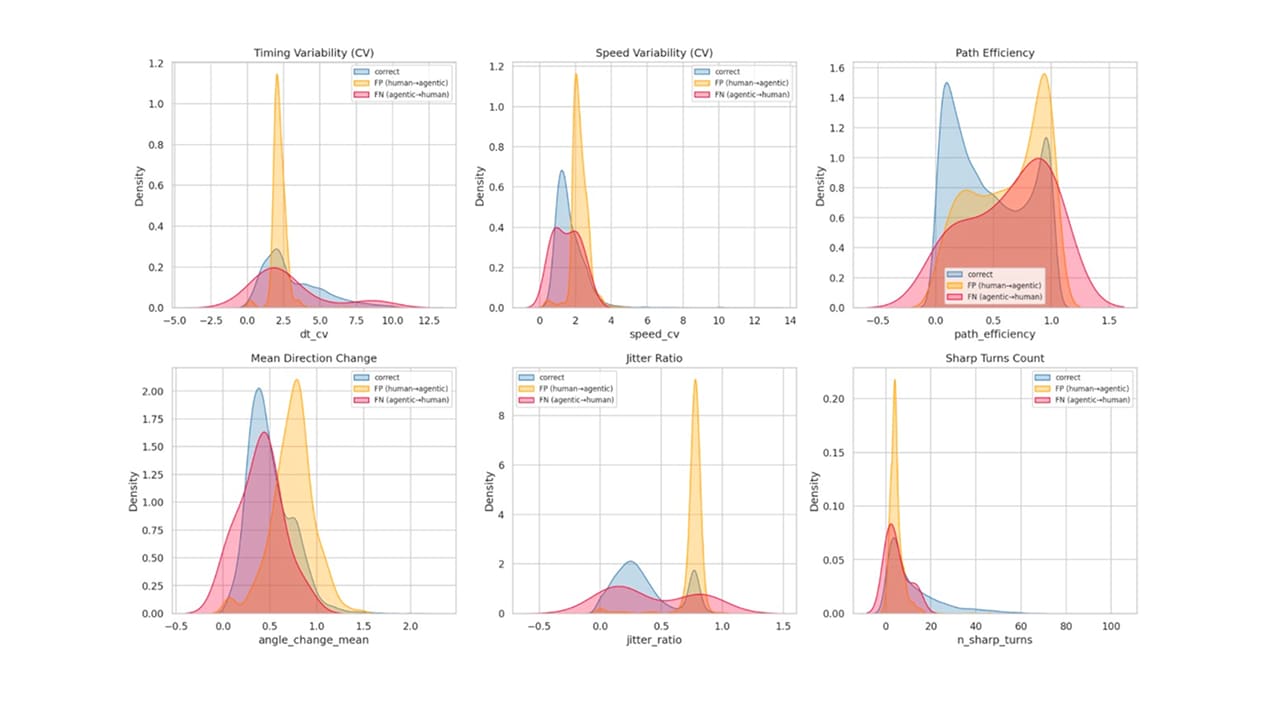
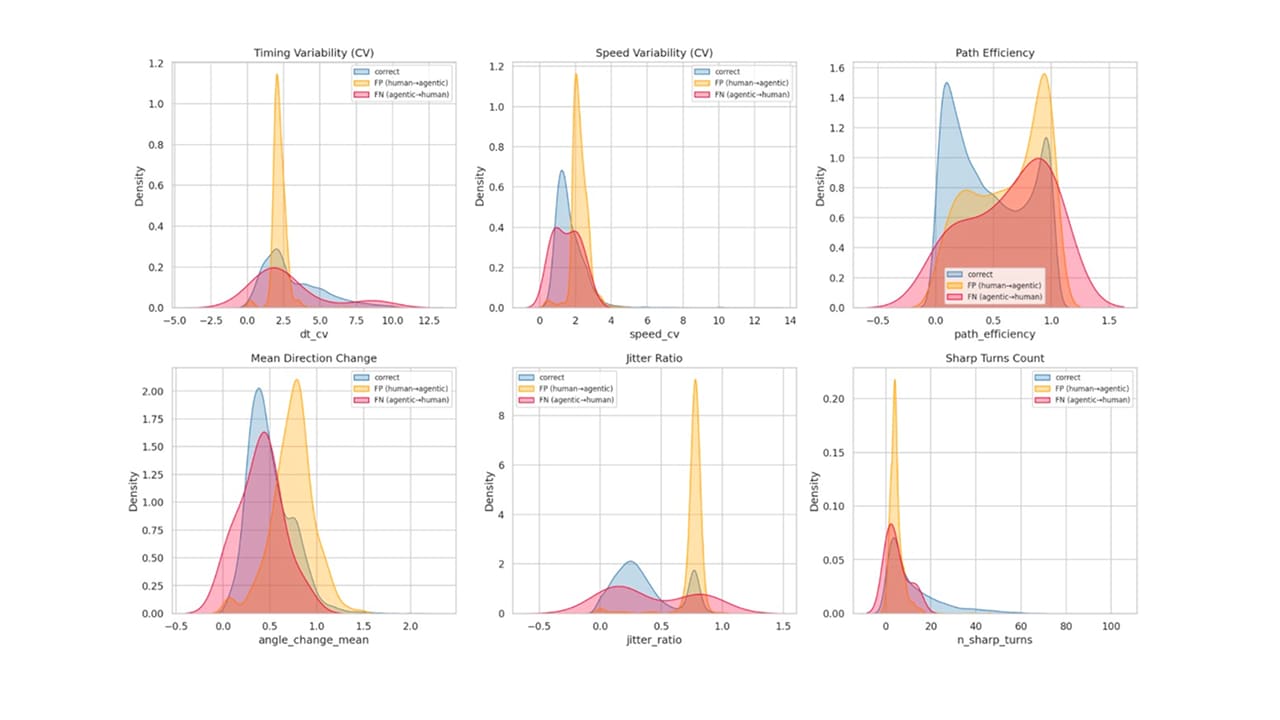
The visualizations in Figure 4 compare mouse trajectory paths and interevent timing distributions from human and agentic sessions in our labeled dataset.

The visualizations in Figure 4 compare mouse trajectory paths and interevent timing distributions from human and agentic sessions in our labeled dataset.
Fig. 4: Distribution of features for sequences correctly classified by the MLP model compared with those of sequences that resulted in false negative and false positive classifications
The visualizations in Figure 4 compare mouse trajectory paths and interevent timing distributions from human and agentic sessions in our labeled dataset.

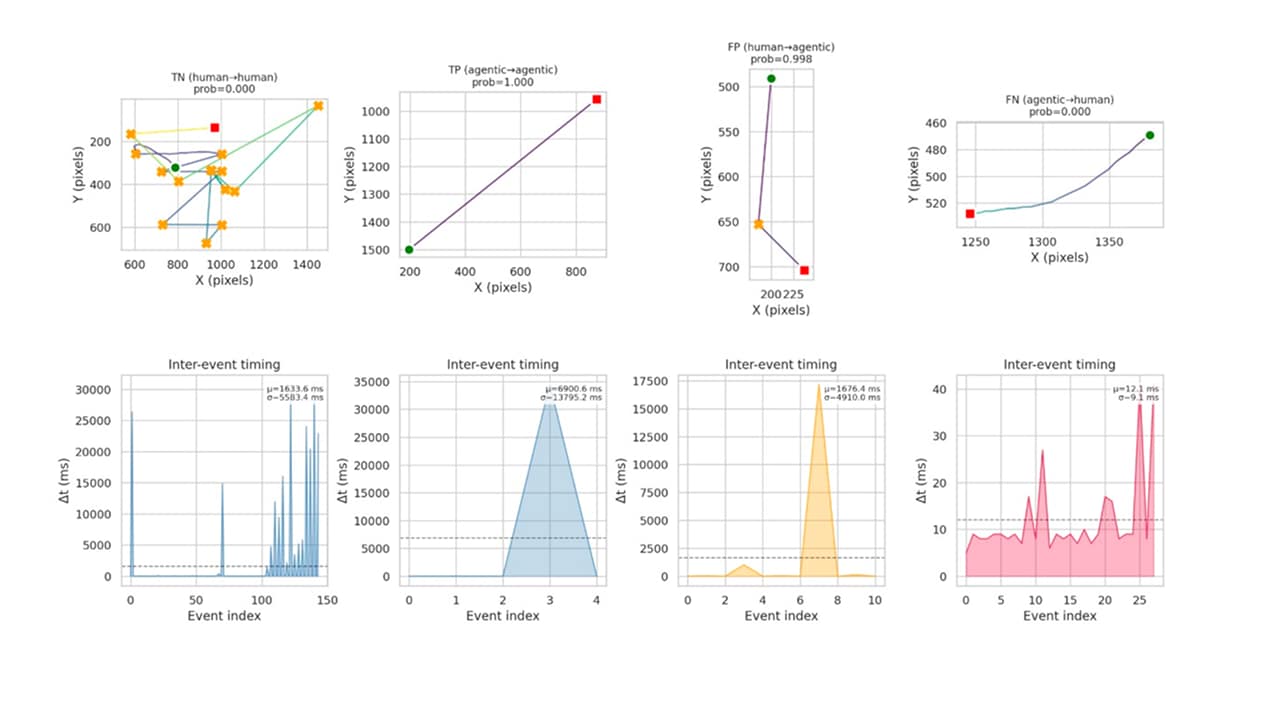
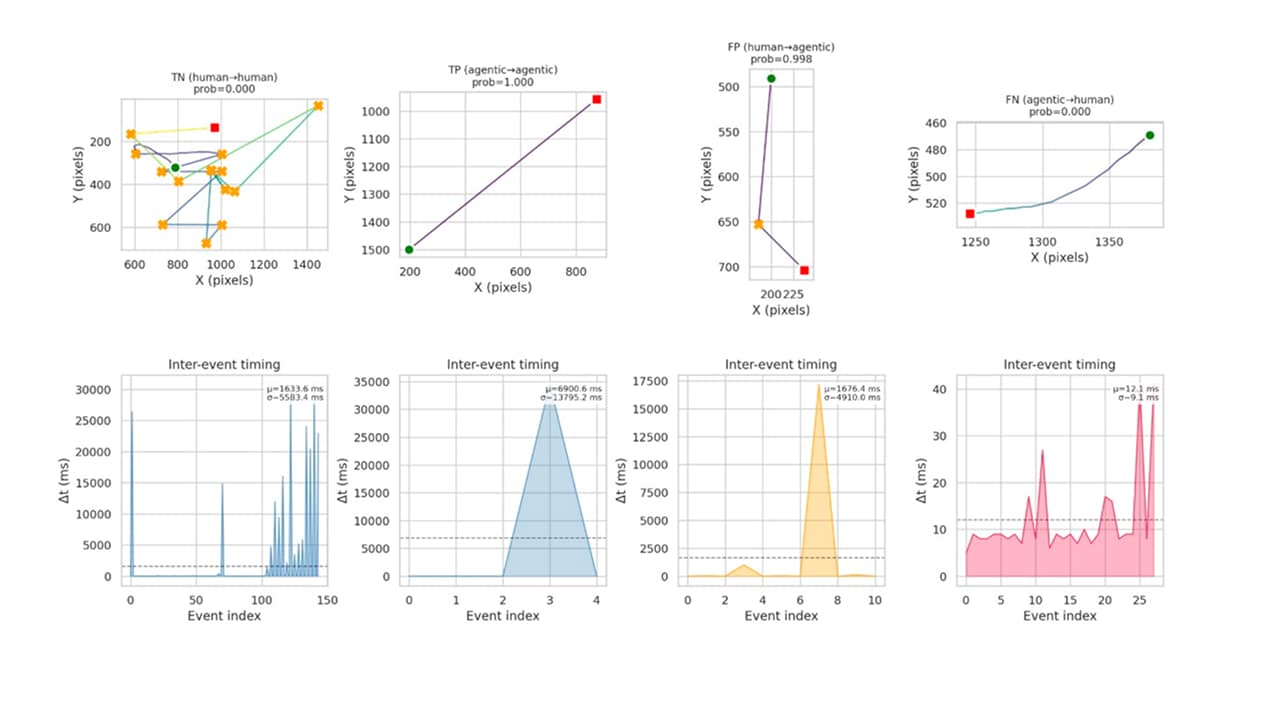
The trajectory visualizations in Figure 5 make the behavioral separation intuitive. A human session shows rich, curvilinear paths across the viewport — exploratory, wandering, occasionally backtracking.

The trajectory visualizations in Figure 5 make the behavioral separation intuitive. A human session shows rich, curvilinear paths across the viewport — exploratory, wandering, occasionally backtracking.
Fig. 5: An example mouse telemetry sequence and its interevent timing distribution for each of the MLP classifier’s confusion matrix categories; from left to right: true negative (human classified as human), true positive (agentic classified as agentic), false positive (human classified as agentic), and false negative (agentic classified as human)
The trajectory visualizations in Figure 5 make the behavioral separation intuitive. A human session shows rich, curvilinear paths across the viewport — exploratory, wandering, occasionally backtracking.

An agent session, however, shows sparse, direct paths: appear at point A, move to point B, clicking, done. Interevent timing for agentic sessions often shows gaps of 2,000 ms to 3,000 ms between any mouse activity, reflecting the agent’s “thinking” between actions.

False positives (i.e., human sessions that the model flags as agentic) tend to be users who visited a page, clicked one link, and left. Their behavioral profile is sparse and direct, superficially resembling agent behavior. 

These are genuine edge cases, not artifacts: These humans interacted efficiently, and the model's confusion is structurally reasonable, but can likely be mitigated with richer training performed in future research. 

Updating transformer embeddings by concatenating interevent timing features (such as the mean and standard deviations shown in Figure 5) before they are passed to the MLP classifier is likely to yield improved model performance on the set of currently misclassified sequences. 

Where this research goes from here

Detection confidence improves substantially when behavioral signals are combined with passive fingerprinting signals. We already have such identification signals for agentic browsers that rely on fingerprint characteristics. The behavioral model is most powerful when applied conditionally on sessions where passive signals already suggest an AI browser, adding a layer of confirmation from behavior itself. 

This research is a proof of concept (PoC), and several open questions will shape the path forward. 

  • Prevalence estimation: How common is agentic traffic across all web traffic? Knowing true prevalence is essential to understanding real-world precision.

  • Hybrid sessions: Users sometimes cede control to an agent mid-session and resume manual browsing. How can we identify these mixed sessions?

  • Data and model scale: The current model was intentionally kept small as a PoC. Will larger labeled datasets and more expressive models yield more robust and generalizable detections?

  • Adversarial robustness: As agentic tools evolve, it will be important to ask: Will behavioral signatures remain stable or require ongoing model updates?

Conclusion

Agentic AI tools represent a genuinely new category of web traffic — not bots in disguise, not humans, but autonomous agents acting on human behalf. They interact with websites economically and purposefully, producing behavioral telemetry that is sparse enough to fall beneath the radar of models that were designed to detect traditional bots.

As a PoC, we've shown that a purpose-built approach — learning a compact behavioral representation from millions of unlabeled mouse event sequences, then training a lightweight supervised classifier on labeled agentic data — can identify automation-mode sessions with 92% request-level recall and 0.981 ROC-AUC, and generalizes meaningfully across customers in leave-one-out cross-validation. 

These results validate the detection direction; translating this into a production-ready capability will require: 

  • Scaling the dataset 

  • Hardening the model against adversarial agents

  • Integrating the behavioral signal into a broader ensemble alongside passive fingerprinting detections

As agentic adoption grows, understanding what fraction of web traffic is driven by AI agents, and which agent tools are responsible, becomes an increasingly important capability for businesses and security teams alike. This research lays the groundwork for future capabilities in Akamai Bot & Agent Control to help better identify, understand, and manage AI agent traffic. 

Learn more

To learn more about how Akamai can help you gain visibility and control over your agentic traffic, contact an expert.

The research described in this post was conducted by the Akamai Threat Research and Data Science teams. The labeled agentic dataset was collected and anonymized following a standardized protocol using BMP-instrumented customer websites.

About the Author(s)

Michael Sparkman image

Michael Sparkman

Michael Sparkman is a Data Scientist at Akamai. He has 6 years experience working on disaster and relief projects and fraud and security analytics with a focus on bot automation. At Akamai, he researches new automation threats and works with customers to keep their security postures strong.

Daniel Estevan McAndrew

Daniel McAndrew

Daniel Estevan McAndrew is a Senior Data Scientist at Akamai, where he has spent five years developing machine-learning models for bot detection and abuse prevention. His work spans behavioral telemetry analysis and large-scale anomaly detection across Akamai Bot & Agent Control products. Before joining Akamai, he worked at Intel as a Software Engineer in Computer Vision for live sports broadcasting. He lives in Oakland, California, where he can usually be found hiking with his partner and two huskies.