

Or Eshed
Or Eshed is the former Co-Founder & CEO of Interaction Security platform LayerX (now part of Akamai), with over a decade of experience in cybersecurity, artificial intelligence, and information warfare.
Akamai acquired LayerX. This previously published blog post reflects the product and feature names on the original date of publication.
AI technology went from an experimental toy to a workplace staple in under three years. That much we all knew. What nobody expected was how fast it would surpass traditional SaaS categories not only in adoption, but in risk.
Our new Enterprise AI and SaaS Data Security Report 2025, based on real-world browsing telemetry from LayerX’s enterprise customers—shows something surprising: AI is no longer an “emerging” technology. It is now the single largest blind spot for data exfiltration in the modern enterprise.
And unlike email or file sharing, where security teams have built years of governance, the majority of AI usage is happening in the shadows; outside SSO, outside visibility, and outside enterprise control.
Let’s start with the headline: 45% of enterprise employees are already using generative AI tools. That’s nearly half the workforce, in less than three years since these tools appeared. By comparison, it took SaaS categories like file sharing or video conferencing over a decade to reach similar penetration.
Even more striking: 92% of all enterprise AI usage is concentrated in a single tool—ChatGPT. This makes it not just the fastest-growing category, but also the most concentrated one. A single, consumer-facing platform has become the de facto enterprise AI standard.
On its own, adoption at this scale is not the surprise. The shock comes when you look at how employees are using it.
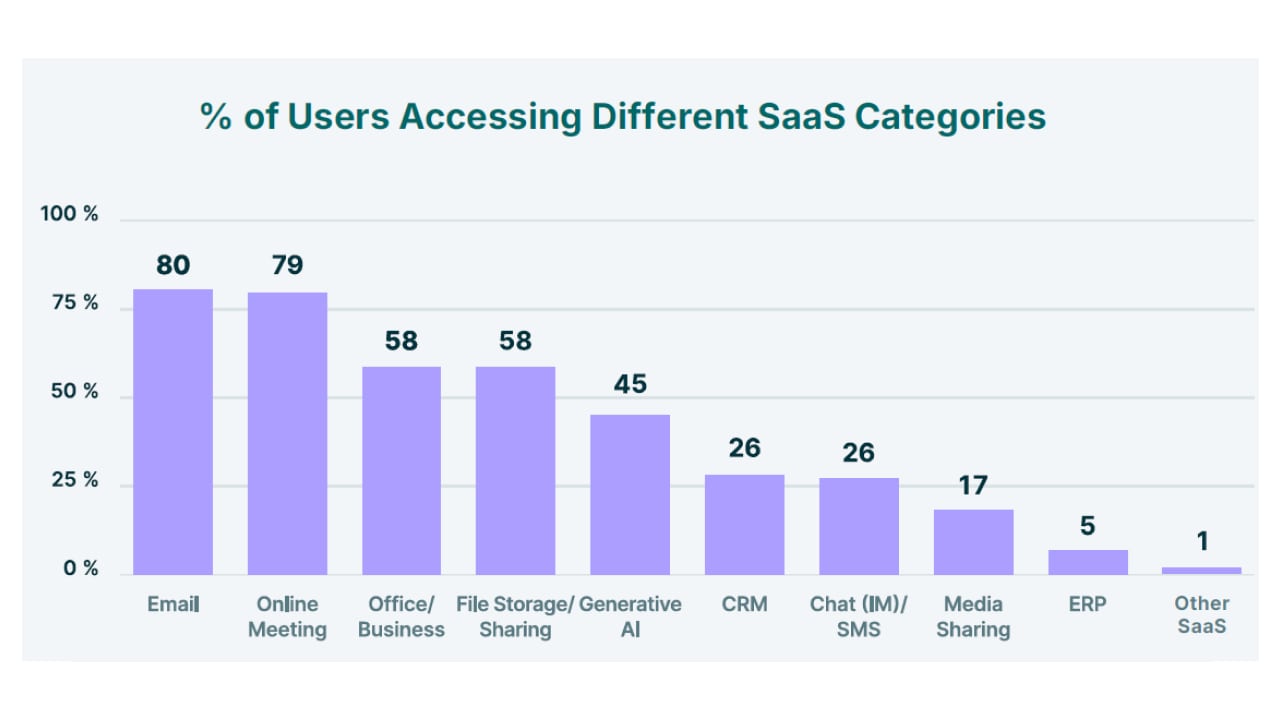
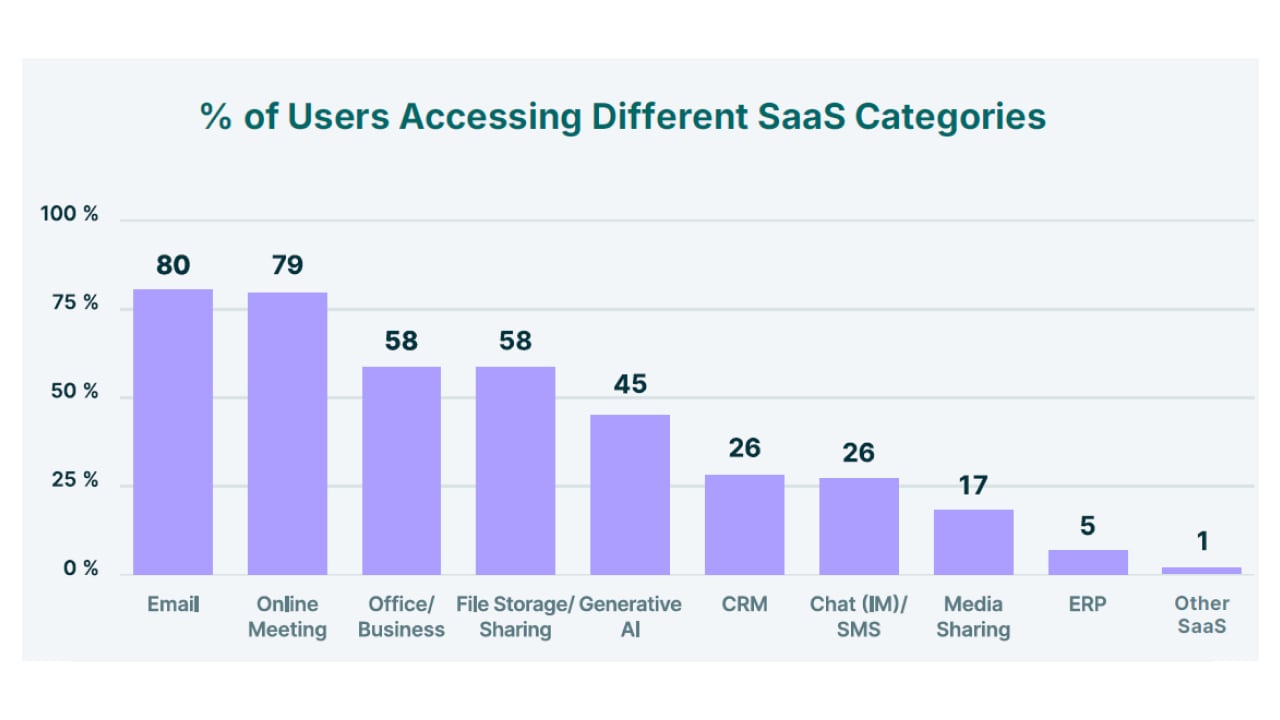
Most CISOs worry about file uploads. And for good reason: 40% of files uploaded to GenAI tools contain sensitive PII or PCI data. That’s almost half of all uploads.
But the real shock lies elsewhere. Our data shows that the majority of sensitive data doesn’t leave the enterprise via uploads at all. It leaves through copy/paste.
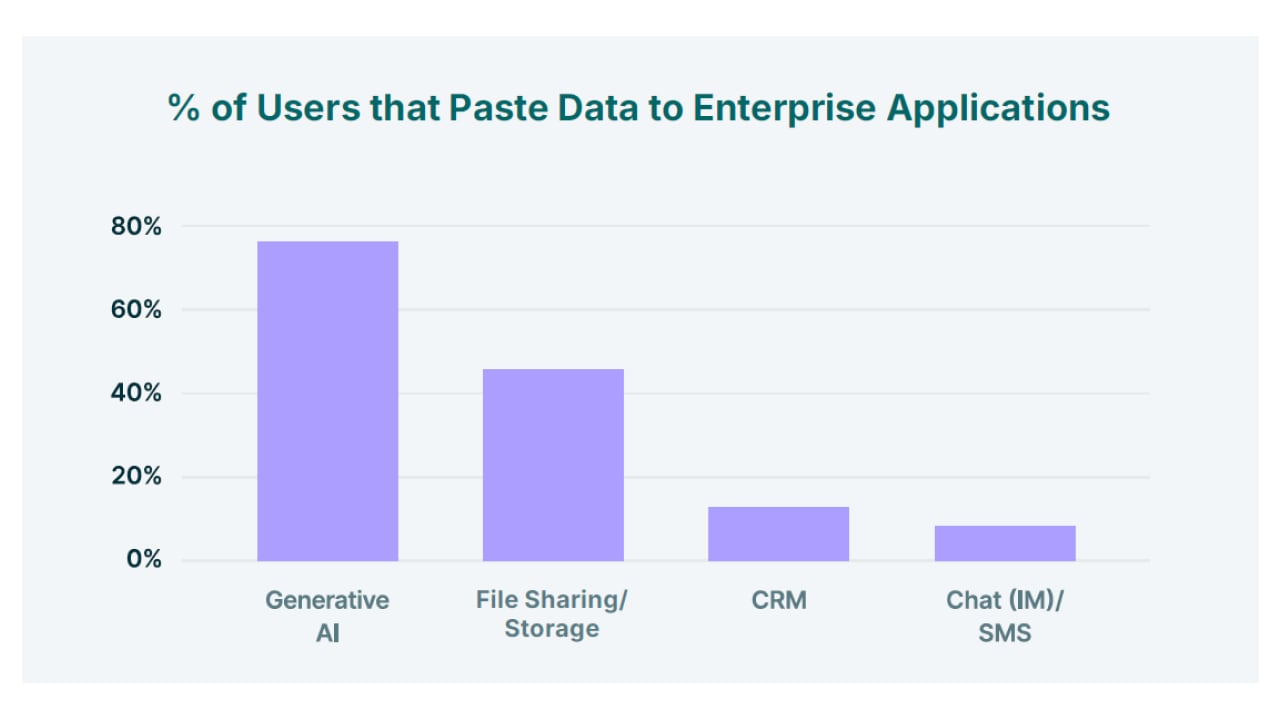
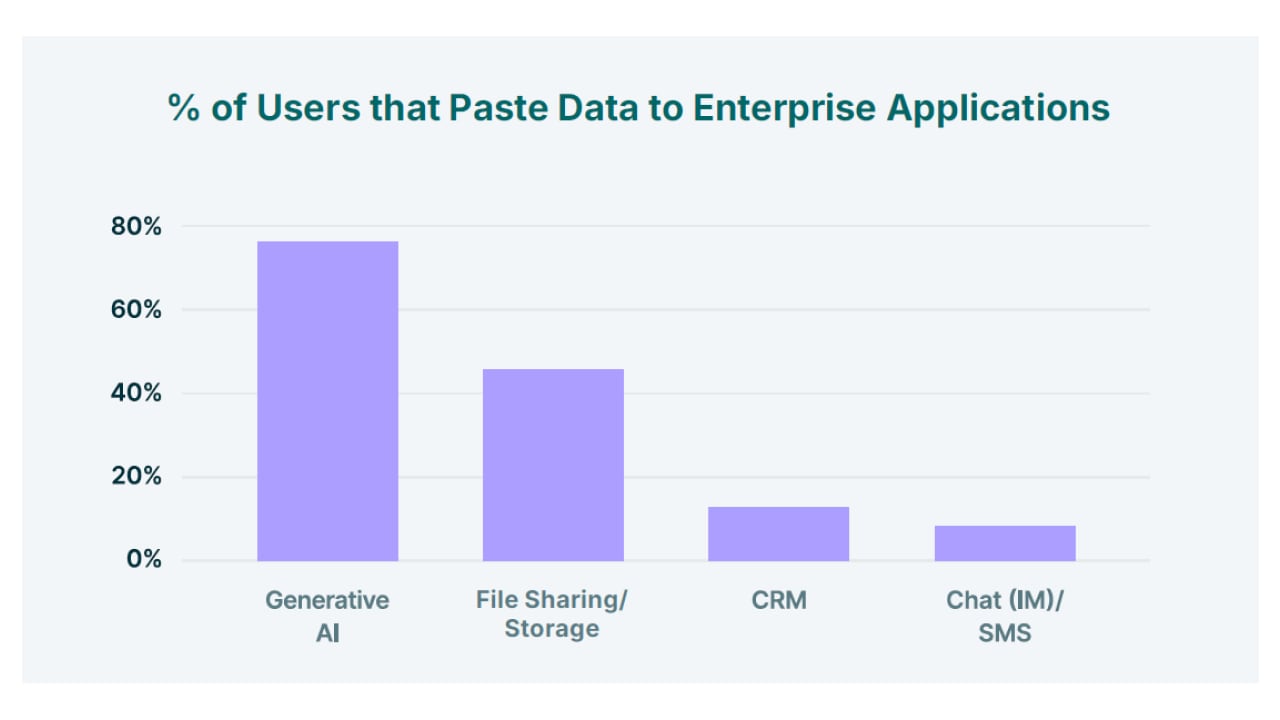
This turns the humble clipboard, an often overlooked fileless and unstructured channel, into the #1 vector for sensitive data exfiltration. GenAI tools alone account for 32% of all corporate-to-personal data transfers.
Traditional DLP tools, built around file-centric monitoring, don’t even register this activity. Which means enterprises aren’t just behind on AI governance—they’re blind.
Enterprises have invested millions into identity security, federation, and SSO. Yet, according to our data, those controls are barely touching the AI category.
The takeaway? Corporate ≠ secure. The systems housing the most sensitive customer and financial data, such as CRM, ERP, and now AI, are being accessed as if they were consumer apps. Identity controls exist, but employees simply work around them.
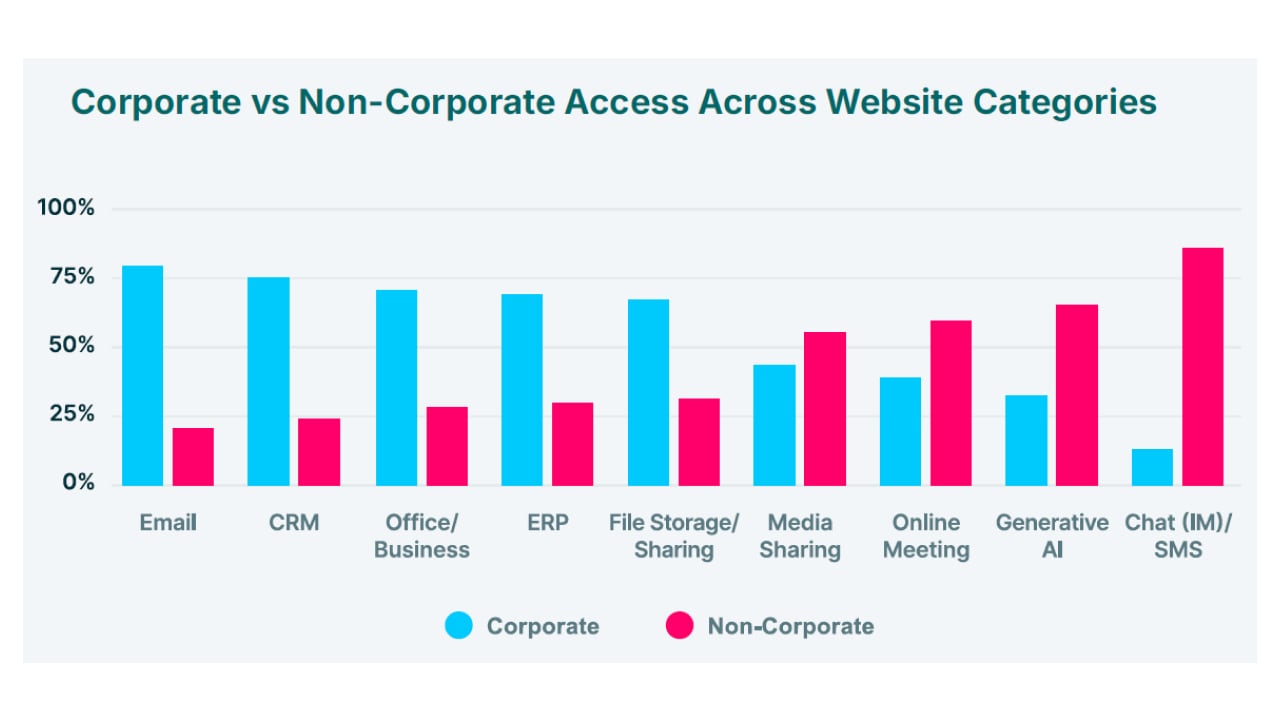
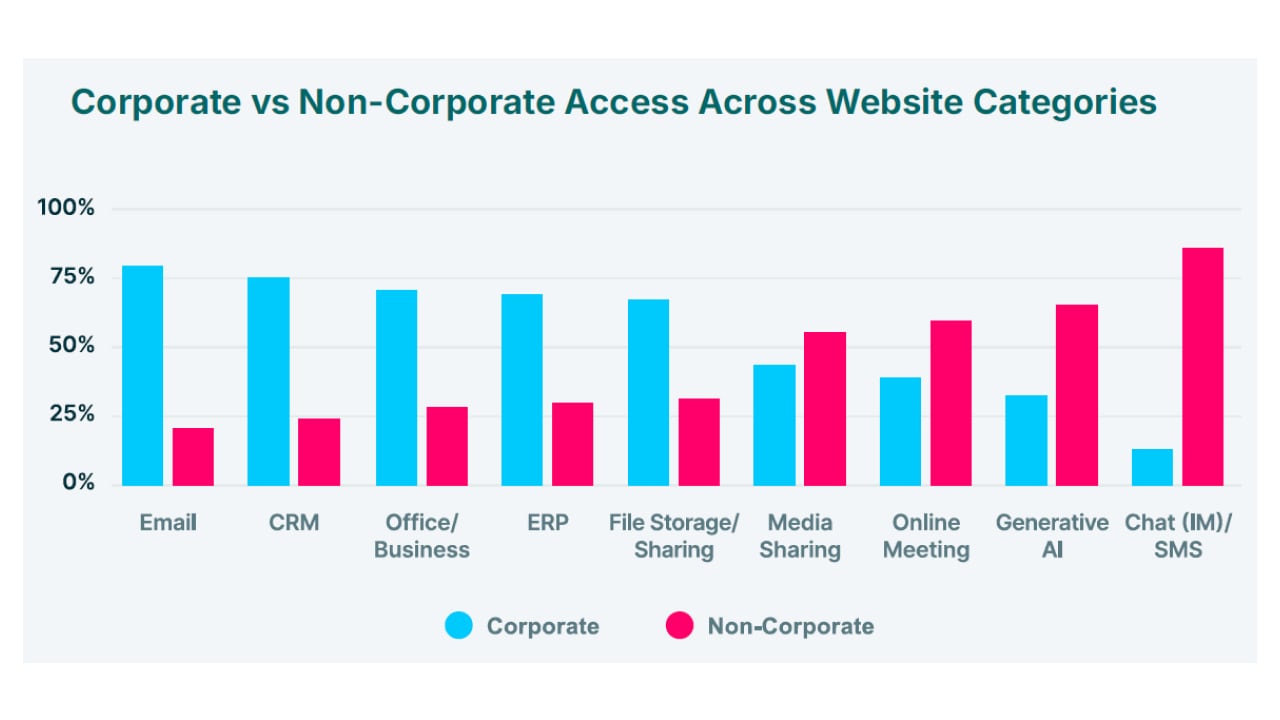
The most counterintuitive finding from our research is this: the more embedded AI becomes in enterprise workflows, the less governance exists around it.
Employees paste sensitive data into prompts. They upload files into consumer-grade accounts. They log in with unmanaged identities. And all of this is happening outside sanctioned oversight.
Contrast this with email, where decades of DLP, archiving, and federation have built at least some form of guardrails. AI, by comparison, is the Wild West.
And yet, AI is no longer “emerging.” It already accounts for 11% of all enterprise activity, rivalling categories that have defined enterprise productivity for decades. Enterprises are running blind in their fastest-growing category.
Based on this data, here are the three most urgent priorities:
Whereas other reports on AI adoption rely on surveys or self-reported data. Ours is built on direct browser telemetry from enterprise users themselves. That means no guesswork—just visibility into real-world activity across sanctioned, unsanctioned, and shadow apps.
This unique vantage point reveals what surveys can’t: that copy/paste, not uploads, is the primary exfiltration channel; that personal accounts dominate even business-critical workflows; and that AI isn’t just a risk on the horizon—it’s the risk happening right now.
CISOs have spent years building governance around email, file storage, and sanctioned SaaS. Meanwhile, AI has become the fastest-growing enterprise category, with almost half of employees using it daily. And almost none of it is secure.
That’s the paradox our data uncovers: the more indispensable AI becomes, the less oversight it has.
The clipboard is now the new frontier of enterprise data leaks. ChatGPT has become the de facto AI enterprise standard. And unmanaged accounts are quietly rewriting the rules of identity.
The challenge for security leaders isn’t whether to govern AI. It’s how quickly they can bring it under control—before the invisible trickle of data leakage turns into a flood.
Download the full report to uncover the full scale of AI and SaaS data risks.

© 2026 Akamai Technologies