

Background

Akamai Named a Leader in 2026 IDC MarketScape for Managed Edge

November 03, 2026 by Pavel Despot

Share

Most discussions about AI infrastructure focus on GPUs: their quantity, speed, and the data centers that support them. That makes sense, since training models and running the associated inference require massive compute. But this focus overlooks everything that happens between a user's request and the response they receive.

We believe the latest research from IDC MarketScape highlights the rapid growth of a trend that Akamai helped start: edge services. The IDC MarketScape: Worldwide Managed Edge Services 2026 Vendor Assessment (Doc #US54122426, September 2026) notes that “The managed edge market has entered its AI-defined phase.” 

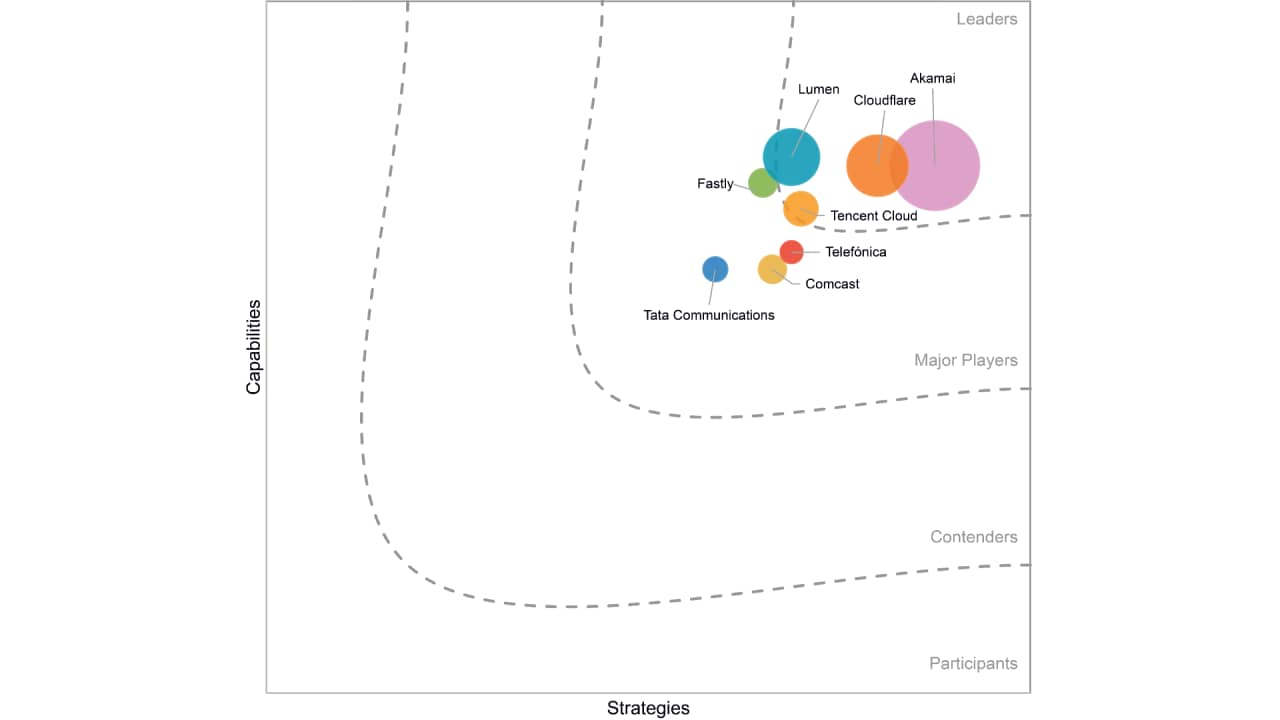
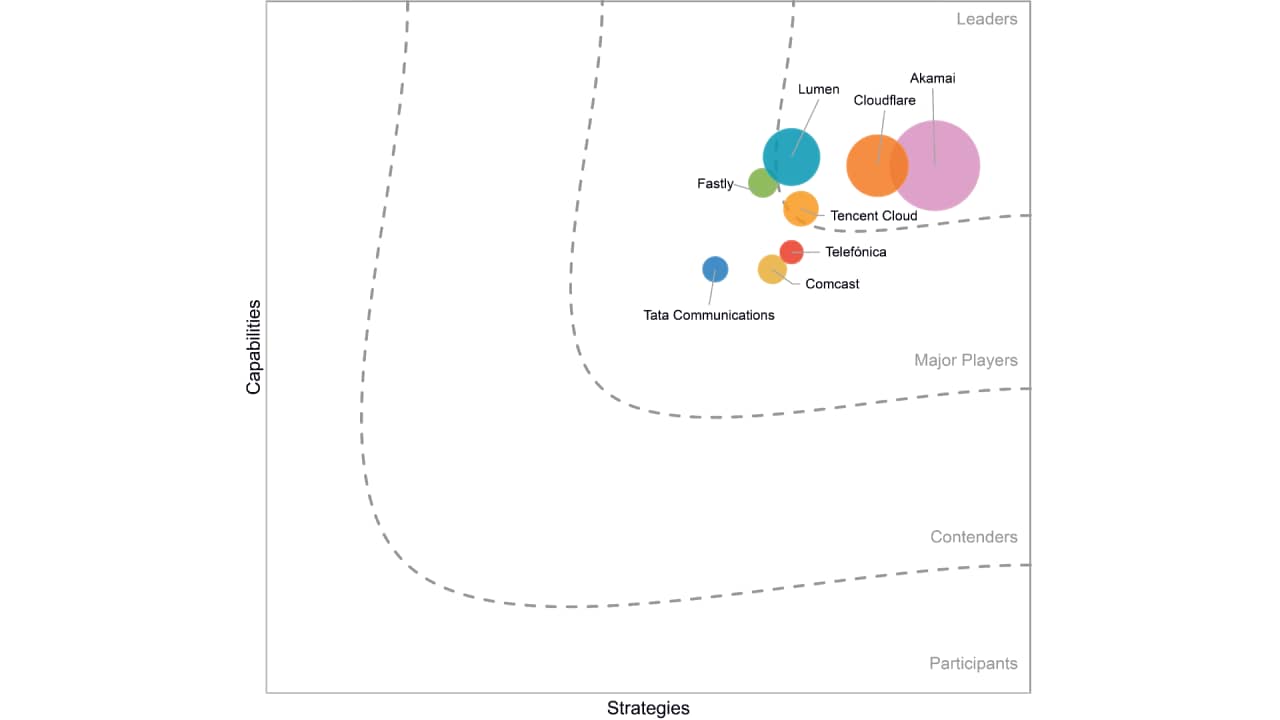
Fast content delivery and network proximity are table stakes. The new battleground is AI inference at the edge. In its assessment of eight global providers, IDC MarketScape named Akamai a Leader (Figure).

Akamai named a Leader in the IDC MarketScape: Worldwide Managed Edge Services 2026 Vendor Assessment (Source: IDC 2026) figure
Akamai named a Leader in the IDC MarketScape: Worldwide Managed Edge Services 2026 Vendor Assessment (Source: IDC 2026)
Akamai named a Leader in the IDC MarketScape: Worldwide Managed Edge Services 2026 Vendor Assessment (Source: IDC 2026) figure

Why AI inference is moving to the edge

The market is being reshaped by two pressures that our customers feel every day: AI inference workloads that need low-latency, distributed compute, and the rising cost and complexity of centralized cloud. 

According to the IDC MarketScape, “The cost of running high-volume AI inference workloads on centralized public cloud infrastructure is driving a meaningful shift of inference compute to edge and on-premises environments.”

Cost is only half of the challenge. As Akamai CEO Tom Leighton said, “If an AI request has to travel thousands of miles, touch data in another location, call tools, and then return an answer to a user in real time, the speed of the data center is only one part of the equation. Proximity matters.”

Akamai Inference delivers up to 80% lower latency and significantly reduced egress overhead than centralized public clouds.

AI is more than GPUs

Think about what happens when someone asks an AI assistant a question, or when an AI agent calls an API for a user:

  • The request is identified (human, bot, or AI agent) and inspected for threats such as prompt injection.

  • The API it calls is authenticated and protected, and it can serve answers that already exist in the cache.

  • The request is routed to the best place to run the model, whether that's a GPU in a core region or one closer to the user, based on latency, cost, and capacity.

  • Retrieval, vector search, and application logic supply the context the model needs.

  • The answer streams back through the application to the user's screen.

GPUs do the heavy lifting in one of those steps. The rest run on CPUs, serverless functions, and the delivery and security services that have always sat between applications and their users. We believe the IDC MarketScape captures this when it suggests considering Akamai for “organizations deploying real-time AI inference workloads that demand a distributed continuum of compute — from CPUs and GPUs to VPUs — at internet scale with low latency, utmost performance, and extensive security protections.”

Complementing hyperscalers across the compute continuum

That's not an argument against large data centers. Training and the heaviest inference will keep running there. As stated in the IDC MarketScape, “Akamai is not competing with centralized hyperscalers but extending them as the decentralized execution layer for live inference.” 

And it’s important to remember that managed edge is more than AI: the same platform still powers media delivery, transcoding, and edge native applications that businesses depend on today and have benefited from for decades.

How we got here

Akamai invented the content delivery network (CDN) in 1998 to solve the “World Wide Wait” by bringing content close to users. Every major step since has used the same principle to address the next big challenge.

  • Security: As business moved online, we distributed protection the same way, running web application firewall, distributed denial-of-service (DDoS) mitigation, and bot management at the edge to stop attacks before they reach the origin.

  • Edge compute: Akamai EdgeWorkers, introduced in 2019, brought serverless code to thousands of edge locations. It proved the value of running logic near users, but showed that lightweight functions alone can't run full applications.

  • Cloud: Akamai added full-stack cloud computing in 2022 — virtual machines, Kubernetes, storage, and GPUs — and brought WebAssembly-based serverless functions to the platform in 2025.

  • AI: Today, that same distributed platform lets customers run, deliver, and secure AI workloads while managing agentic traffic.

IDC MarketScape describes this as “a deliberate strategic transformation — from a pioneer in content delivery to a full-spectrum provider of edge delivery, cybersecurity, and distributed cloud computing.”

What's next: Agentic AI

This IDC MarketScape calls agentic AI “the next architectural inflection point for managed edge” and expects it to become the dominant managed edge use case within three to five years. 

Agents raise the stakes on everything: they need low latency, local data access, fine-grained policy control, and verified identity. Akamai covers that path on one platform: bot and agent management to identify agents, API Security to protect the APIs they call, Firewall for AI to inspect prompts and responses, Akamai Inference to run models close to users, and AI and API Manager to govern AI traffic.

Get the excerpt

The IDC MarketScape excerpt covers an analysis of Akamai, the market forces changing managed edge services, and guidance for technology buyers. Download your complimentary excerpt of the IDC MarketScape: Worldwide Managed Edge Services 2026 Vendor Assessment.

About the author

Pavel Despot

Pavel Despot

Pavel Despot has more than 20 years of experience designing and deploying critical, large-scale solutions for global carriers and Fortune 500 companies around the world. He is currently the Senior Product Marketing for Cloud Computing Services at Akamai. In his previous role as Principal Cloud Solutions Engineer, he led application modernization and security initiatives for Akamai’s largest SaaS clients. Before joining Akamai, Pavel held various leadership roles on standards bodies, including the CTIA Wireless Internet Caucus (WIC), the CDMA Developers Group (CDG), and the Interactive Advertising Bureau (IAB). He has two patents in mobile network design, and currently resides in the Boston area.