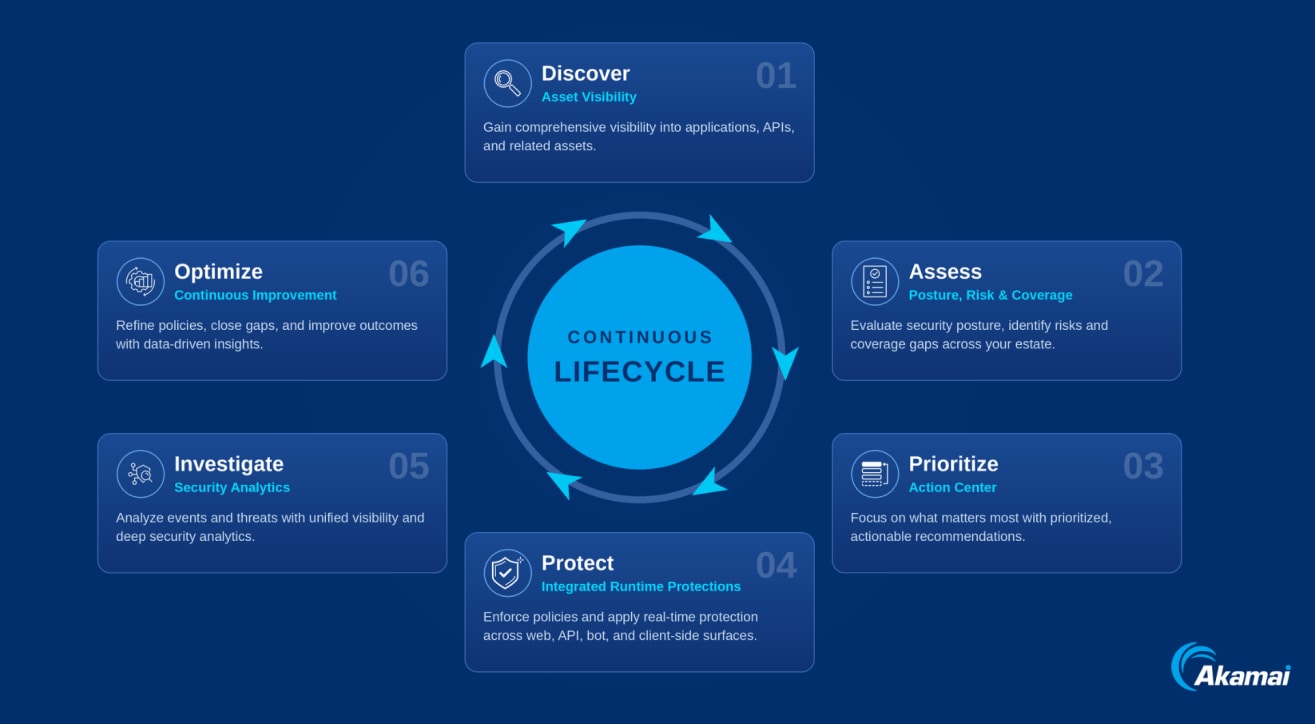
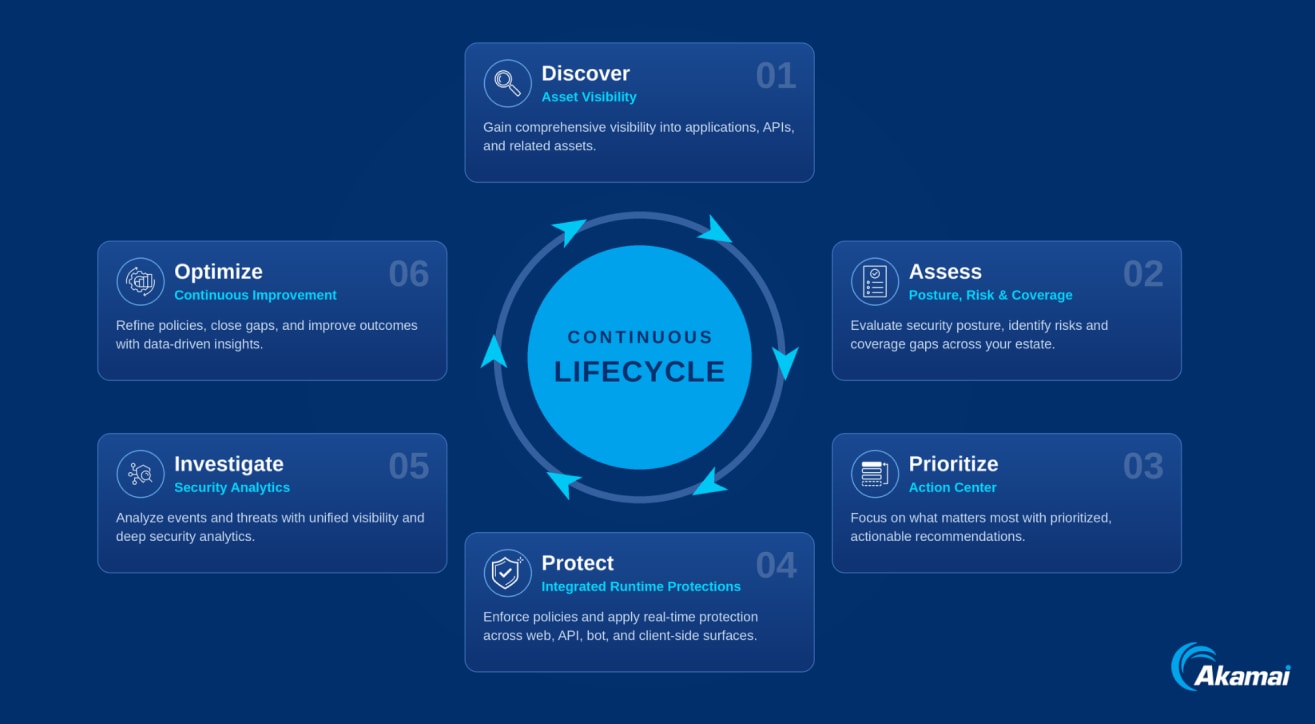
The first challenge is building a reliable picture of the application and API estate.
Traditional inventories often show what has been configured or formally onboarded. Production reality can be different. An API may begin to receive traffic before the security team knows about it. An application may exist with only part of the protection the organization expects. A hostname may be covered by one layer of protection but still have gaps in another.
Unified Asset Inventory brings these perspectives together.
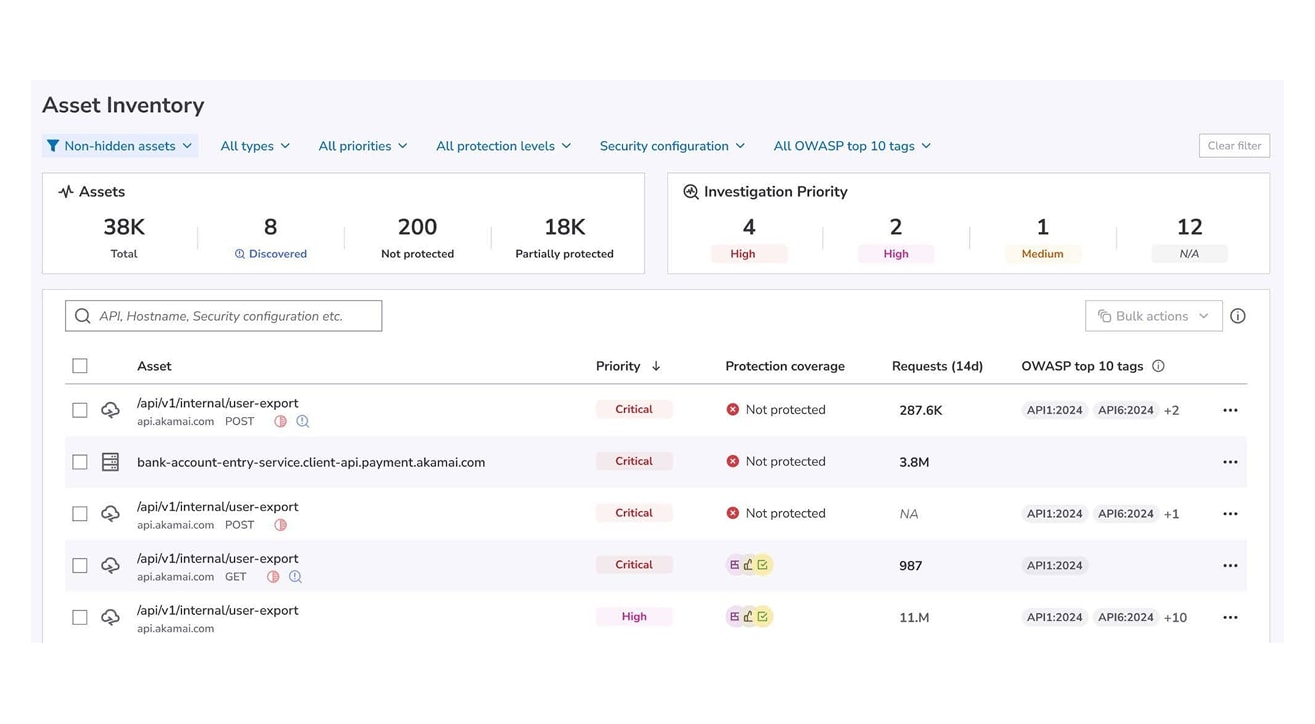
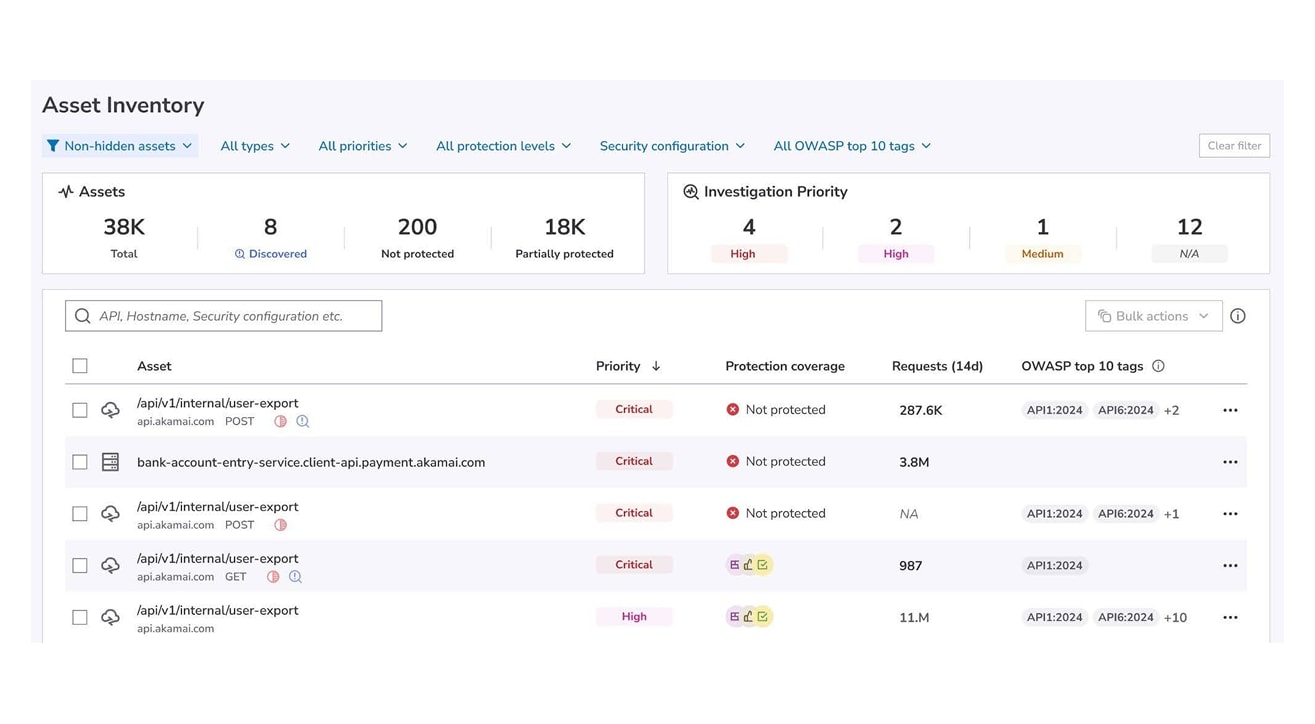
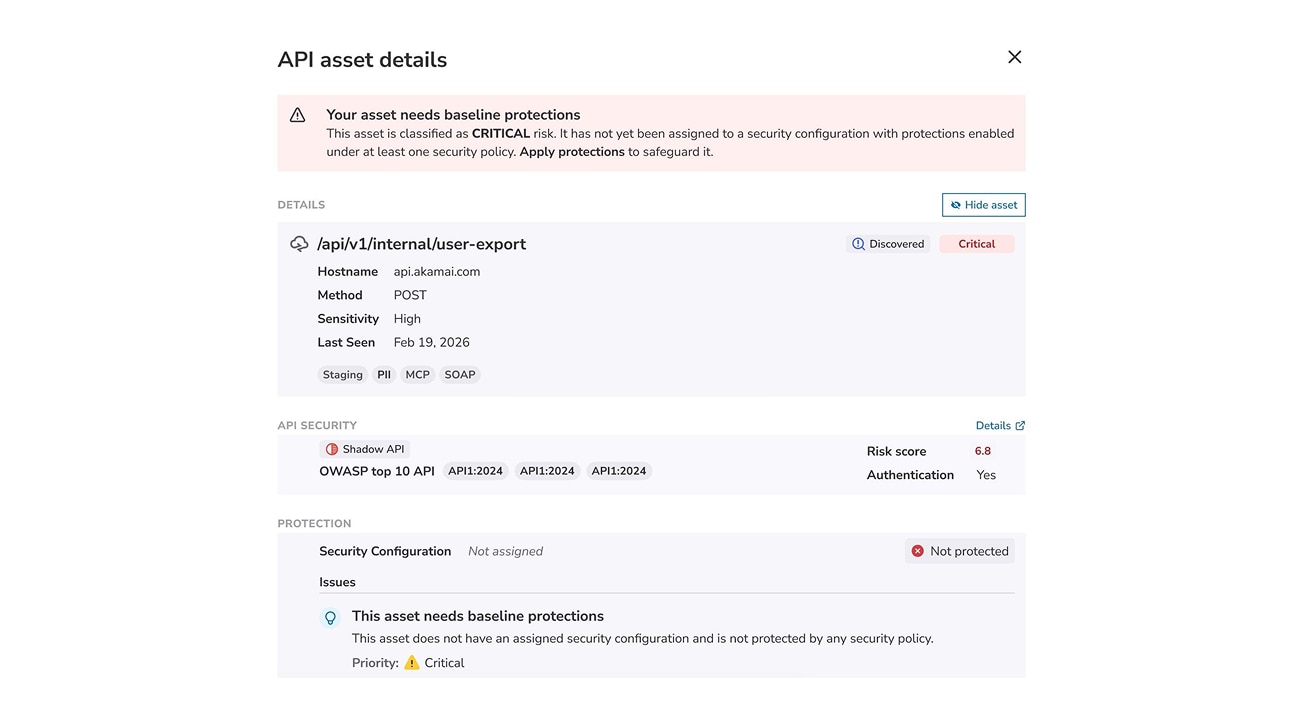
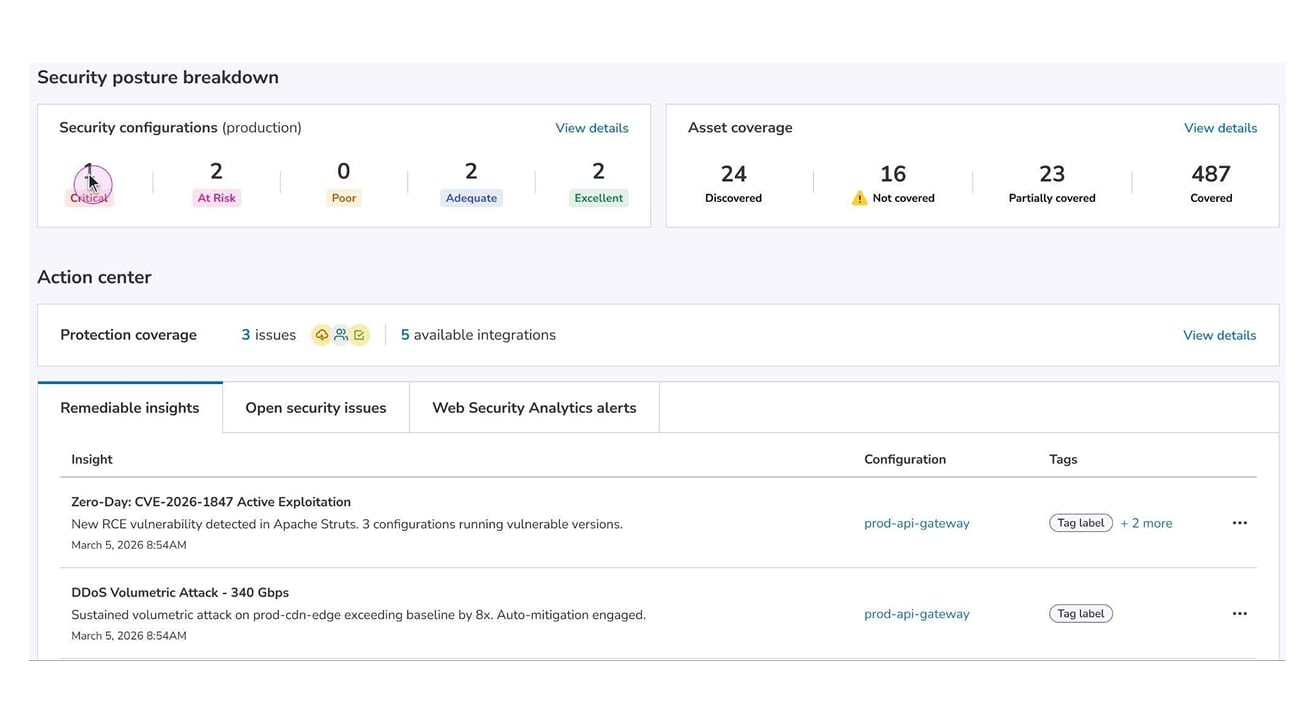
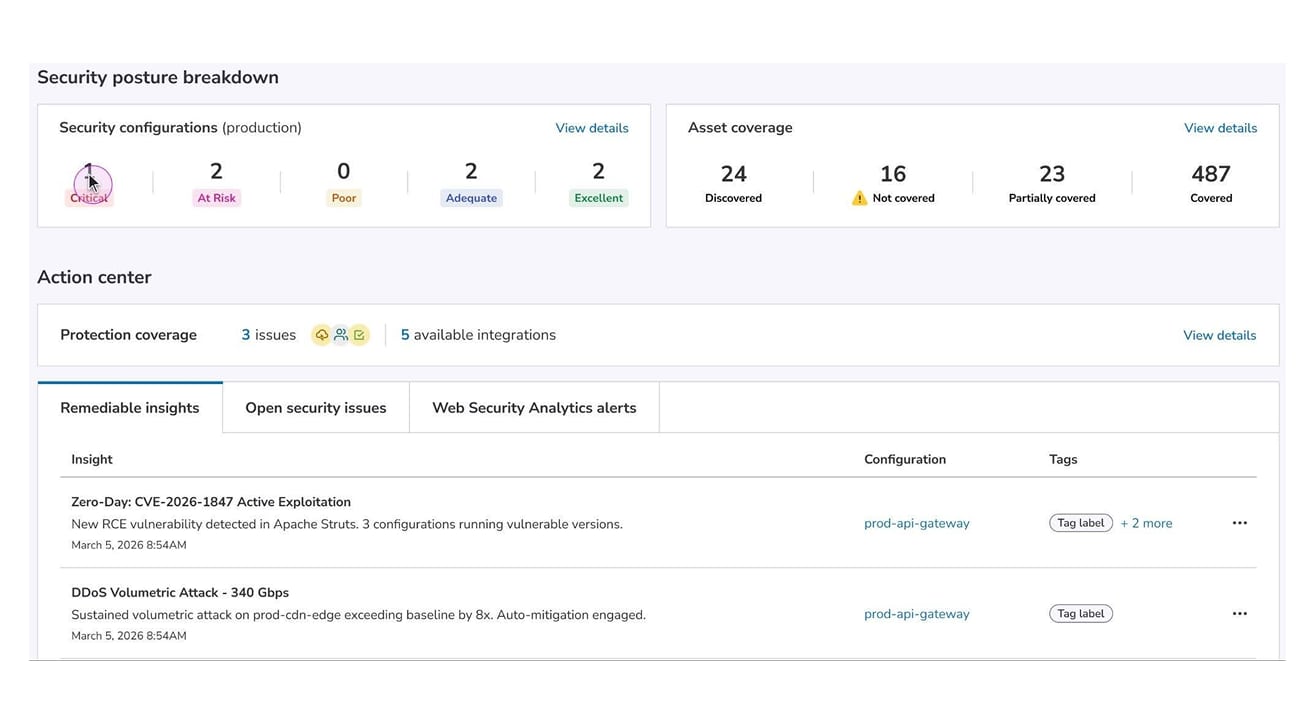
It provides a unified view of hostnames and APIs known to the Akamai Application Protection Platform, including assets already configured on the platform and assets discovered through observable production traffic. Instead of stopping at an asset list, it connects assets with protection coverage and available security context.
This helps security teams answer three important questions:
What assets do we have?
How well is each asset protected?
Which assets require attention?
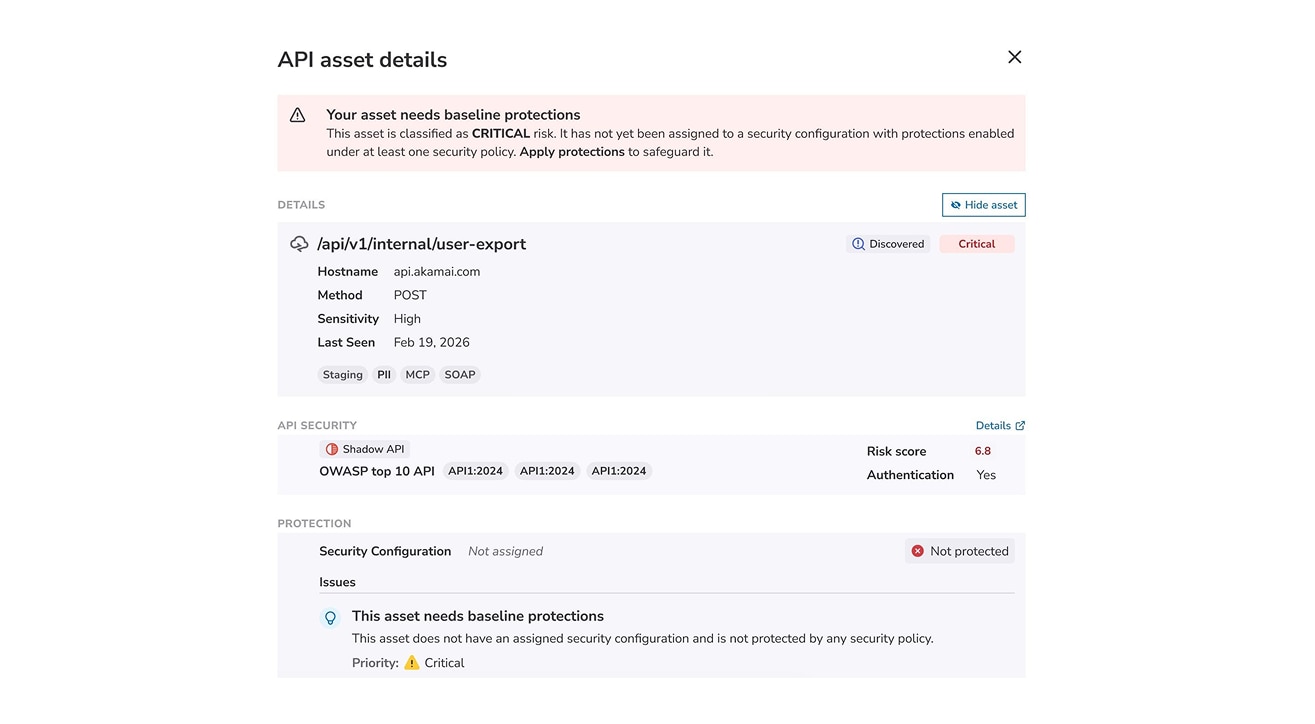
For an API, where API security data is available, context can include traffic activity, authentication status, sensitive-data information, API security risks, and whether the API has been observed but not formally declared. Protection information helps teams distinguish assets with stronger coverage from those with meaningful gaps or no protection.
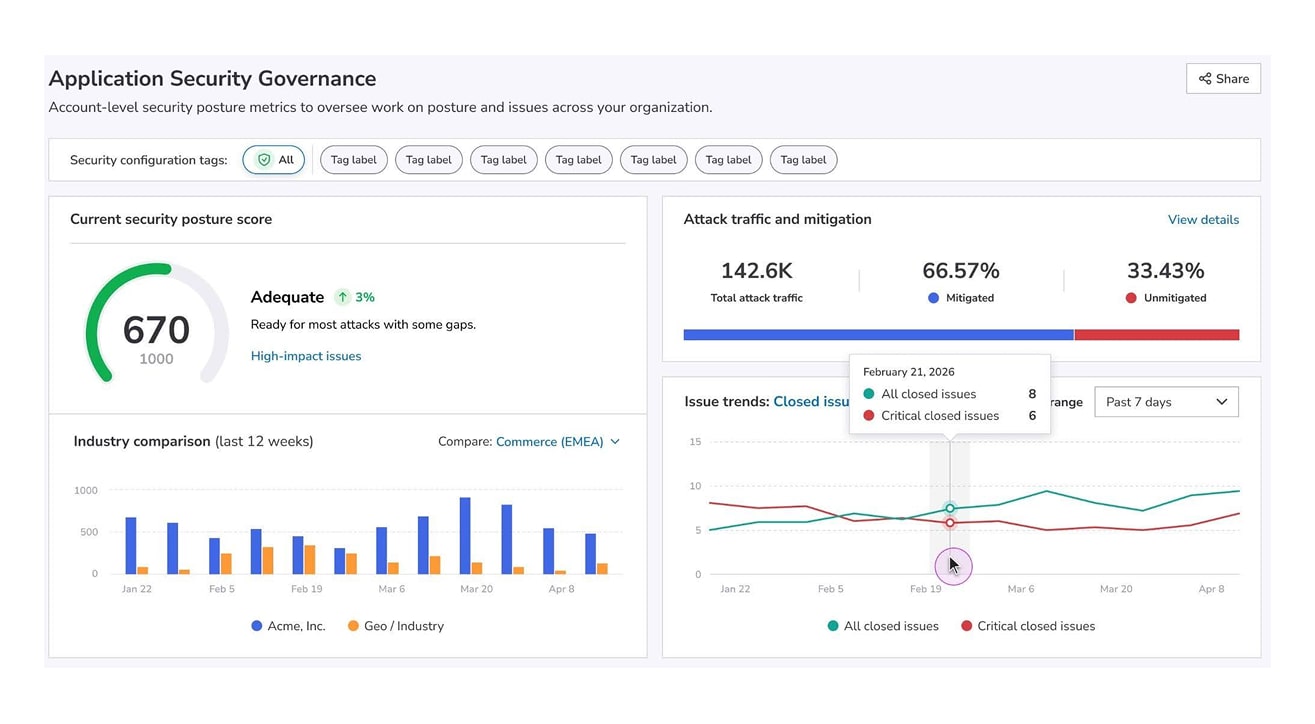
Just as important, the inventory is designed for prioritization. Signals such as sensitivity, traffic activity, and protection posture can help surface assets that require attention, rather than asking teams to manually work through a growing list of applications and APIs (Figure 2).