Background

Streamlining Application and API Discovery and Governance

August 31, 2026 by Aseem Ahmed

Share

Key takeaways

Modern application environments change continuously. New applications and APIs appear, traffic patterns shift, and assets can begin to receive production traffic outside established onboarding processes.

Unified Asset Inventory gives security teams a clearer view of hostnames and APIs known to the Akamai Application Protection Platform, including configured assets and assets discovered through observable production traffic.

The CISO Dashboard provides an account-level view of posture, risk, protection coverage, attack activity, mitigation trends, and critical items requiring executive attention.

Together, these capabilities help you move from discovery to assessment, prioritization, protection, investigation, and continuous improvement.

Modern application environments do not stand still. Applications change, APIs are added, services evolve, and assets can begin to receive production traffic before they are fully reflected in security workflows.

That creates a familiar problem for security teams. Visibility matters, but visibility alone is not enough. Teams also need to understand which assets are protected, where gaps remain, what needs attention first, and whether their overall security posture is improving.

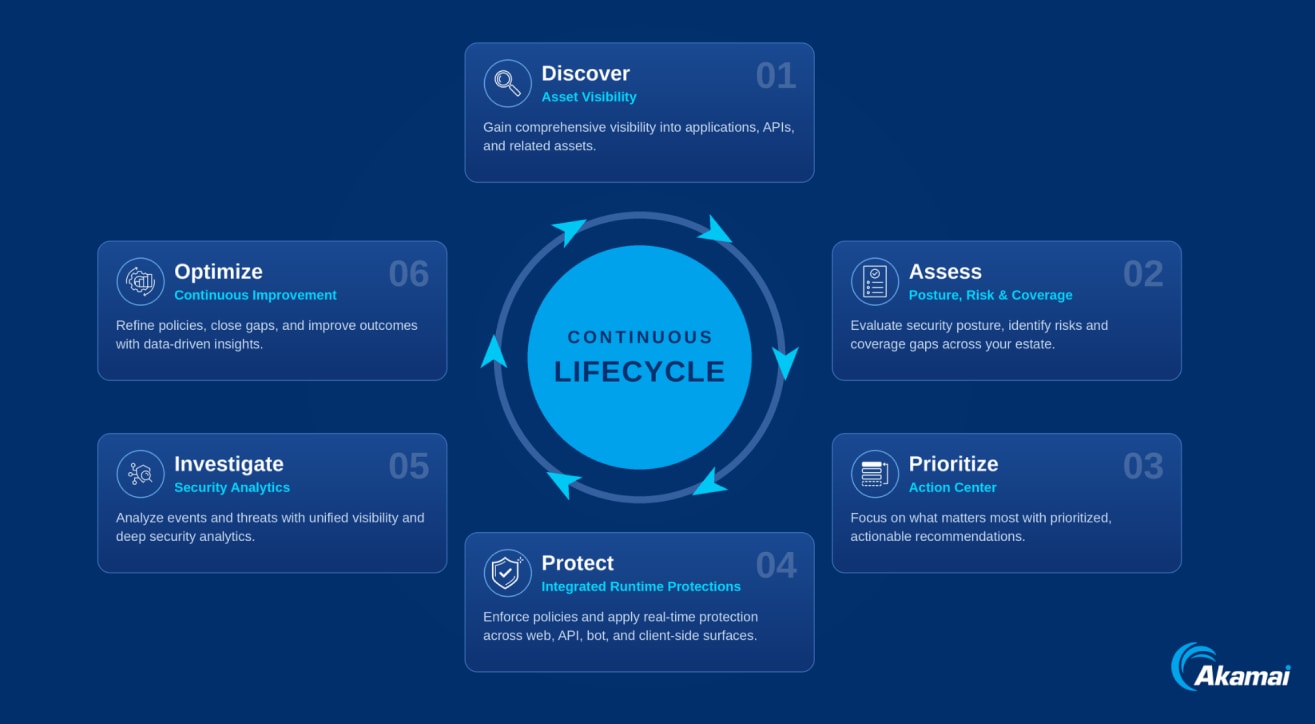
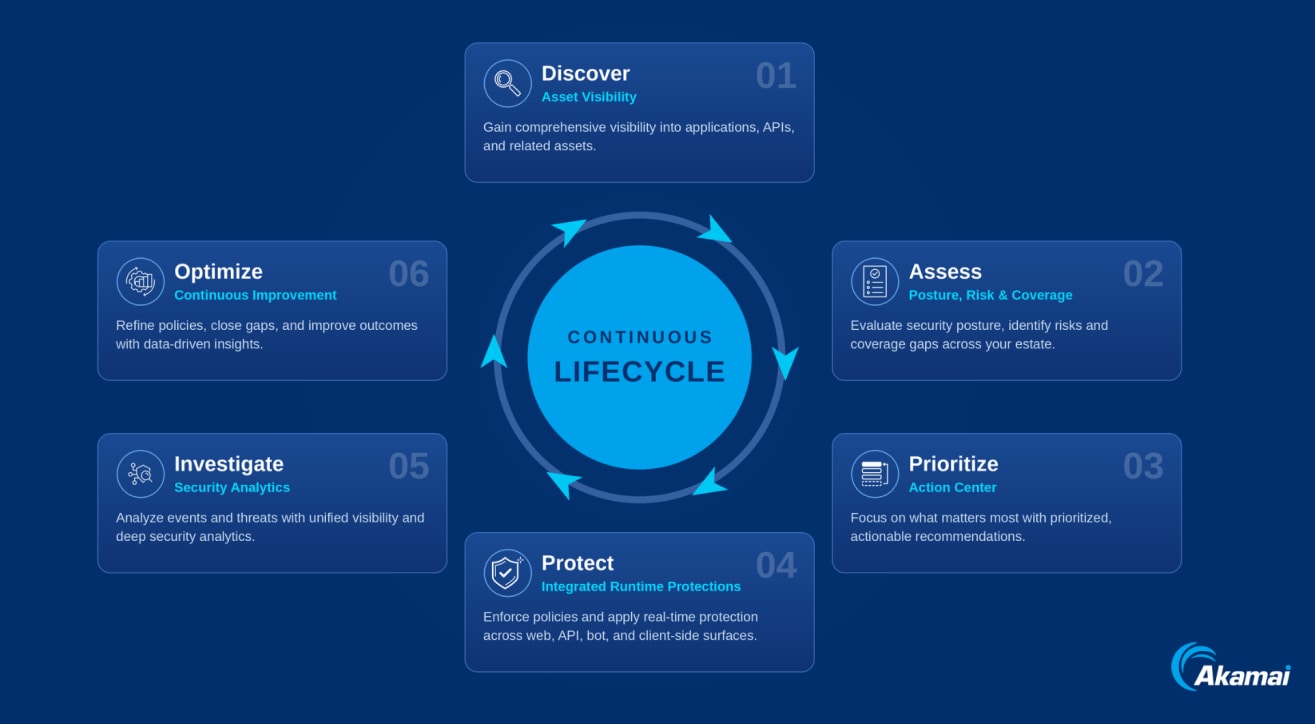
As shown in Figure 1, we view application protection as a continuous cycle within the closed loop platform approach: Discover. Assess. Prioritize. Protect. Investigate. Optimize.

As shown in Figure 1, we view application protection as a continuous cycle within the closed loop platform approach: Discover. Assess. Prioritize. Protect. Investigate. Optimize.
Fig. 1: The Akamai Application Protection Platform operating mode
As shown in Figure 1, we view application protection as a continuous cycle within the closed loop platform approach: Discover. Assess. Prioritize. Protect. Investigate. Optimize.

That cycle reflects a simple idea. Application protection is not a one-time deployment or a single control. Visibility informs posture. Posture informs priorities. Priorities guide protection and investigation. What teams learn should help improve the environment over time.

Two capabilities in the Akamai Application Protection Platform — Unified Asset Inventory and the CISO Dashboard — help connect operational visibility with executive governance.

Know what you have and how well it is protected

The first challenge is building a reliable picture of the application and API estate.

Traditional inventories often show what has been configured or formally onboarded. Production reality can be different. An API may begin to receive traffic before the security team knows about it. An application may exist with only part of the protection the organization expects. A hostname may be covered by one layer of protection but still have gaps in another.

Unified Asset Inventory brings these perspectives together.

It provides a unified view of hostnames and APIs known to the Akamai Application Protection Platform, including assets already configured on the platform and assets discovered through observable production traffic. Instead of stopping at an asset list, it connects assets with protection coverage and available security context.

This helps security teams answer three important questions:

  1. What assets do we have?

  2. How well is each asset protected?

  3. Which assets require attention?

For an API, where API security data is available, context can include traffic activity, authentication status, sensitive-data information, API security risks, and whether the API has been observed but not formally declared. Protection information helps teams distinguish assets with stronger coverage from those with meaningful gaps or no protection.

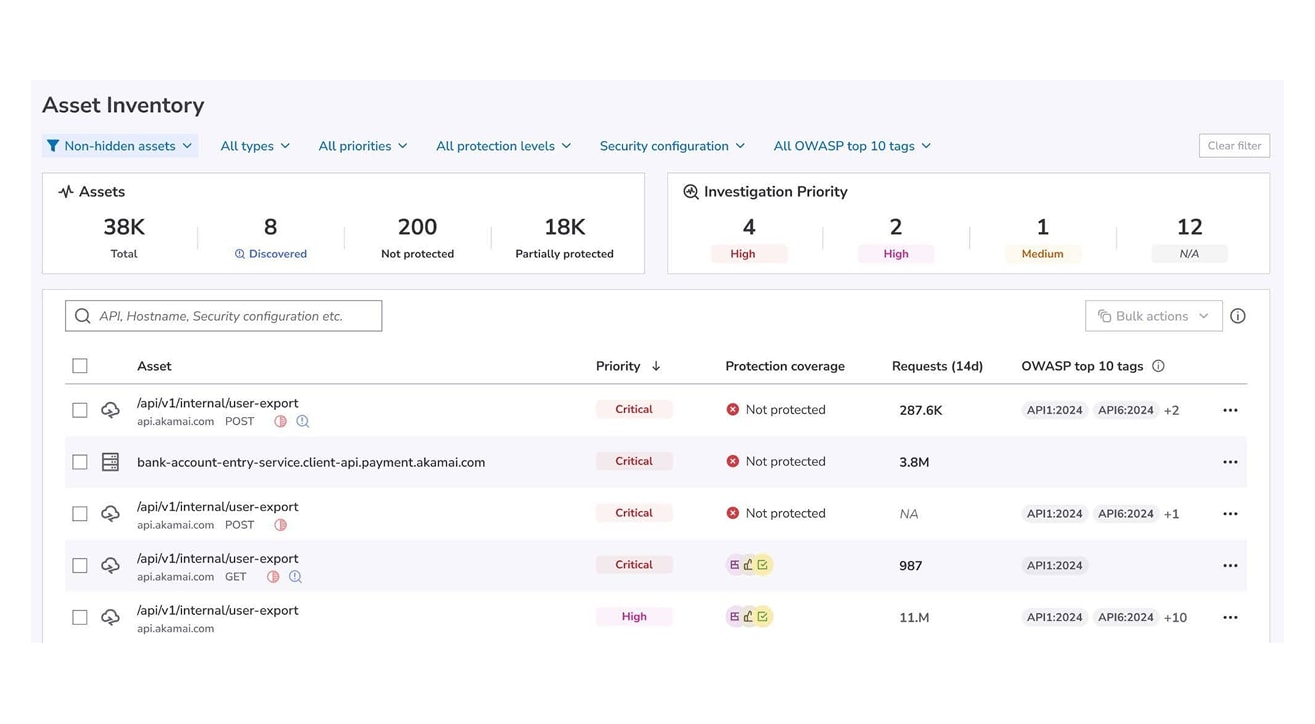
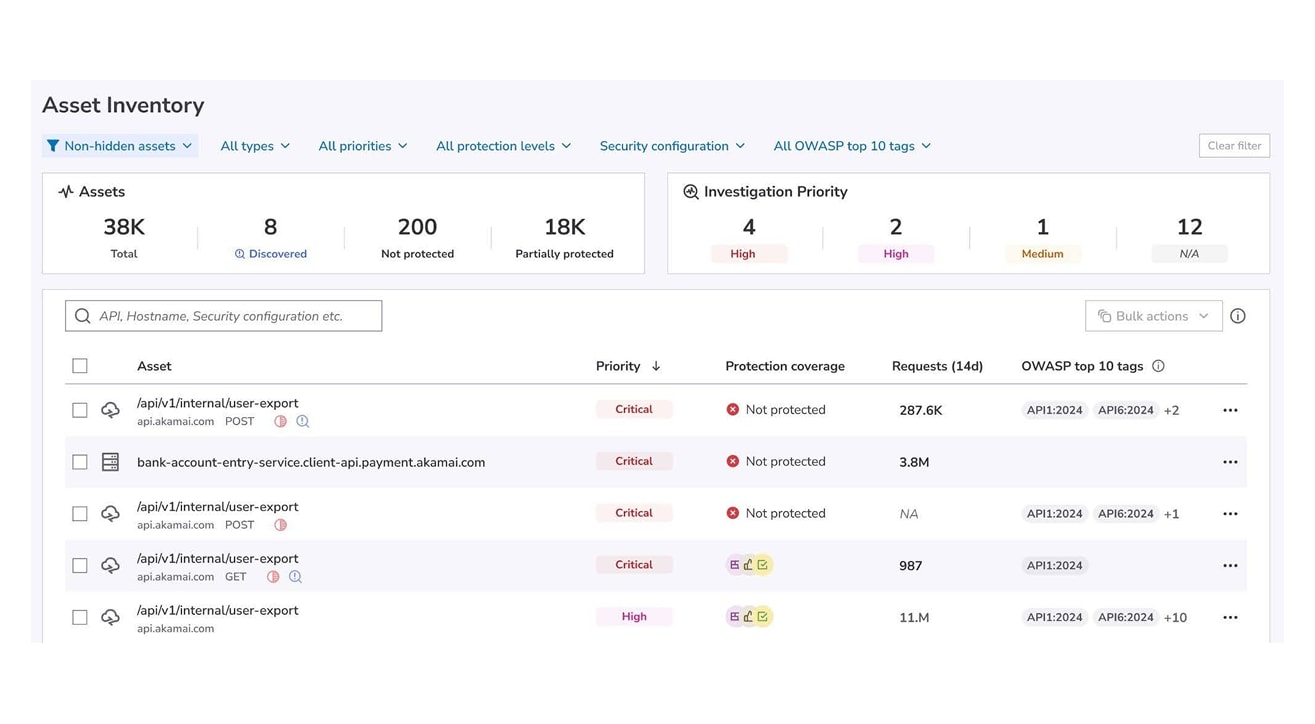
Just as important, the inventory is designed for prioritization. Signals such as sensitivity, traffic activity, and protection posture can help surface assets that require attention, rather than asking teams to manually work through a growing list of applications and APIs (Figure 2).

Signals such as sensitivity, traffic activity, and protection posture can help surface assets that require attention, rather than asking teams to manually work through a growing list of applications and APIs (Figure 2).

Fig. 2: Unified Asset Inventory, showing configured and discovered assets, protection level, priority, and available API context
Signals such as sensitivity, traffic activity, and protection posture can help surface assets that require attention, rather than asking teams to manually work through a growing list of applications and APIs (Figure 2).
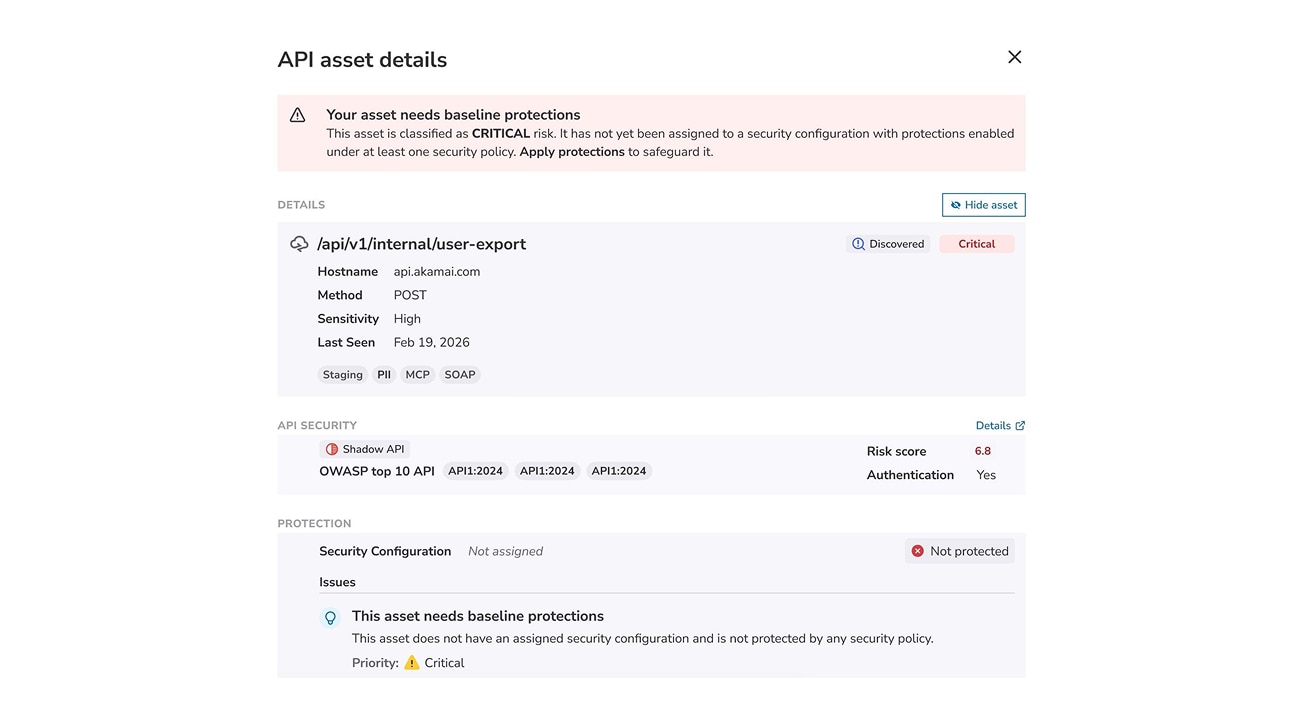
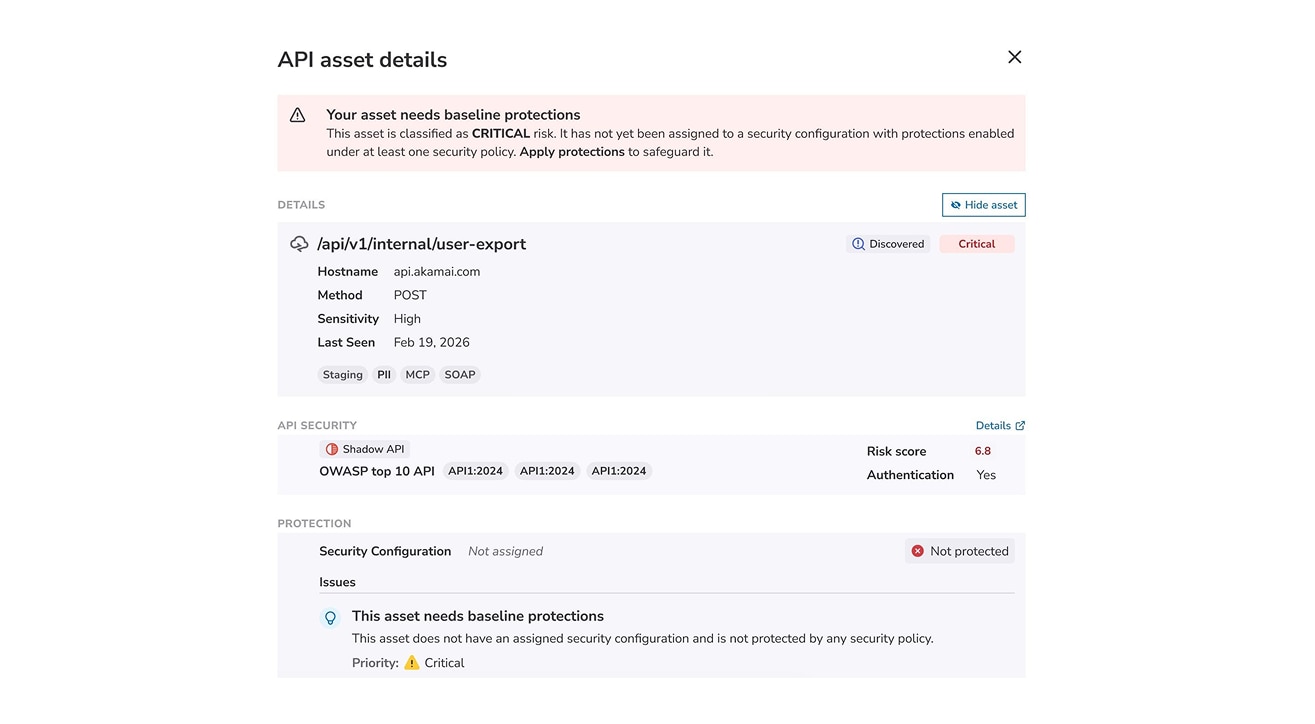
Consider a simple example. A previously unknown API appears in production traffic visible to Akamai. Unified Asset Inventory makes it easier to see that API, understand its activity and security context, review whether appropriate protections are present, and decide whether it should be brought under protection (Figure 3).

Unified Asset Inventory makes it easier to see that API, understand its activity and security context, review whether appropriate protections are present, and decide whether it should be brought under protection (Figure 3).
Fig. 3: Asset Detail view in Unified Asset Inventory, showing protection coverage gap, API security risk level, and priority
Unified Asset Inventory makes it easier to see that API, understand its activity and security context, review whether appropriate protections are present, and decide whether it should be brought under protection (Figure 3).

That is the progression from discovery to assessment to prioritization in practice.

Give security leaders the view they need

Security architects and AppSec teams need asset-level context. CISOs need a different view.

Their questions are more likely to be:

  • How secure are we overall?

  • Where is risk concentrated?

  • Are our protections working?

  • Are we improving?

  • Where should the organization focus next?

The CISO Dashboard is designed around that executive view.

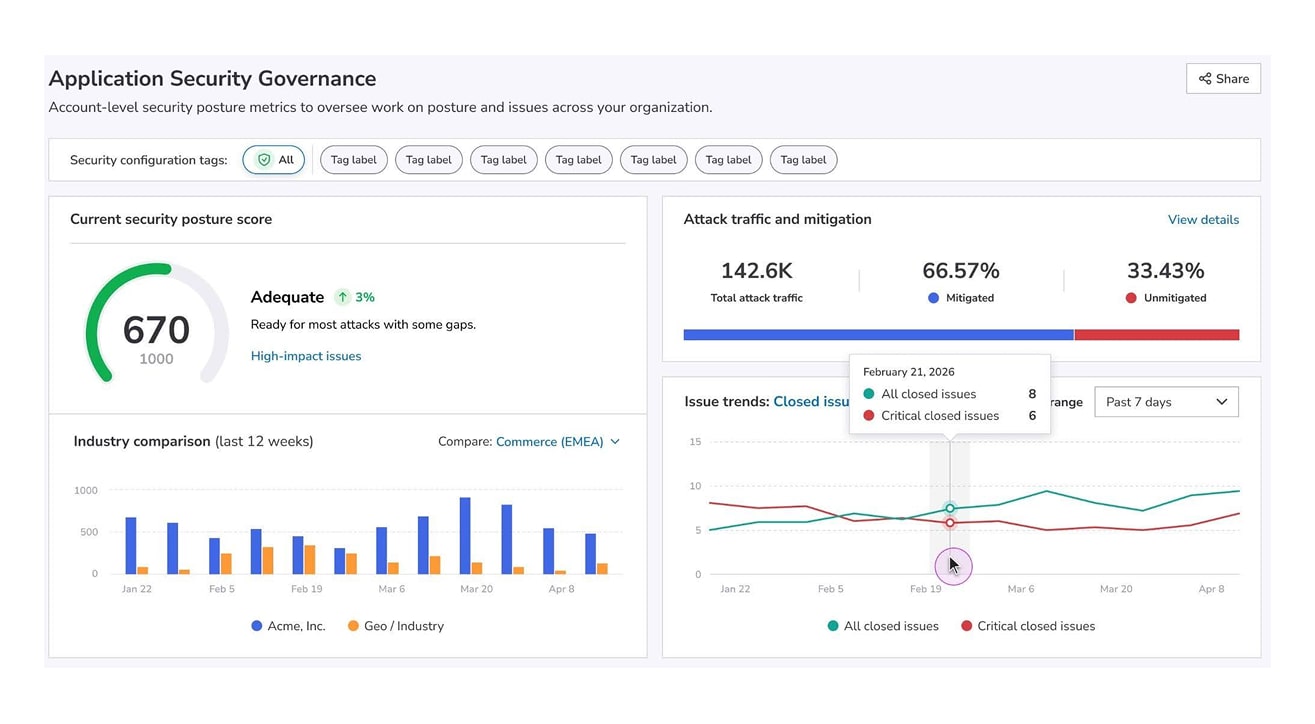
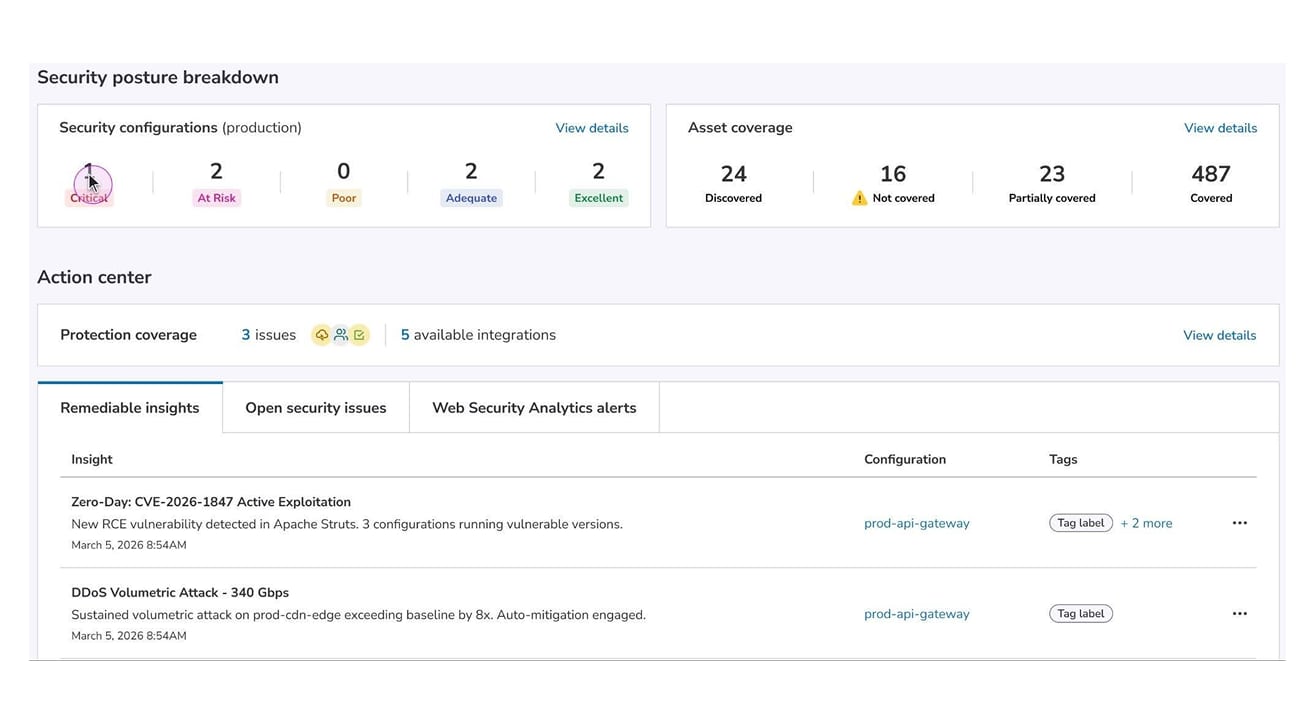
Rather than requiring security leaders to navigate individual configurations or operational alerts, the dashboard brings together an account-level picture of security posture, protection coverage, risk, attack activity, mitigation trends, and critical items that require attention (Figure 4).

Rather than requiring security leaders to navigate individual configurations or operational alerts, the dashboard brings together an account-level picture of security posture, protection coverage, risk, attack activity, mitigation trends, and critical items that require attention (Figure 4).
Fig. 4: The CISO Dashboard
Rather than requiring security leaders to navigate individual configurations or operational alerts, the dashboard brings together an account-level picture of security posture, protection coverage, risk, attack activity, mitigation trends, and critical items that require attention (Figure 4).

The dashboard helps security leaders understand areas such as:

  • Overall security posture and how it is changing over time

  • Where protection coverage or configuration gaps are concentrated

  • Which areas of the environment contribute most to risk

  • Attack pressure across protections such as web application firewall (WAF), distributed denial of service (DDoS), and bot defenses

  • How effectively detected attacks are being mitigated

  • Critical insights or issues that may require further attention

One important shift is from simply showing attack volume to showing the relationship between threat and defense. A CISO should be able to understand not only that the organization is being attacked, but whether controls are effectively responding.

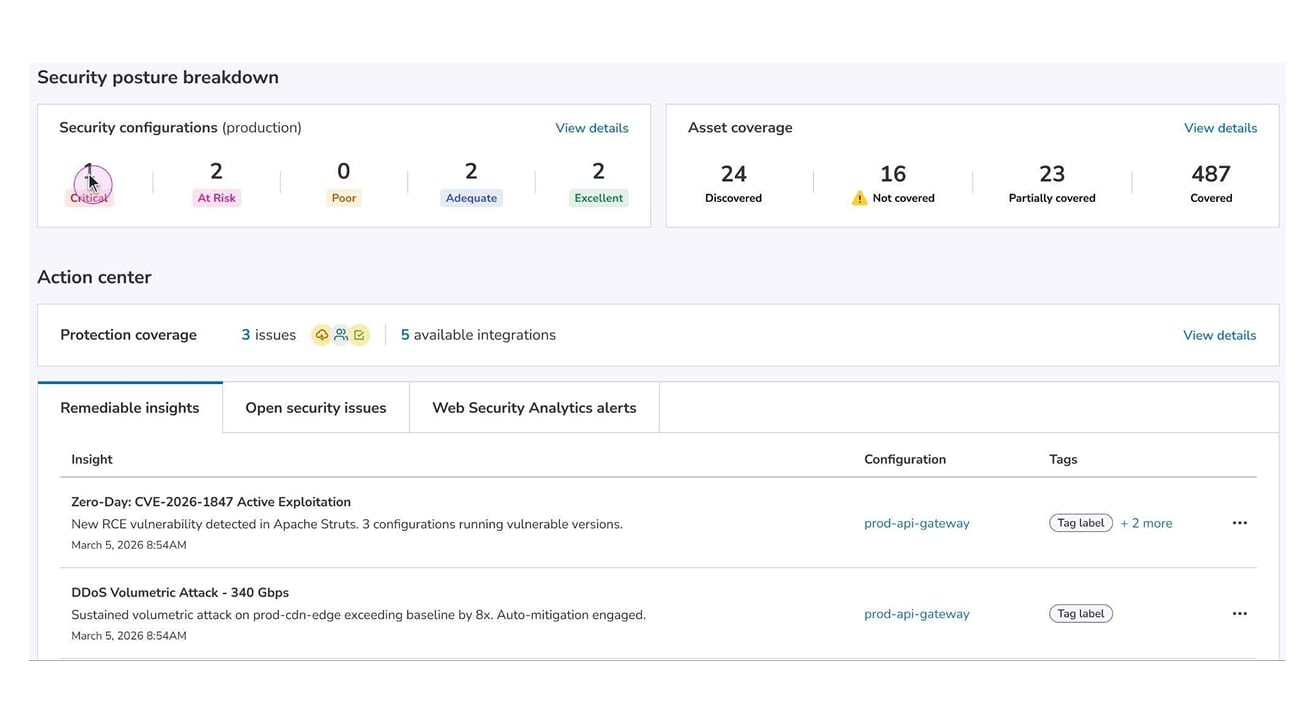
The dashboard also connects executive visibility back to operational workflows. When an important issue surfaces, the executive view can guide users toward the appropriate security experience for deeper investigation or action (Figure 5). 

When an important issue surfaces, the executive view can guide users toward the appropriate security experience for deeper investigation or action (Figure 5).
Fig. 5: The CISO Action Center provides executive level decision points
When an important issue surfaces, the executive view can guide users toward the appropriate security experience for deeper investigation or action (Figure 5).

The goal is not to turn the CISO Dashboard into another operational console. It is to give security leaders a clearer view of posture, risk, and progress, while helping teams focus on the work that matters most.

That is the progression from protection to investigation to optimization in practice.

Connect visibility, prioritization, and governance

Unified Asset Inventory and the CISO Dashboard serve different users, but they address the same underlying challenge.

Unified Asset Inventory helps practitioners understand what assets exist, how well they are protected, and which ones need attention.

The CISO Dashboard helps security leaders understand what that means for overall security posture, risk, and progress.

Together, they represent an important step toward a more connected application protection experience. Teams can see the estate, understand protection coverage, focus on meaningful gaps, take action, and measure whether security is improving over time.

The value of the Akamai Application Protection Platform: Improving outcomes

That is the value of the Akamai Application Protection Platform vision. Beyond simply offering more individual controls, it helps teams continuously understand risk, make better decisions, apply protection, investigate what is happening, and improve outcomes as application and API environments evolve. 

As applications and APIs become more dynamic, bringing discovery, prioritization, and governance closer together gives both practitioners and security leaders something increasingly important: a clearer understanding of what they are protecting, where attention is needed, and whether their security program is getting stronger over time.

About the Author(s)

Aseem Ahmed

Aseem Ahmed

Aseem Ahmed is a seasoned cybersecurity professional with more than 17 years of experience, specializing in product management, web application, and API security. Currently a Director of Appsec Product Management at Akamai, Aseem leads cross-functional teams to develop security strategies for applications, API, and DDoS protection.