A global streaming platform standardizes on CAT as the credential format that spans catalog, playback, billing, and downstream entitlement services. The potential benefits are huge: one token format, validated everywhere.
However, success depends on every validation point agreeing on what the token means.
The centralized architecture
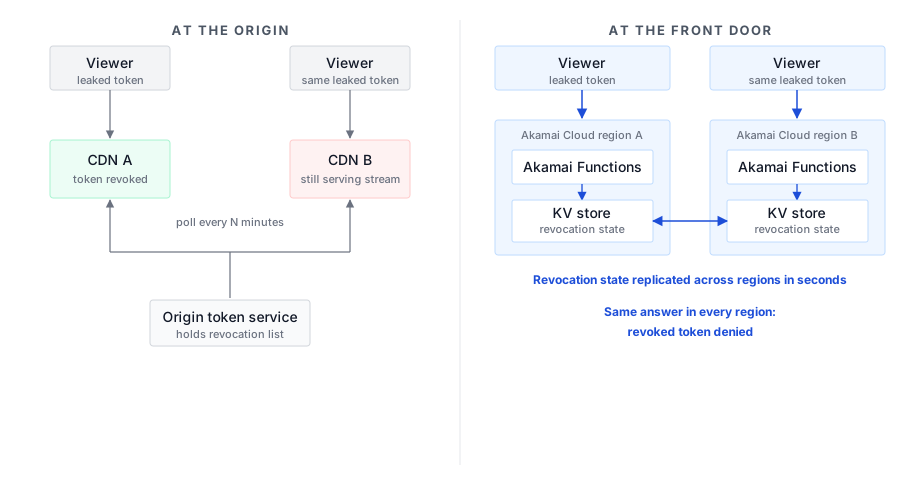
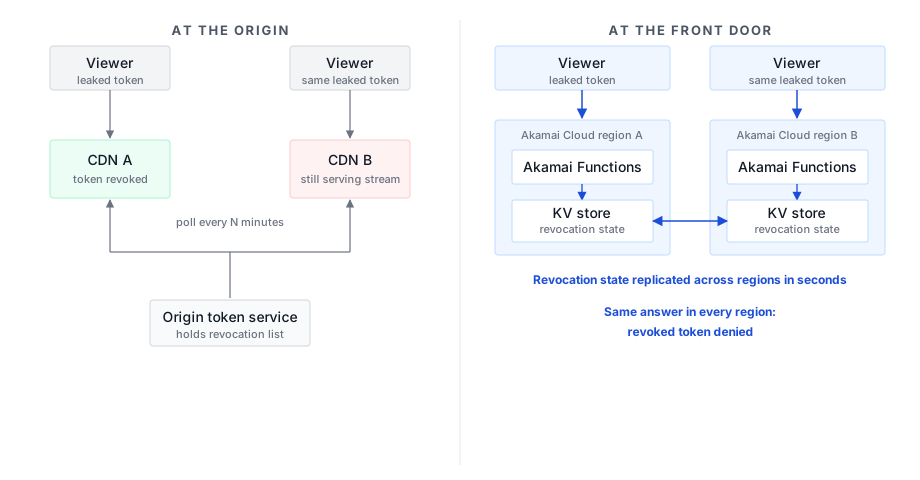
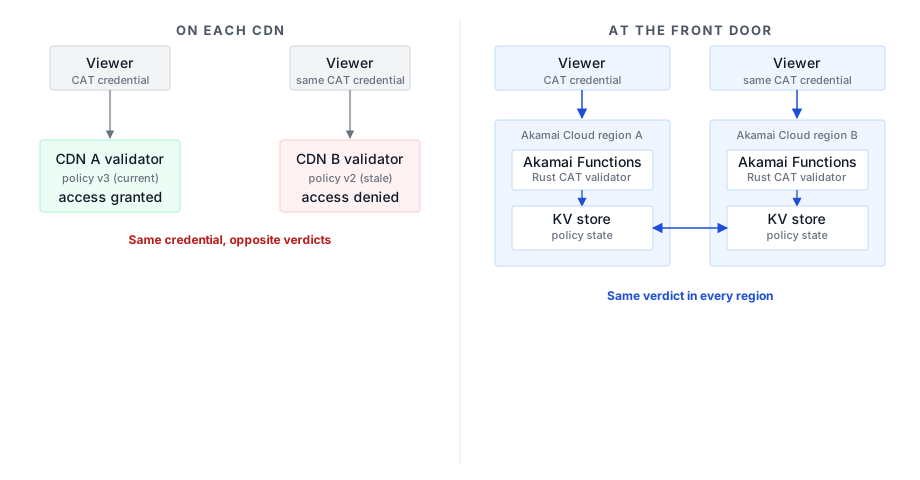
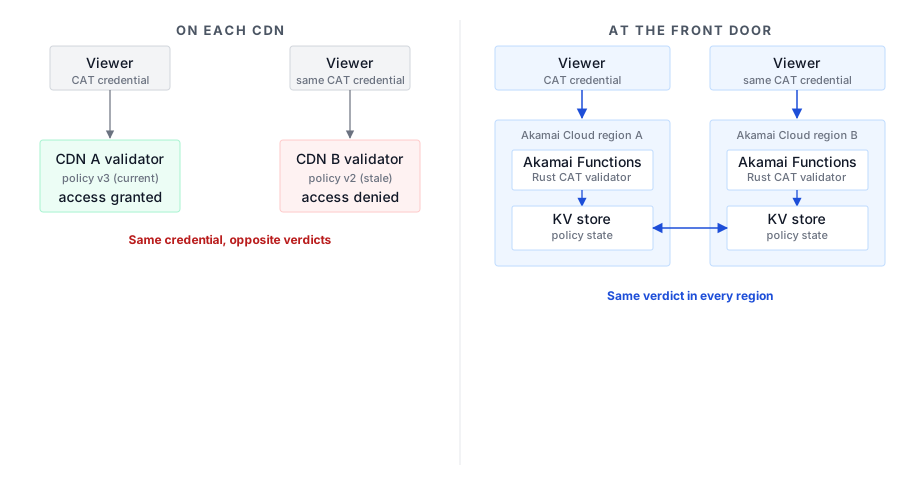
In a centralized solution, each CDN runs its own CAT validator, often implemented separately with separate caches of the policy graph. Several engineering teams are needed to maintain functionally identical validators. Drift between policy versions causes false denials on one CDN (paying subscribers are turned away) and false approvals on another (revoked tokens are still working).
The more difficult the validation gets — with multistep claims, signature verification, and downstream identity callouts — the worse the drift.
The Akamai Functions solution
With Akamai Functions, the validator runs once, as a single Wasm function on Akamai's network, not re-implemented separately on each CDN. It can be written in the language your team already uses — e.g., Go, JavaScript, Python, Rust, etc. — with Rust especially well suited to validation work that has to be both secure and fast on every request. Heavier validation logic (stateful checks, multistep claims, signature verification, and downstream calls to identity services) runs comfortably within the function.
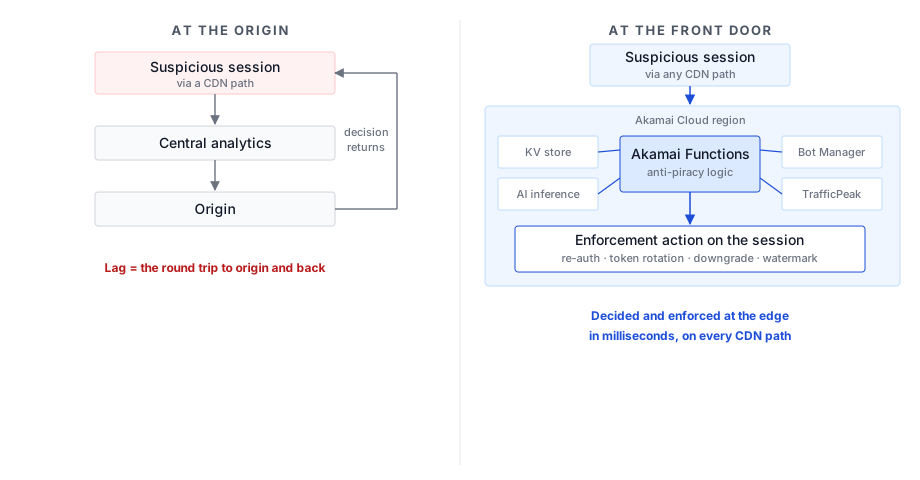
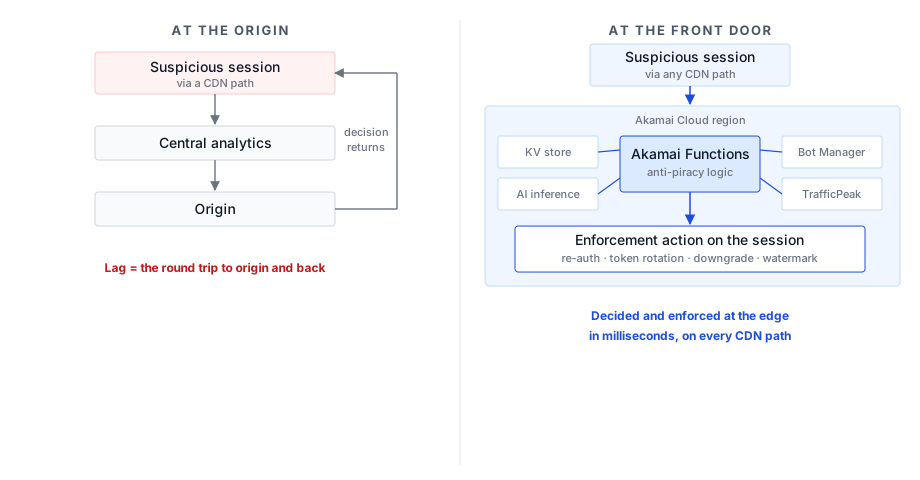
And because the function executes in Akamai Cloud regions, just behind our global front door of almost 4,350+ points of presence across 130+ countries, it minimizes latency for viewers almost anywhere they watch. The validator becomes a single source of truth: one codebase, one policy version, deployed globally, with the KV store holding the state used by every CDN (Figure 2).