






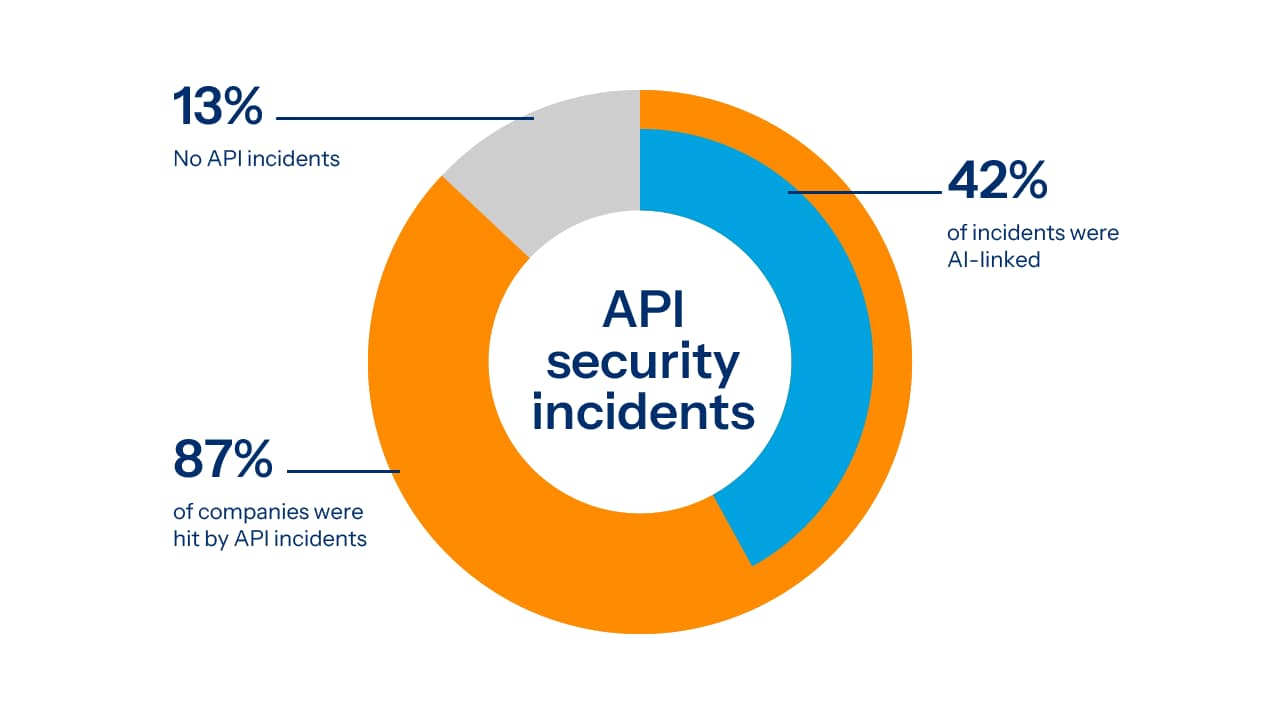
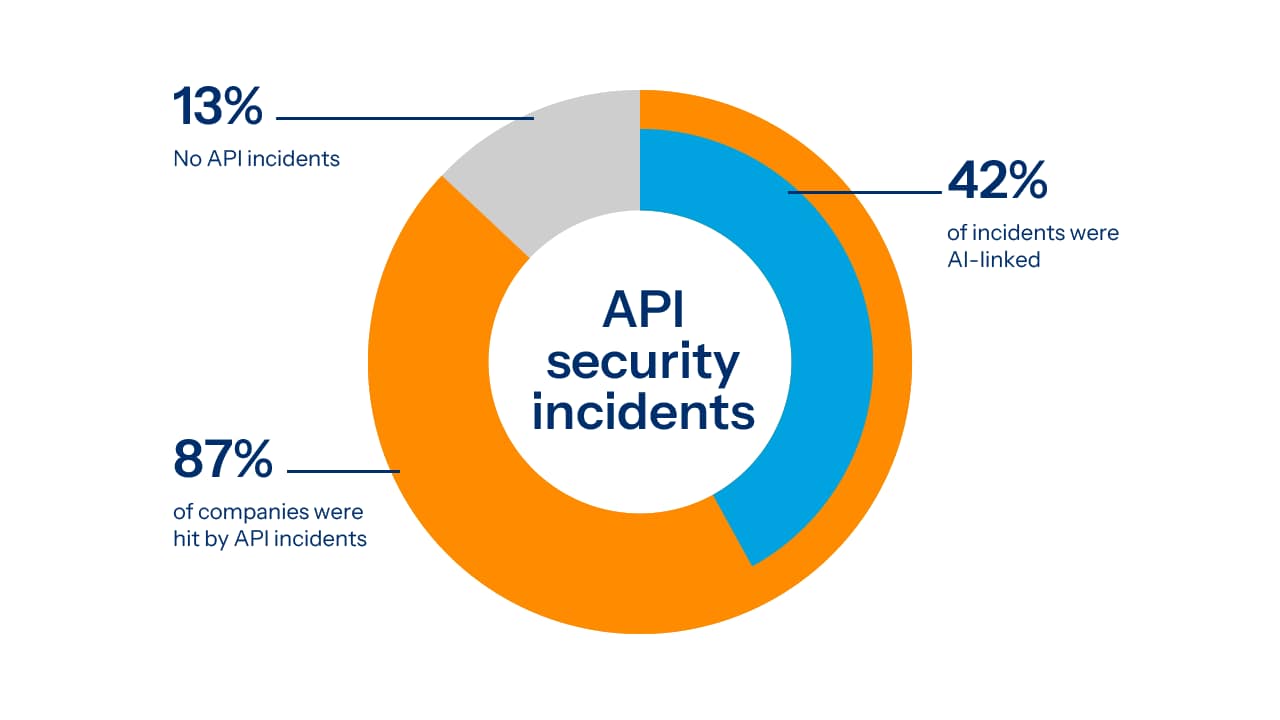
Organizations are accelerating AI adoption to create agentic experiences, investing roughly US$19 billion in the application layer this year. This rapid directive is flooding production with undocumented APIs, leading to a landscape where 87% of organizations experienced an API-related security incident in the past year.
Cover the full range of risks in application security
AI adoption is flooding production with unprotected endpoints. Gain control and set guardrails without slowing down development.
API incidents now affect 87% of enterprises and frequently target LLMs. This framework delivers layered security to protect every interaction from prompt to response.
How a layered, AI-powered defense works
Our purpose-built defenses protect the points where applications, APIs, and AI services are exposed, accessed, and abused. This approach has four foundational elements:
Customer Stories

Industry recognition
Frequently Asked Questions (FAQ)
Frequently Asked Questions (FAQ)
Vibe coding refers to development that prioritizes rapid functional shipping — “getting the vibe right” — over rigorous security architecture. This contributes to the finding that API misconfiguration is the leading cause of security incidents, cited by 54% of respondents in our 2026 study.
These endpoints are now the #1 target, involved in 42% of security incidents. While they are high-risk, they are often undocumented, contributing to a crisis where only 23% of security professionals know which of their APIs return sensitive data.
Known as the “USB-C for AI,” MCP simplifies how agents connect to data like Slack or SQL databases. However, “Shadow MCP” is a critical risk, and Forrester predicts 30% of app vendors will launch their own MCP servers by the end of 2026, further complicating the unmanaged attack surface.
Traditional firewalls struggle with agentic traffic, which is expected to grow 1,000x by 2027. While 45% of enterprises prioritize service continuity, manual responses are too slow. AI-powered reconnaissance can now exploit system flaws in minutes.
It is a shift from reactive manual tuning to autonomous protection to address the fact that only 18% of organizations feel “well prepared” for AI-linked API attacks. It uses behavioral AI to recognize machine-speed reconnaissance efforts and exploits before they execute.
As internal agents call external tools, the attack surface expands exponentially. If a third-party agent is compromised, it can poison your internal agent’s context, leading to unauthorized actions — a top concern for the 40% of organizations worried about malicious prompt injections.
By adopting a layered runtime model that provides situational awareness across the entire IT stack. Currently, 59% of organizations say gaining better visibility into their AI risk is their highest priority for enterprise resilience.
Resources

Contact us
Let’s talk about your needs and how Akamai can help your enterprise innovate with confidence in the AI era.