

Background

Synthetic CISOs Call AI Agents the Most Underestimated Risk

November 04, 2026 by Kimberly Gomez

Share

Key takeaways

AI agents ranked last among today's AI security concerns in a survey of 1,067 synthetic CISOs (AI personas modeled on enterprise security leaders), but topped the list of risks that the industry is underestimating.

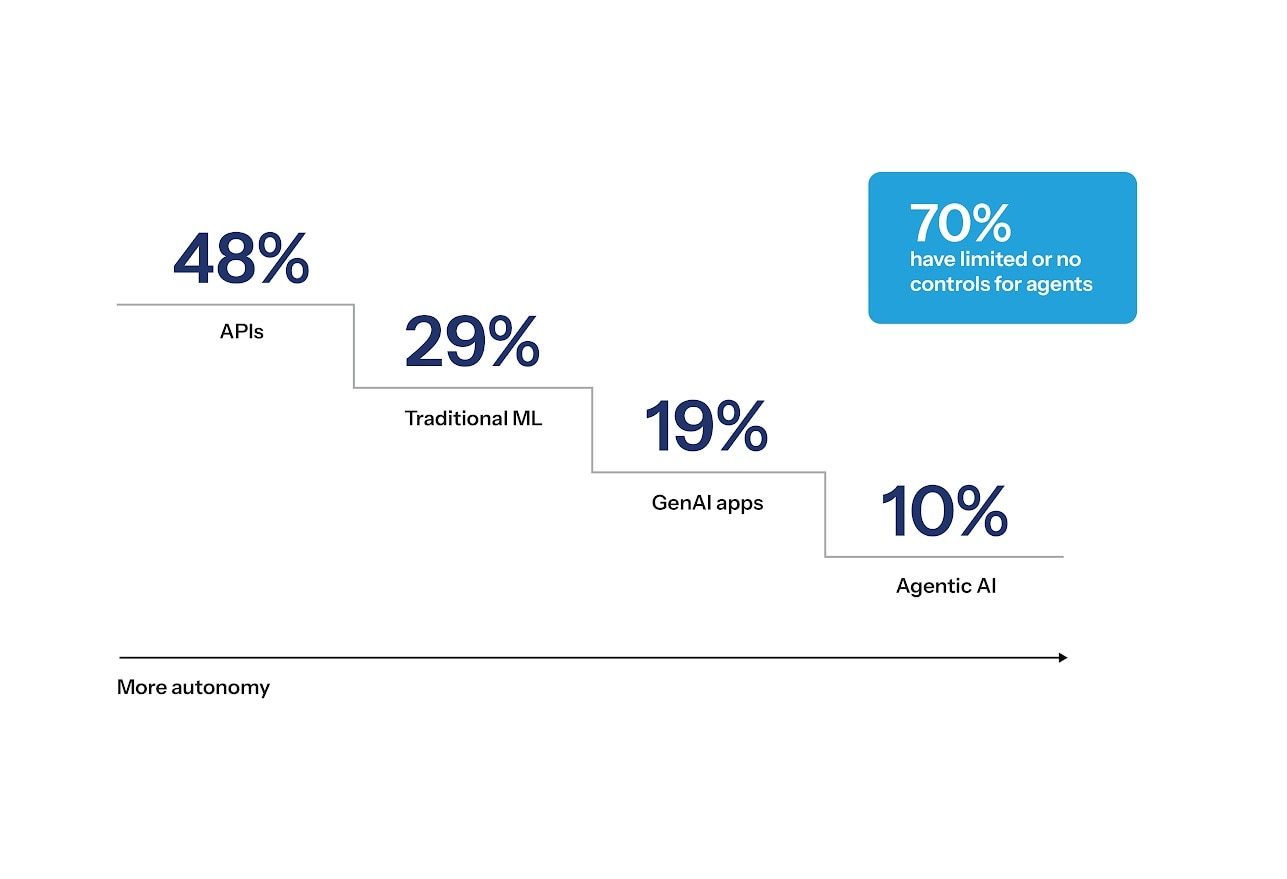
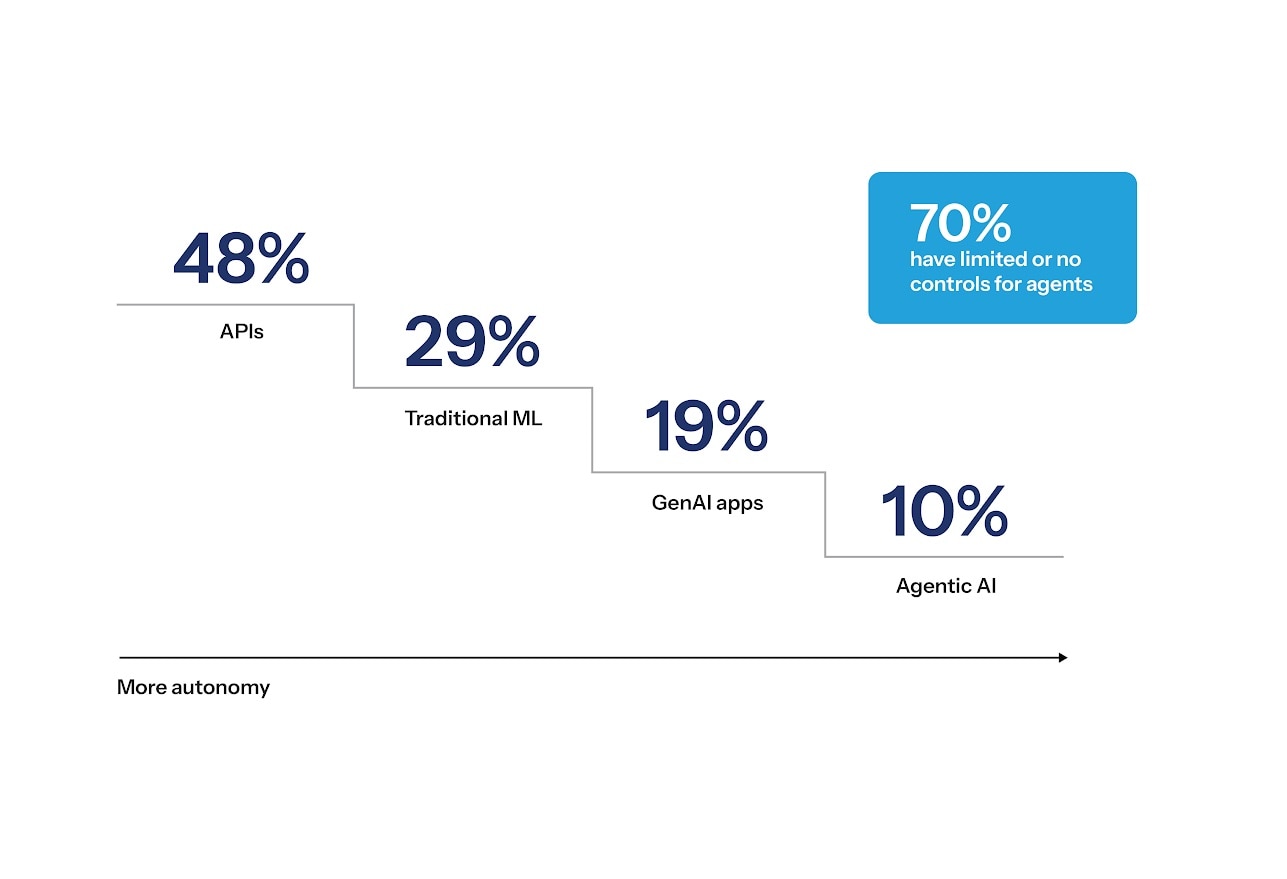
Only 10% of synthetic CISOs report having mature security controls for AI agents, compared with 48% with mature security controls for APIs. Agents do their work through APIs, and attacks on AI-linked APIs were the most common API incident in Akamai's 2026 API Security Impact Study.

Security teams can get ahead of agent risk by inventorying agents, scoping their access to least privilege, and monitoring the APIs they call before agents get write access.

If you ask security leaders which AI risks worry them most, you'll likely hear about sensitive data leaking into chatbots and employees using AI tools nobody approved. Those problems are visible to them every day. In fact, Akamai's State of the Internet (SOTI) report Speed, Scale, and Nonhuman Identity: The Agentic Threat Landscape  found that more than 6% of employee conversations with AI chatbots contain sensitive information, and 47% of AI conversations on work devices happen through personal accounts that security teams largely can’t see.

If, next, you ask what risk the industry is overlooking, the answer will probably shift to AI agents. That same SOTI report found that 4.1% of AI bot actions, like logins and checkouts, already run through the Model Context Protocol (MCP), a common standard for connecting agents to outside tools. Security teams are letting these agents carry out multistep tasks on their own, often with far more access than the job requires.

What is a synthetic CISO?

A synthetic CISO is an advanced, data-calibrated AI persona trained on real-world demographic, firmographic, and behavioral data from actual enterprise security leaders. Rather than replacing human research, synthetic panels allow researchers to simulate decision-making, benchmark emerging sentiment, and test scenarios against established industry baselines.

Why we asked synthetic CISOs about agentic risk

To learn more about how security leaders weigh these risks, Akamai commissioned Evidenza to survey 1,067 synthetic CISOs. The respondents are AI personas grounded in real-world data — a fitting panel for a survey about AI threats. Whenever possible, we checked the synthetic CISOs’ answers against our own research with security professionals (see the About this research section for more information on our methods).

How do synthetic CISOs view AI security overall?

Synthetic CISOs see AI as a real threat.

  • 83% govern customer-facing AI with policy or limits

  • 62% of synthetic CISOs treat AI as an operational security threat

  • 56% say AI favors attackers

  • 35% say the board pushes hardest on AI security

  • 5% still believe AI is hype

That tracks with what security leaders told us in our 2026 API Security Impact Study: How API Risks Threaten Your AI’s Resilience, a global survey of 1,840 real-life security professionals. Securing AI was their top security priority for the year ahead, followed by defending against AI-powered attacks.

But AI agents, which can act inside company systems and have the weakest controls, rank near the bottom of synthetic CISOs' concerns today.

Synthetic CISOs believe the risk of agents is underestimated

Synthetic CISOs believe the industry is underestimating the risk of AI agents and the access they're given. The survey asked one open-ended question: “In one sentence, what AI security risk is the industry most underestimating right now?” The top three themes were all about agents.

  1. Nonhuman identities, like agents and service accounts, with too much access (31%)

  2. Agent-driven fraud and access abuse (26%)

  3. Runaway agents (25%)

Where agent risk ranks when stacked against today’s threats

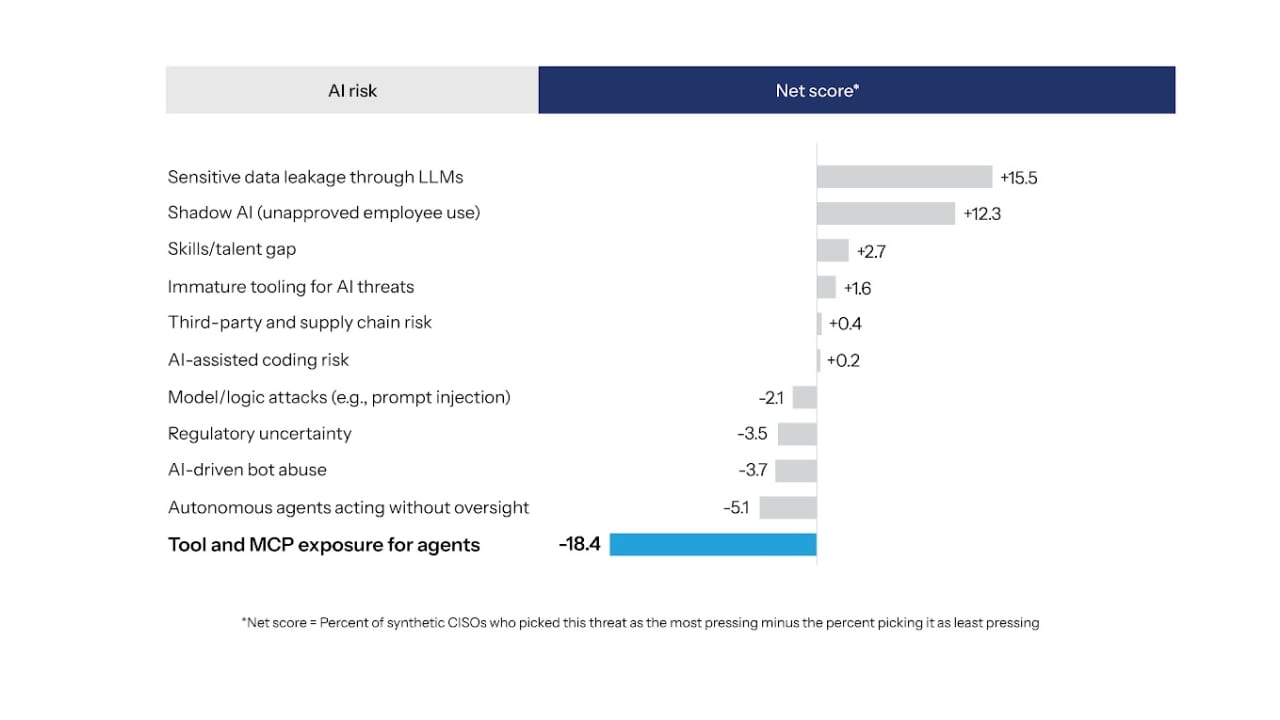
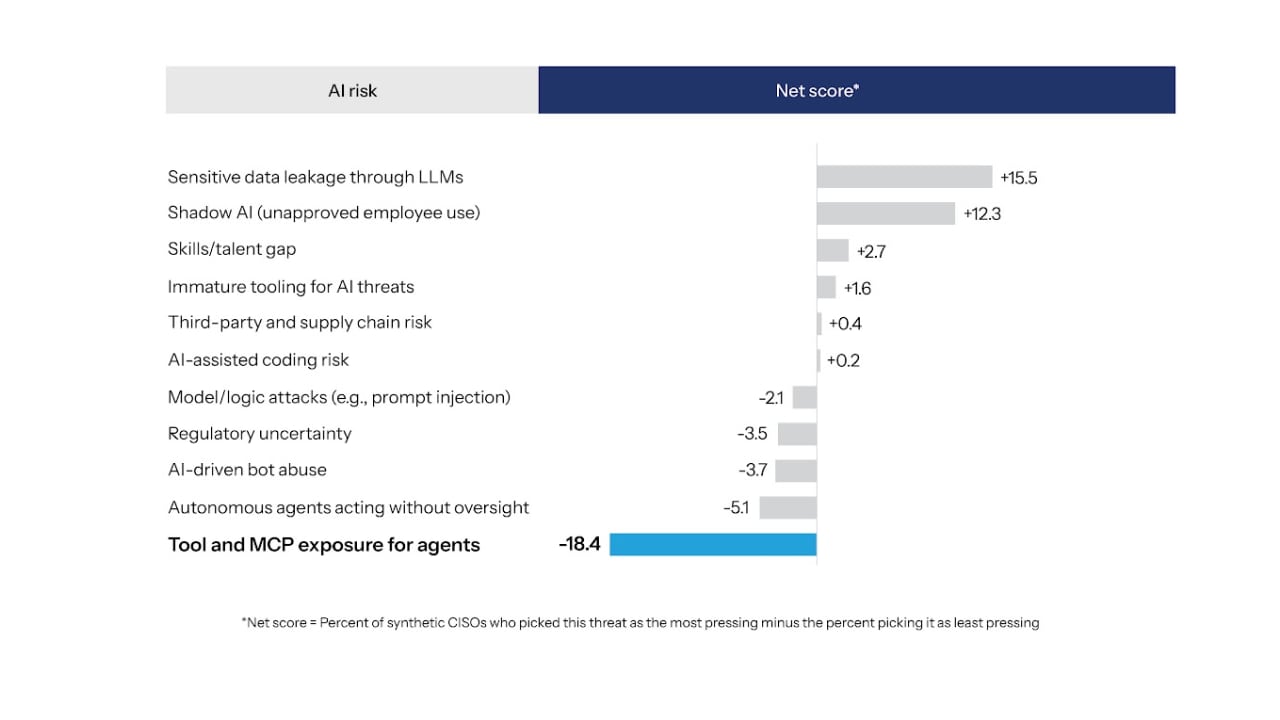
These results are surprising because when the same synthetic CISOs were asked to rank 11 most pressing AI security challenges, they ranked agents' access to tools and data, including through MCP, last. They put sensitive data leaking through chatbots and shadow AI at the top (Figure 1).

Synthetic CISOs: Most to least pressing AI security challenges today chart
Fig. 1: Synthetic CISOs: Most to least pressing AI security challenges today
Synthetic CISOs: Most to least pressing AI security challenges today chart

Akamai's 2026 API Security Impact Study found a similar split among security professionals: APIs leaking sensitive data topped their list of AI-related API risks (43%), while weak access control and identity management came in last (19%).

Synthetic CISOs’ view of the future

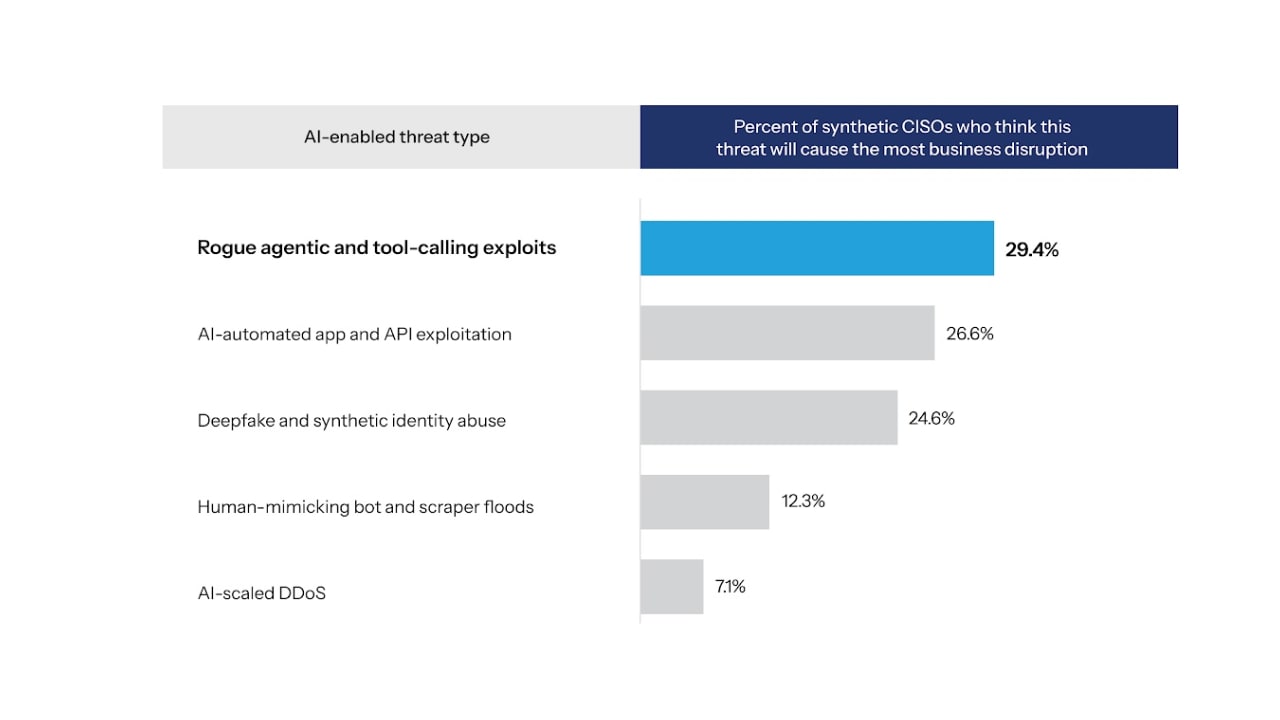
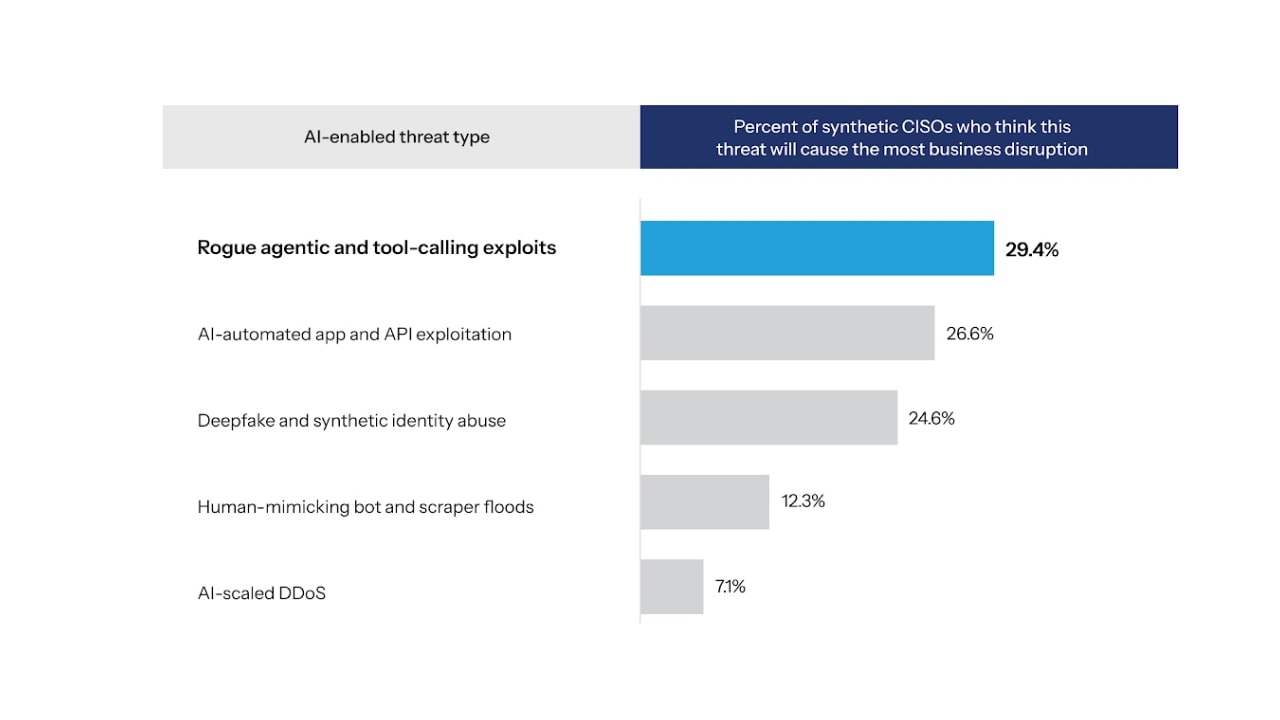
When the synthetic CISOs looked ahead, however, agents moved to the top of the list of AI-enabled threats. When asked which AI-enabled attack will cause the most business disruption by 2030, 29% picked rogue agents, more than any other answer (Figure 2).

Synthetic CISOs: Biggest AI-enabled threat by 2030 chart
Fig. 2: Synthetic CISOs: Biggest AI-enabled threat by 2030
Synthetic CISOs: Biggest AI-enabled threat by 2030 chart

In other words, the risk the personas ranked as lowest today is the one they expect to matter most by 2030.

How ready are security teams to protect AI agents?

According to the panel, most security teams aren't ready to protect AI agents yet. The synthetic CISOs rated how mature their protections are across four layers of technology, and maturity drops at every step toward autonomy (Figure 3).

Share of organizations with mature controls, by layer chart
Fig. 3: Share of organizations with mature controls, by layer
Share of organizations with mature controls, by layer chart

Nearly half of the synthetic CISOs reported mature controls for APIs but only 10% say the same for AI agents. Furthermore, 70% have limited or no dedicated controls for agents at all.

Agents do their work through APIs, so this drop-off is a problem. Strong API controls give teams a head start, but most weren't designed with an autonomous caller in mind.

And those APIs are already under attack. In our 2026 API Security Impact Study, attacks on APIs linked to AI apps, agents, and large language models (LLMs) were the most common type of API incident, reported by 42% of organizations that had one. Fewer than half of security professionals (49%) felt well prepared for them.

Skills are thin, too: 80% of the synthetic CISOs say their teams have only partial or minimal skills for defending against AI threats, and only about 1 in 10 say they're well covered.

What does the agent risk look like?

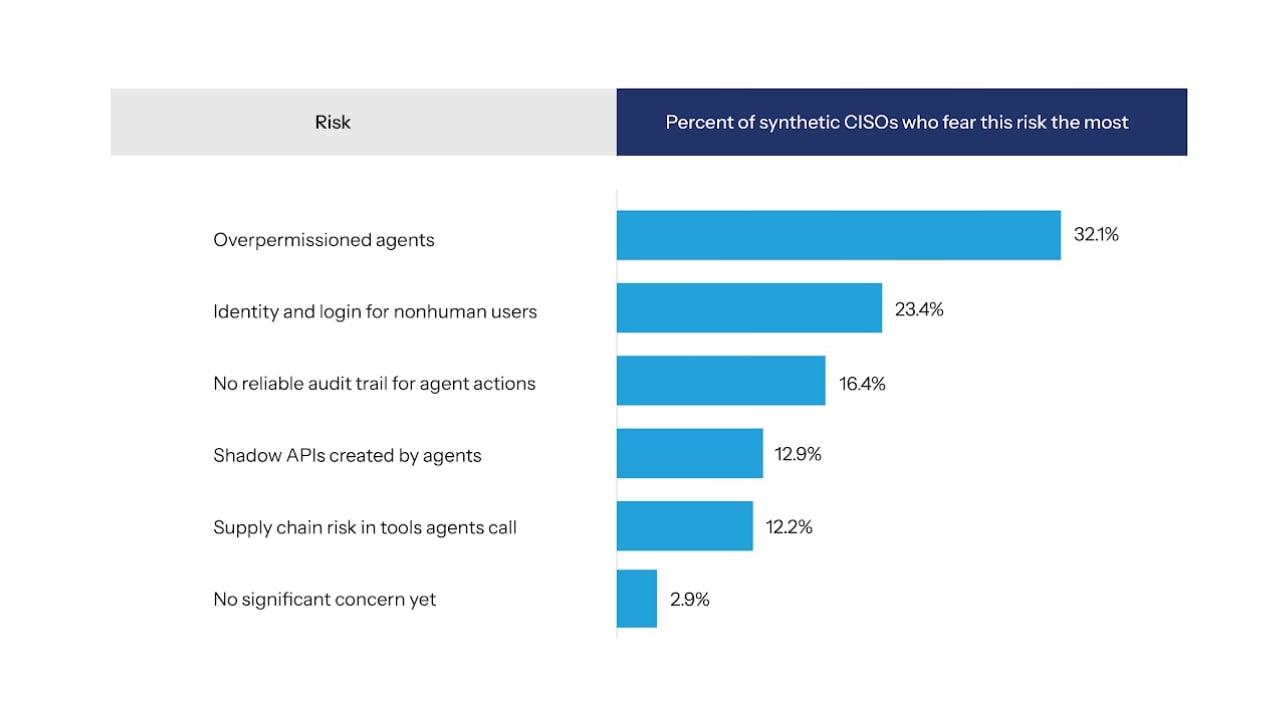
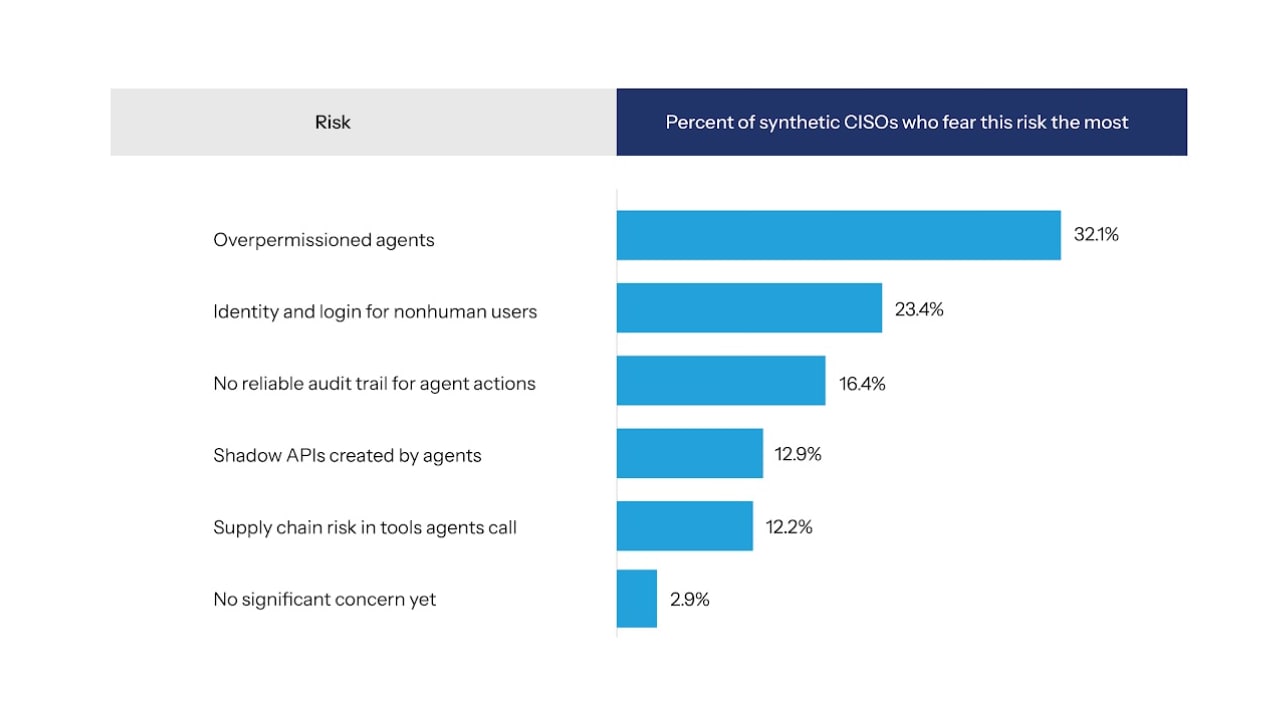
Synthetic CISOs say agent risk mostly looks like agents with too much access. When asked which risk associated with too much access worries them most, the top answer was overpermissioned agents, followed by identity and login controls for nonhuman users, and the lack of a reliable record of the agents’ actions (Figure 4).

Greatest risk as agents gain access to tools and APIs chart
Fig. 4: Greatest risk as agents gain access to tools and APIs
Greatest risk as agents gain access to tools and APIs chart

Too much access is not a new problem; agents just give it a new place to show up. One synthetic persona (an AI-generated head of security architecture at a software as a service company) described how it happens: “We've got teams standing up agent prototypes and just slapping admin-level service accounts on them because nobody wants to spend two days scoping OAuth properly when a demo is due Friday.”

The same persona described finding an agent that had been created only to summarize support tickets but had write access to production settings. Nothing malicious had happened yet, but if that agent were tricked or misbehaved, it could change production settings as easily as an attacker could.

What makes an agent with too much access different from a human with too much access is speed and visibility. An agent can make thousands of requests in the time a person makes one. And when something goes wrong, teams may be able to see that an API was called but not why the agent called it.

Why do the most AI-mature teams worry the most?

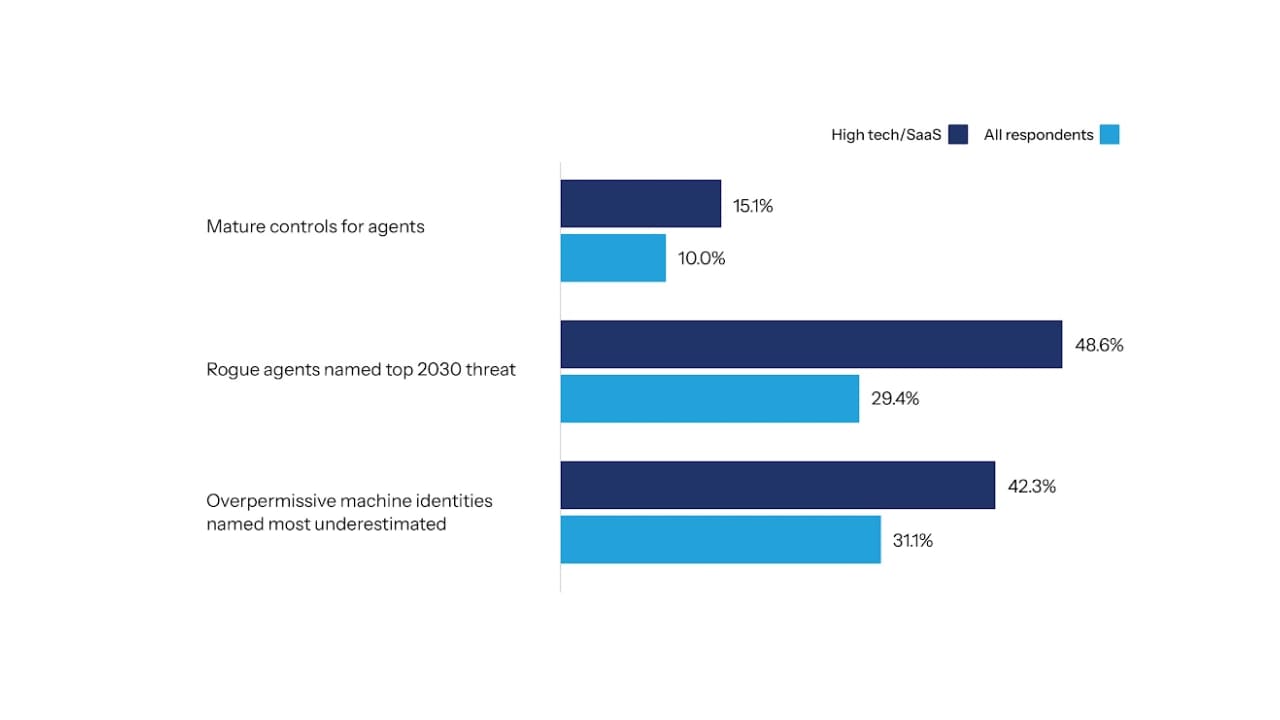
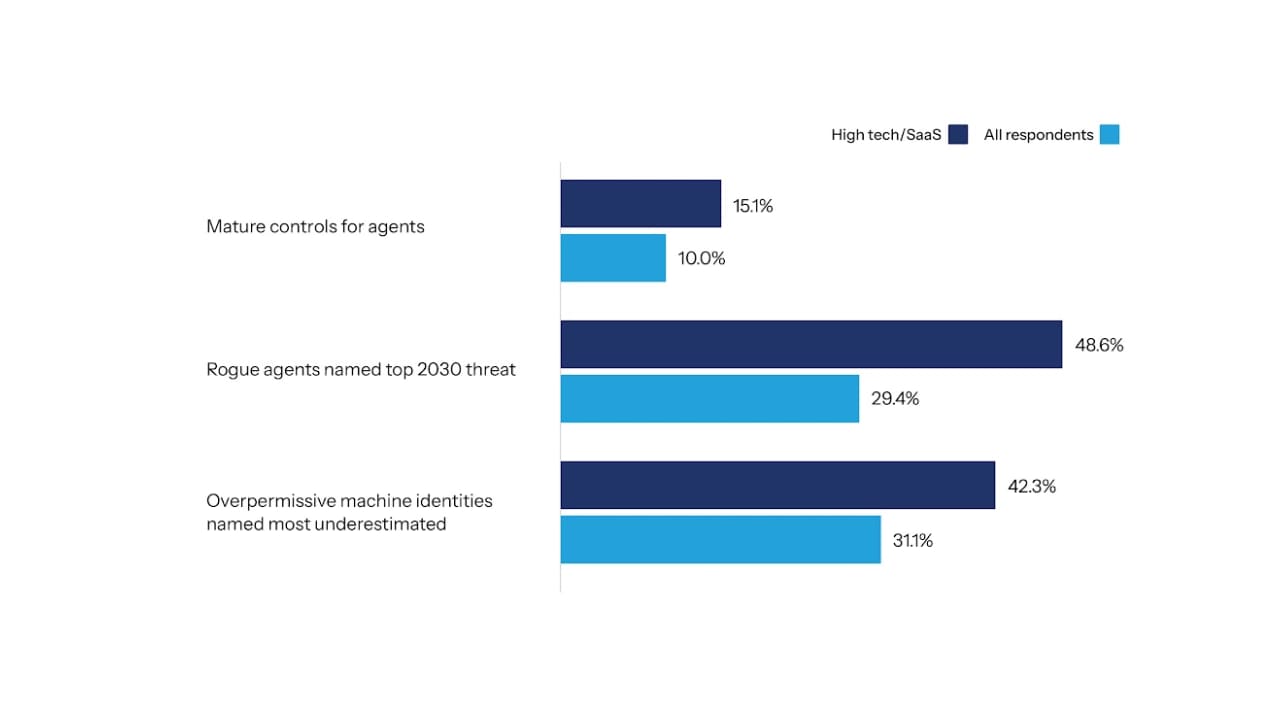
The most AI-mature teams worry more because they've actually connected agents to real systems. High tech and SaaS companies are the furthest along with AI in this survey, and they see agent risk very differently from everyone else (Figure 5).

High tech/SaaS vs. all respondents on agent risk chart
Fig. 5: High tech/SaaS vs. all respondents on agent risk
High tech/SaaS vs. all respondents on agent risk chart

In most industries, agent and MCP exposure scored between −18 and −26 on the “most pressing today” scale, which placed them firmly at the bottom. Among synthetic CISOs in the SaaS industry, agent and MCP exposure scored −2.4, which is close to the middle. Nearly half of them picked rogue agents as the biggest threat by 2030, compared with less than one third of respondents overall.

The synthetic personas who ranked agent risk last all mostly gave the same reason: They haven't connected agents to anything yet. Many don't use agents in their own security work either (27% overall, 46% in the public sector).

That's a legitimate reason today. But it also means the low ranking reflects where companies are now, not how risky agents can be. Once agents get write access, the concern seems to follow.

What should security teams do before agents go live?

Security teams should set guardrails now, while agents are still read-only. Synthetic data can't determine exactly what to do, but the risks the panel named point to a short list:

  • Inventory every agent, the machine identities it uses, and the APIs it can reach, including the APIs that nobody documented

  • Scope each agent to the least access it needs, and review tokens and service accounts that no one remembers granting

  • Log agent actions so you can trace each one back to the request that triggered it

  • Require human approval for actions that change data or systems, at least at first

  • Monitor API traffic for agent behavior that doesn't fit the agent's job

For more details, see "11 questions every CISO should ask about AI" in Akamai's 2026 SOTI report Speed, Scale, and Nonhuman Identity: The Agentic Threat Landscape

How to get started

Agents act through APIs, so securing agents starts with securing the APIs they call. Our strategic guide, Securing Your AI Applications Begins with API Visibility, provides a step–by-step roadmap for securing AI-enabled applications.

About this research

This research was conducted with Evidenza, a synthetic research platform, in July 2026. Rather than fielding a traditional survey, Evidenza models the target population as AI-driven synthetic personas grounded in real-world demographic, firmographic, and behavioral data, and benchmarks them against real-world attitudes before a study is fielded.

We asked 16 questions about AI security and AI-enabled crime to 1,067 personas modeled on senior security leaders at organizations with 1,000 or more employees, across seven industries and four global regions.

Comparison data comes from Akamai's 2026 API Security Impact Study, a survey of 1,840 security leaders and practitioners in 10 countries.

About the author

Akamai wave logo

Kimberly Gomez

Kimberly Gomez is the Director of Security Research at Akamai, where she leads research teams to deliver comprehensive analyses and reports that help organizations stay one step ahead of cybercriminals. With more than a decade in cybersecurity and a background spanning print, broadcast, and online journalism, Kimberly is passionate about security storytelling — the kind that can help even your grandparents understand what's happening in the threat landscape.

When she's not tracking down the latest cyberthreats, you can find her buried in a book, planning her next adventure, or chasing her son through the theme parks of Orlando.