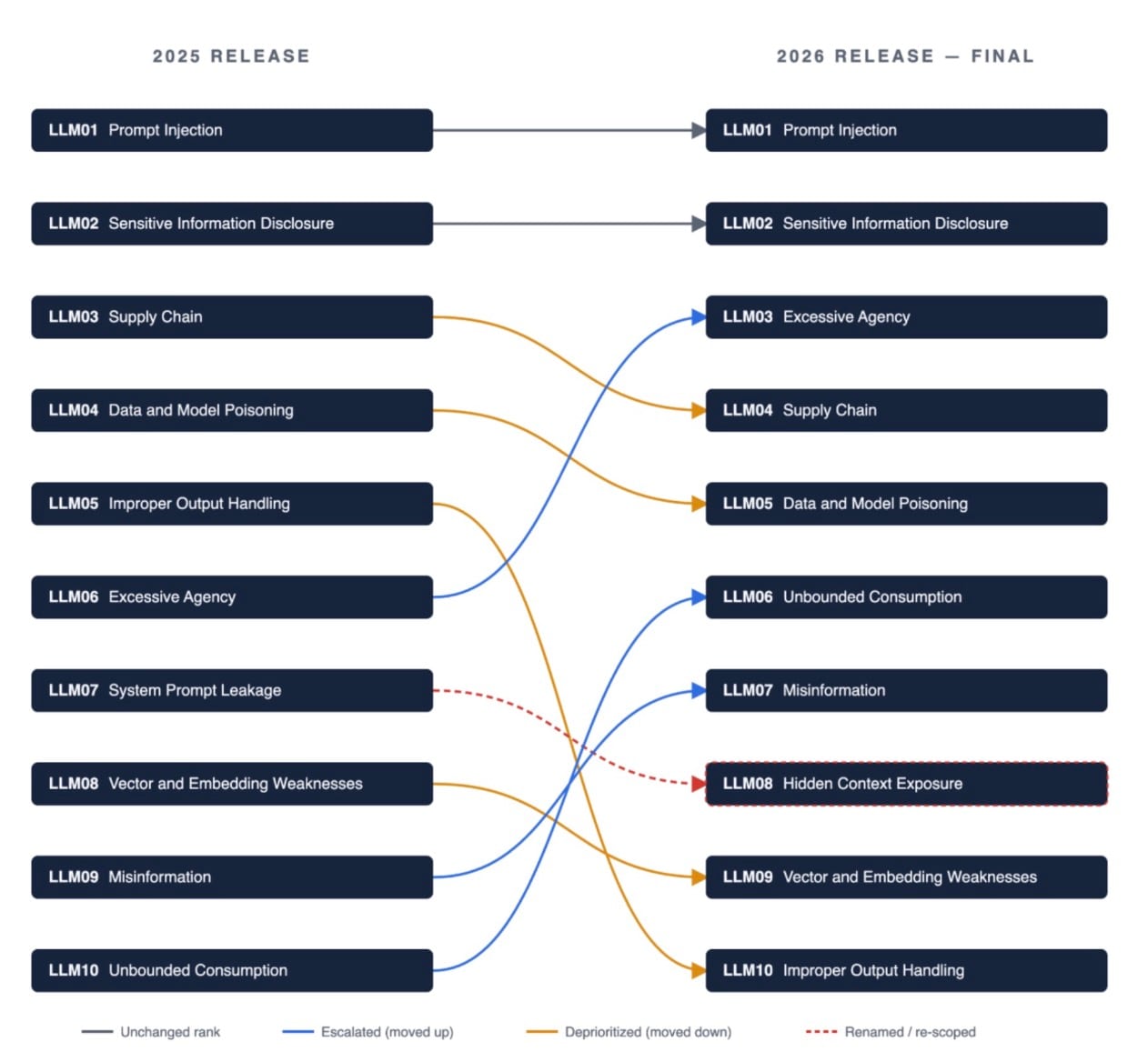
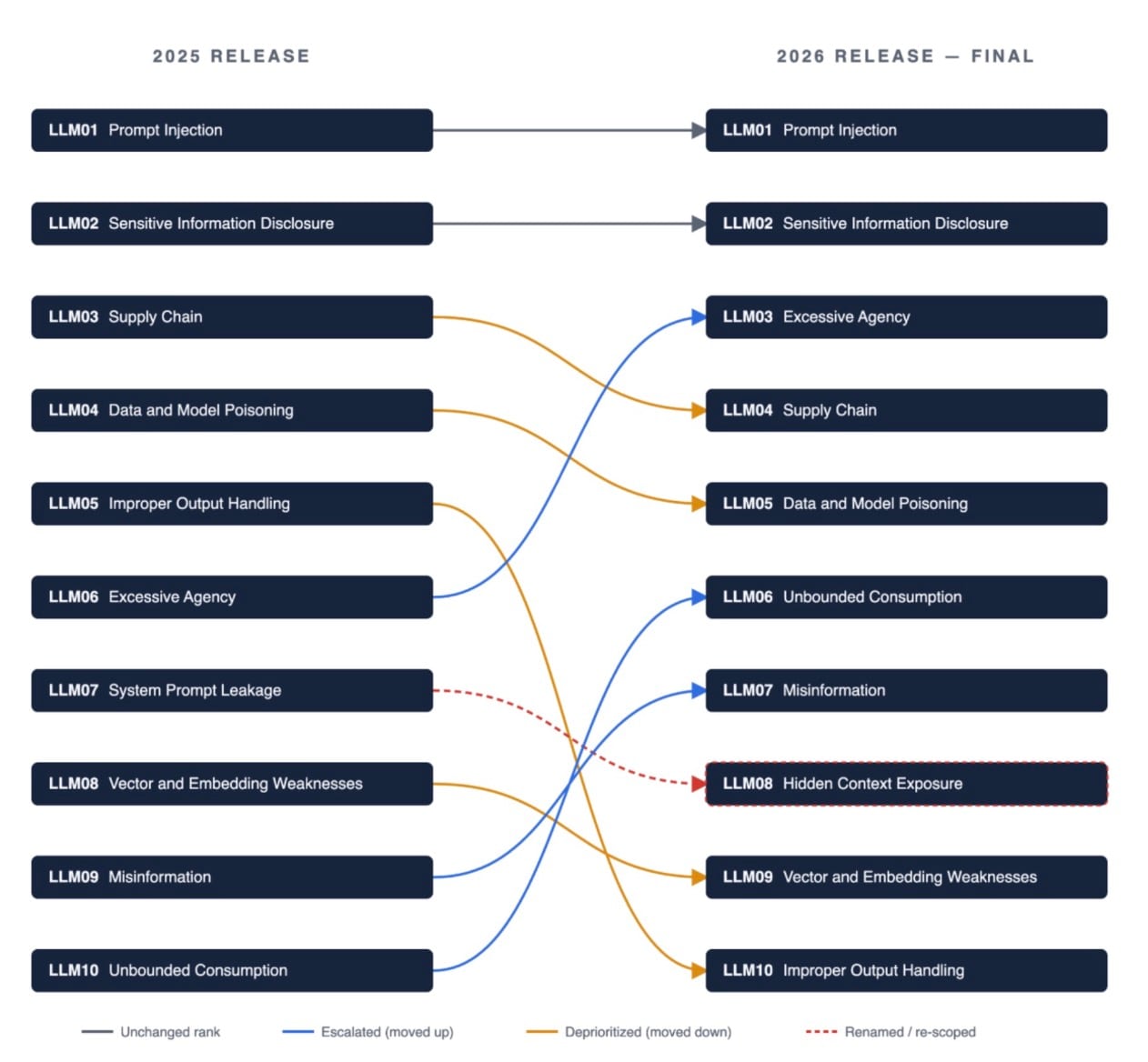
The OWASP Top 10 for LLM Applications 2026 does not completely redefine AI security. Instead, it provides a more mature and evidence-based view of the risks already emerging in production.
Securing agentic AI requires visibility across the entire attack chain - from reconnaissance and context discovery to data exfiltration or unauthorized actions.
Firewall for AI is built for this reality. It provides runtime protection across interactions with AI applications, helping organizations identify and control threats as users interact with models, and as those models become connected to sensitive data, tools, and business workflows.
Firewall for AI protects a broad range of AI-specific risks, including prompt injection and jailbreak attempts, sensitive data exposure, reconnaissance activity, harmful or off-topic use, and emerging agentic threats.
By applying security controls directly to AI traffic, organizations can detect suspicious behavior, enforce policies before risky interactions progress further, and gain visibility into how their AI applications are actually being used and attacked.
This becomes increasingly important as AI systems evolve from standalone chat interfaces into applications that can retrieve internal information, maintain context, invoke tools, and perform actions on behalf of users.
Additionally, Akamai offers comprehensive AI security solutions that help enterprises operate safely in an AI-powered environment and secures digital interactions, both inside and outside an organization. Some of the key AI security solutions include Akamai Guardicore Segmentation, Akamai Workforce Protector, and Akamai Application Protection Platform, among others.